
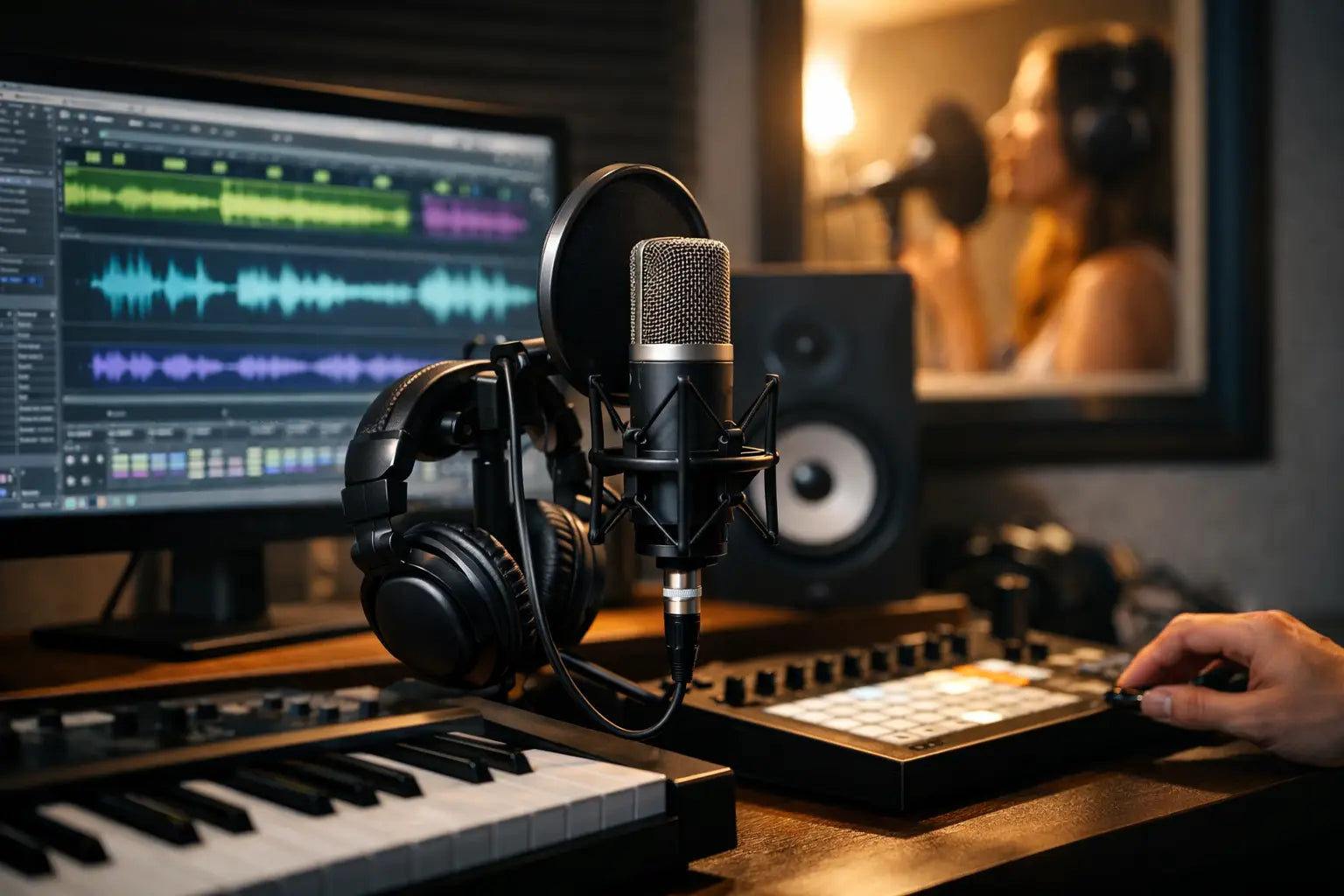
A flat drum groove can survive for a few bars. A weak vocal usually cannot. In club-focused production, dance music vocal samples often decide whether a track feels like a tool, a record, or something DJs actually remember after the drop. The right phrase, chop, ad-lib, or topline loop adds identity fast, but only if it fits the genre, the mix, and the energy of the track.
That is why producers who work quickly do not just collect random vocals. They look for source material that already sounds current, clean, and usable. If the sample needs heavy repair before it even sits in the session, it is slowing the record down instead of moving it forward.
What makes dance music vocal samples worth using
Not every vocal pack is built for electronic production. Some are recorded well but arranged poorly. Others have decent phrases but come with too much reverb, weak tuning, or awkward timing that fights the groove. For dance records, usability matters as much as tone.
A strong vocal sample should do one of three jobs immediately. It should carry the hook, create momentum between sections, or add texture without crowding the lead instruments. If it cannot do one of those jobs within a few minutes of testing, it is probably not helping your workflow.
The best packs also understand genre context. A breathy Afro House phrase, a dry Tech House chant, and a wide EDM lead vocal all serve different purposes. You can force one style into another, but it usually takes more processing than most producers want. Better source material gets you to a polished result faster.
Choosing dance music vocal samples by genre
Genre fit is where a lot of producers either save hours or waste them. A vocal that sounds impressive on its own can still be wrong for the record.
House and Tech House
For House and Tech House, short phrases, attitude-driven one-shots, spoken lines, and catchy female or male hooks tend to work best. You usually want vocals that leave room for the drums and bassline to stay in control. Dry recordings are often more useful than heavily processed ones because you can shape the space around your groove instead of fighting someone else's effects.
The biggest mistake here is overloading the arrangement. One memorable phrase with a few supporting chops usually hits harder than a full vocal layered across every section.
Afro House and Melodic Techno
These styles often need emotional weight and atmosphere at the same time. Longer phrases, soulful lines, haunting textures, and tonal ad-libs work well because they can sit inside a deeper arrangement without sounding too pop-forward. In Afro House especially, rhythm matters. A vocal with the right pocket can lock into percussion in a way that feels natural rather than pasted on top.
For Melodic Techno, the trade-off is clarity versus mood. Washed-out vocals create space, but if they are too diffuse, they disappear once the synth stack comes in. Samples with clean recording quality give you more control when you start adding delay, reverb, and modulation.
EDM and Bass House
In more aggressive commercial styles, the vocal often needs to do real headline work. Big hooks, chopped leads, strong vowel content, and clear lyrical phrases can all drive the identity of the drop. Here, energy matters as much as polish. If the vocal sounds timid, the track usually does too.
That said, not every drop needs a full topline. Sometimes a single sustained note, a hype phrase, or a processed shout is enough to create impact without turning the production into a pop record.
What to listen for before you buy or download
Producers often judge vocal samples by the demo, but the better test is imagining how the sample behaves once your drums, bass, synths, and effects are in place. A vocal that sounds huge in isolation may be too saturated, too wet, or too harmonically busy for a full club arrangement.
Recording quality comes first. Listen for clean transients on consonants, natural breath control, and a solid noise floor. If there is obvious background noise, harsh compression, or brittle high-end baked in, your mix will feel narrower before you even start.
Editing quality matters just as much. Good dance vocal packs are trimmed tightly, tuned naturally, and organized in a way that lets you find usable content fast. Key and BPM labeling should be reliable. If you have to second-guess every file name, the pack is costing you time.
Variation is another key factor. A useful collection does not just give you one nice full phrase. It gives you the parts needed to build sections: lead lines, doubles, harmonies, ad-libs, chops, tails, and one-shots. That flexibility turns a sample pack into a production tool instead of a folder you browse once and forget.
How to make vocal samples fit faster in a mix
Even high-quality vocals need context. The goal is not to use every sample exactly as delivered. The goal is to get it sitting right with minimal friction.
Start with timing before effects. Tighten the phrasing so it respects the groove of the drums, especially in House, Tech House, and Bass House. Tiny shifts can make the difference between a vocal that drives the rhythm and one that drags behind it.
Then handle key and tone. A semitone shift might solve the fit immediately, but larger pitch moves can introduce artifacts or change the character too much. If the emotion disappears after repitching, choose a better source sample. Forcing a bad tonal match usually leads to more processing than it is worth.
EQ and space come next. Most dance vocals need some low-mid cleanup and careful top-end control to avoid clashing with hats, claps, and bright synths. Reverb and delay should support the groove, not wash it out. In club genres, a shorter, smarter effect chain often beats a bigger one.
Layering also helps, but only when each layer has a clear job. A main phrase can carry the message, while chopped tails or pitched doubles add movement around it. If every layer is trying to be the lead, the vocal stack turns blurry fast.
When full vocal loops work and when chops are better
This is where it depends on the track. Full vocal loops are efficient when you need instant direction. They can give you a clear emotional center and help build sections quickly. If you are sketching ideas fast, they are often the shortest path to a finished arrangement.
Chops give you more control. They are especially useful when you want the vocal to function like an instrument rather than a featured singer. In Tech House, Bass House, and some techno-adjacent records, chopped vocals can create personality without dominating the mix.
There is also a commercial trade-off. Full hooks can make a track feel more accessible. Chops can make it feel more producer-driven and club-focused. Neither is automatically better. It depends on whether you are aiming for peak-time utility, streaming appeal, or a balance of both.
Why royalty-free vocals matter for working producers
For independent producers, royalty-free vocal content is not just a legal convenience. It is a workflow advantage. You can audition, arrange, process, and release without turning every promising idea into a rights discussion.
That freedom matters even more when you are finishing multiple tracks, producing for clients, or building music on a deadline. Waiting on clearances kills momentum. Reliable royalty-free dance music vocal samples keep the creative side moving while reducing risk on the release side.
Of course, royalty-free does not mean low effort. The strongest producers still shape the vocal into something personal through editing, resampling, automation, layering, and effects. The sample gives you the raw advantage. Your production choices turn it into a record.
Building a smarter vocal sample library
A useful library is not the biggest one. It is the one you can search quickly and trust. Instead of hoarding random packs, build around the genres you actually make and the kinds of vocals you use most often.
If your records lean clubby and minimal, prioritize chants, hooks, dry phrases, and one-shots. If you make melodic records, focus on emotional phrases, harmonies, and atmospheric textures. If you jump across styles, organize by function as much as genre - lead vocals, chops, ad-libs, spoken lines, and transition phrases.
This is also where quality beats quantity every time. A smaller set of well-labeled, professionally recorded vocals will do more for your output than hundreds of messy files you never open. Brands built around producer workflow, including Hot Grooves, understand that speed is part of the product.
The right vocal sample should make you want to finish the track, not fix the pack. If it drops into place, survives the mix, and gives your record a clear identity, keep it close. That is the kind of source material that earns repeat use and ends up in finished releases instead of abandoned project folders.
Tech House Loops That Actually Make Tracks Move
How to Use Afro House Vocals in Your Tracks