
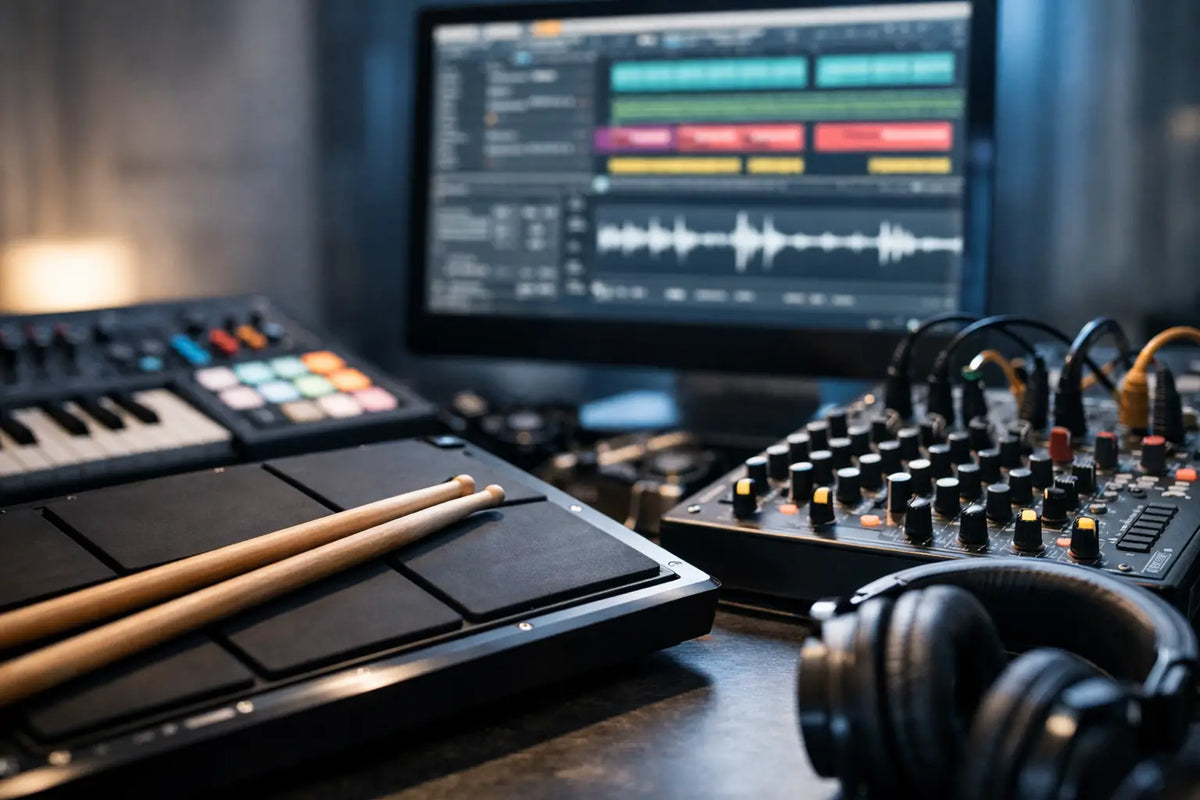
A kick that sounds huge in solo can disappear the moment the bass arrives. A clap can feel expensive until three bright percussion loops turn it into a brittle mess. This electronic drum layering guide is built for that real-world problem: creating drums that hit hard, stay clean, and move a dance floor without turning your session into a 40-track repair job.
Layering is not about stacking samples until a drum sounds bigger. It is about assigning one clear job to each sound, then making sure those jobs do not compete. In club music, the payoff is immediate. Your groove gets more authority, transitions feel more intentional, and the drop lands with the focused impact DJs expect from a release-ready record.
Start With a Job, Not Another Sample
Before adding a layer, identify what the main sound is missing. Is the kick short on sub weight? Does it need more click to translate on small speakers? Is the clap lacking width, body, or a sharp top-end crack?
Every layer should solve one of those questions. If it does not, leave it out. This mindset is the fastest way to avoid the classic over-layered drum bus: loud, crowded, and strangely less powerful than a simple kit.
For most club-focused productions, think in frequency zones and roles. A low layer supplies weight. A midrange layer provides body and character. A high layer creates attack, texture, or air. You rarely need all three on every element, but this framework makes your choices deliberate.
A good source selection does half the mix work. Start with samples that already belong in the genre. A tight Tech House kick and a long, boomy Afro House kick may both be high quality, but they ask for completely different layering decisions. Do not force a sound into a role it was not designed to play.
Electronic Drum Layering Guide: Build the Kick First
The kick is the anchor of most electronic records, so build it before filling the arrangement with hats, claps, and percussion. Choose one primary kick that establishes the fundamental tone, length, and groove. In many Tech House, Bass House, and EDM tracks, that main sample may be enough on its own.
Add a second layer only when there is a specific gap. A short, clean low-end layer can support a punchy top kick. A subtle click or beater layer can help a darker kick read through dense synths. For Melodic Techno, a slightly textured transient can add presence without making the kick feel aggressive.
The key is timing. Zoom in and check the waveform. If the transient of one sample starts noticeably before or after the other, the combined kick can lose impact. Align the initial attack by ear first, then inspect visually. A shift of just a few milliseconds can change a kick from tight to floppy.
Phase matters most when two layers share low frequencies. Flip polarity on one layer and compare. If the low end suddenly becomes fuller and more stable, you have found a better relationship. If neither setting works, adjust the start point, shorten one layer, or choose a different sample. EQ cannot always fix two waveforms fighting at the source.
Keep the low end simple. If your main kick already owns the sub range, high-pass the click layer aggressively. If you add a sub thump beneath it, remove unnecessary lows from the primary kick where possible. The goal is one convincing low-frequency event, not two separate kicks playing at once.
Tune to the Track, Then Trust Your Ears
Kick tuning can help, especially in key-driven Melodic Techno and EDM. But do not chase a tuner at the expense of impact. Many kick samples have fast pitch movement, distortion, or noise that makes their exact note ambiguous.
Start by auditioning the kick against the bassline. If the low end feels tense in a bad way, try moving the kick up or down a semitone. Then check whether the groove still hits. The best choice is often the one that makes the kick and bass feel separated, controlled, and physical, even if a frequency analyzer does not present a perfect answer.
Layer Claps and Snares for Shape, Not Volume
A modern clap often needs more than one texture, but it does not need three full-range samples piled together. Start with a core clap or snare that has the right attitude. Then support it with a layer that adds a contrasting quality: a short snare for center impact, a wide clap for stereo spread, or a noise burst for a modern top-end edge.
Keep the center focused. If every clap layer is wide, the stereo field can become blurry and the drop loses its forward punch in mono. A reliable approach is a centered body layer with a wider, high-passed clap tucked underneath. This gives the hit scale while protecting the middle of the mix for kick, bass, vocals, and lead elements.
Shape the tails with envelopes or fades. Long clap decays can overlap the next hat pattern and crowd the groove, particularly at higher tempos. A shorter release may make the same sample sound more premium because its energy is controlled rather than smeared across the bar.
If the clap feels weak, do not immediately reach for compression. First test a brighter or shorter layer, move one sample a few milliseconds later, or remove low-mid buildup around the combined hit. Compression works best once the layers already behave like one instrument.
Use Hats and Percussion to Create Motion
Hats are where layering can quickly become excessive. A driving open hat, shuffled top loop, closed hat pattern, shaker, and ride can all serve a purpose, but they cannot all occupy the same rhythmic and frequency space.
Choose a lead rhythmic voice. In Tech House, that might be a crisp offbeat open hat. In Afro House, it may be a percussion loop or shaker that carries the swing. Everything else should support that main source, not compete with it.
When layering top percussion, contrast is more useful than duplication. Pair a dry, short closed hat with a loose shaker. Add a muted organic percussion hit against a bright electronic loop. The different textures create movement without requiring excessive level or high-end EQ.
High-pass supporting layers to make room for kick and clap body. Then use panning carefully. A small left-right offset can make percussion feel alive, but avoid hard-panning every bright element. Club systems and mono playback will reveal whether your groove depends too heavily on stereo tricks.
Velocity and timing are part of layering too. Duplicate samples triggered at identical velocity and timing often sound programmed in the wrong way. Lower the velocity of ghost notes, nudge a supporting shaker slightly, or use a different sample on alternate hits. The groove will feel more human without losing the precision needed for electronic music.
Process the Stack as One Drum Sound
Once the layers work together, route them to a group channel. This is where you turn separate samples into a single, intentional drum element. Use processing sparingly at first. Your job is to enhance the relationship, not rescue bad source choices.
A light bus compressor can add cohesion, especially on claps or percussion stacks. Let enough transient through so the hit still speaks, then use modest gain reduction. If the stack loses punch, slow the attack, ease the ratio, or bypass it. More compression is not automatically more energy.
Saturation can add density and help smaller speakers reproduce perceived weight. It is particularly useful on a kick that needs more midrange presence or a clap that needs a little attitude. Apply it after cleaning obvious frequency clashes, because distortion will exaggerate any mud already in the layers.
For drum groups, a small amount of clipping can be more effective than heavy limiting. A controlled clip catches the sharpest peaks and lets you push average level without flattening every transient. The trade-off is easy to hear: push too far and the kick becomes papery, the clap turns harsh, and the groove starts feeling fatigued.
Check the Layering in Context
Never make final layering decisions with the drums soloed. Bring in the bass, main synths, vocal, and any risers that occupy the drop. A layer that seems quiet alone may be exactly what makes the drum read through the full arrangement. Another may be doing nothing except stealing headroom.
Check at low monitoring volume. If the kick pulse, clap placement, and core hat rhythm still come through, you are close. Then test in mono and compare your track to a relevant reference at a matched level. You are listening for balance, not copying an exact sound.
Hot Grooves-style workflow starts with genre-ready source material, but the final edge comes from restraint. Select fewer sounds, give each one a role, and commit when the groove feels right. A focused drum stack leaves room for the bassline, hook, and vocal to do their job - and that space is often what makes a club track feel expensive.
7 Afro House Arrangement Examples That Work
Sample Packs Comparison for Club Producers