
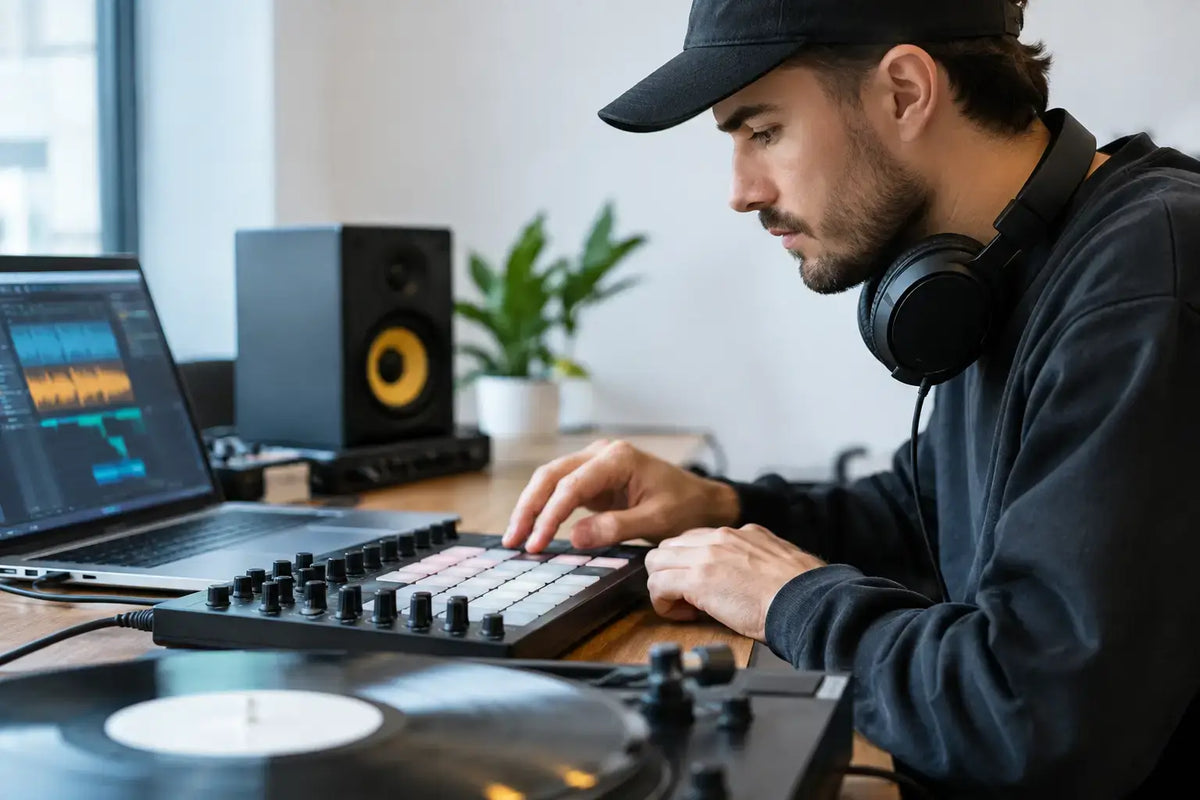
A great club record can start with one sound that makes the whole groove feel inevitable: a shuffled top loop, a hypnotic vocal phrase, a saturated stab, or a kick that owns the low end. This electronic music sampling guide is about turning those raw ingredients into tracks that sound intentional, current, and ready for a serious system.
Sampling is not about dropping in more audio until the arrangement feels full. It is about choosing sounds with a job, shaping them around your groove, and leaving enough space for the record to hit. Whether you produce Afro House, Tech House, Melodic Techno, Bass House, or EDM, the principles stay consistent. The details change with the genre.
Start With a Sample That Solves a Problem
The fastest way to lose momentum is auditioning hundreds of sounds without knowing what your track needs. Before opening a pack, listen to your eight-bar loop and identify the missing function. Do you need movement in the high end? A stronger hook? More percussion? A transition element that builds energy without crowding the drop?
This approach makes sample selection much faster. A vocal chop should add identity or rhythm, not simply fill empty space. A percussion loop should reinforce the pocket already established by your kick and bass. A synth loop should bring a harmonic or textural role that your existing parts do not cover.
Genre context matters. A rolling Afro House groove may need organic percussion, warm chord textures, and vocals with emotional weight. A peak-time Tech House idea may benefit more from a dry clap, punchy bass one-shot, and a short spoken phrase with attitude. For Melodic Techno, look for atmosphere, tension, and motifs that can develop across a longer arrangement.
High-quality royalty-free samples save time because they are designed to work in a mix from the start. That does not mean every sample belongs in every track. The best source sound is the one that supports your record's direction with the least amount of correction.
Electronic Music Sampling Guide: Match Key, Tempo, and Feel
Tempo matching is easy in modern DAWs, but automatic stretching is not always flattering. Extreme time-stretching can smear transients, dull percussion, and make vocals sound unstable. If a loop is far from your project tempo, try a different source before forcing it into place.
Key deserves the same attention. Tune melodic samples, bass notes, vocals, and tonal percussion to the track's center. If your bassline is in F minor and a vocal phrase strongly implies A major, no amount of EQ will make that conflict disappear. Pitching can help, but large shifts can create artifacts or change the character that made the sound appealing.
Feel is the third part of the equation. A perfectly synced loop can still fight the groove if its swing, velocity, or transient shape feels wrong. Nudge percussion by a few milliseconds, trim a late attack, or use groove settings carefully. Small timing changes often create more lift than adding another layer.
When sampling vocals, test the phrase against your busiest section first. A vocal that sounds cinematic over a breakdown may get swallowed by a full drop. Sometimes the answer is to use only one word, a breath, or a pitched fragment rather than the entire line.
Chop for Rhythm, Not Just for Variation
Chopping a sample gives you control over arrangement and groove. Instead of letting a four-bar loop dictate the entire track, slice it into pieces and build a new pattern around your drums. This is especially effective with vocals, guitar phrases, percussion, and synth riffs.
Start by finding the strongest moments: the first transient, the most memorable syllable, the cleanest chord hit, or the noisiest texture. Put those pieces on separate pads or audio clips, then play them as rhythmic events. A short vocal cut placed before the clap can become part of the groove. A reversed fragment can create tension before a downbeat without needing a huge riser.
Do not chop every sample into chaos. Repetition is what makes club music physical. Give the listener a recognizable motif, then change one detail every four or eight bars. You might mute the final chop, pitch it up for a fill, or replace it with a filtered version before the next section.
Build Layers With Clear Roles
Layering is powerful when each sound occupies a distinct place. It gets messy when three samples are trying to deliver the same information. If you stack multiple kicks, for example, decide which layer provides sub weight, which delivers the punch, and which adds a short click. Then remove anything that does not earn its place.
The same rule applies to drums and musical parts. A tight shaker can provide continuous motion while an open hat handles the lift on offbeats. A chord stab can establish harmony while a pad supplies width and depth. A vocal texture can add atmosphere while a lead vocal carries the hook.
Use EQ to create separation, but solve arrangement problems before reaching for extreme processing. If two loops fight in the same frequency range and rhythm, muting one may improve the track more than carving both into thin versions of themselves.
A practical move is to convert a loop into a complementary layer. High-pass it and use it for top-end energy, or low-pass it and tuck it beneath your drums for body. This works well when you like the character of a sample but do not need its entire frequency range.
Process Samples Until They Belong to the Record
A polished sample can still sound pasted on when its tone, space, or dynamics do not match the rest of your production. The goal is not to process every sound heavily. The goal is to make the sample feel like it was created inside the same record.
Start with gain staging. Set the level before adding saturation, compression, or limiting. A loop that is too loud can trick you into thinking it sounds better, then leave no headroom for the drop. Get the balance working at modest levels first.
Next, shape the frequency range and envelope. Trim unnecessary lows from most percussion, vocals, and synth loops so the kick and bass have room. Shorten tails when a sample muddies the groove. Add a little saturation when a sound needs density or edge, especially if it needs to hold its position on smaller speakers.
Reverb and delay should reinforce depth, not push important rhythmic information to the back of the mix. For a tight Tech House groove, short room ambience or a controlled delay may work better than a long wash. For Melodic Techno breakdowns, longer effects can add scale, but automate them so the drop returns with focus.
Bus processing can help sampled elements feel connected. Send related percussion to one bus for subtle glue, or place several vocal chops through the same delay chain. Be careful with aggressive compression on full loops. It can flatten the transients that gave the sample its energy.
Keep Samples Legal and Release-Ready
There is a major difference between royalty-free content and sampling a recognizable commercial record. Royalty-free samples are licensed for use under the terms supplied by the creator or pack provider. Commercial music, films, online clips, and other protected recordings may require permission from rights holders before release, even if you chop, pitch, or heavily process them.
Read the license for every source you use, particularly for vocals and construction kits. Know whether the content can be used in commercial releases, whether attribution is required, and whether the license restricts redistribution of isolated files. Keep a simple project note with the pack name and source details. It is a small habit that can prevent problems when a label, distributor, or collaborator asks questions later.
For producers who want speed without uncertainty, purpose-built royalty-free packs are the practical route. Hot Grooves collections are organized around club-focused genres and usable formats, making it easier to grab a vocal, loop, one-shot, or preset that fits the session rather than slowing the session down.
Arrange Samples Like a DJ Would Hear Them
A sample may sound great in isolation but fail when it arrives at the wrong moment. Club arrangements depend on contrast. Bring elements in with purpose, let them establish a role, then take them away before they lose impact.
Try introducing a recognizable sample early in a filtered or reduced form. Give listeners a preview of the hook, then reveal the full version after a transition. In a drop, reserve your most distinctive sampled element for the moments that need identity. If it plays nonstop, it stops feeling like an event.
Print or bounce complex sample chains once you are happy. This protects your CPU, helps you commit to decisions, and encourages arrangement thinking over endless plugin tweaking. Keep the original muted on a backup track in case you need to revisit the edit.
The strongest sampled records do not sound like collections of borrowed parts. They sound like a producer made decisive choices. Pick fewer sounds, give each one a clear role, and make every chop, layer, and transition push the dancefloor forward.
Serum Preset Review for Modern Club Producers