
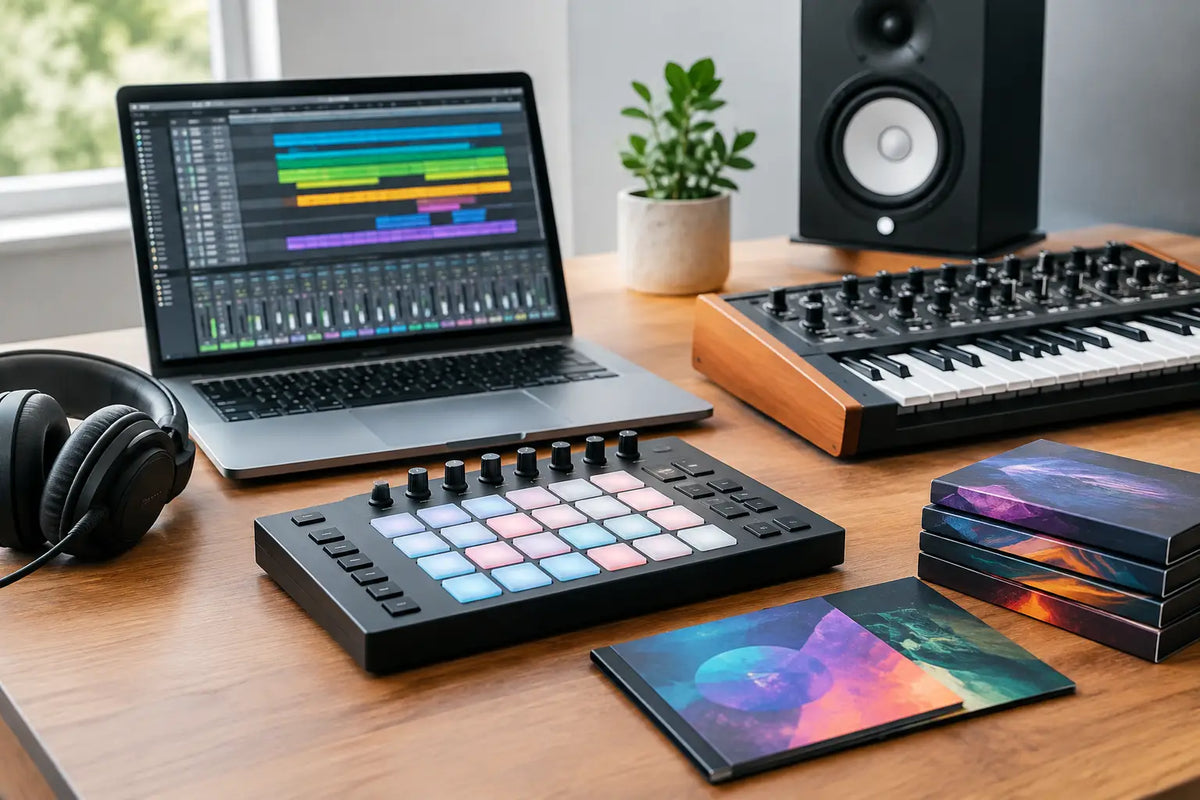
A great drop can lose all of its impact when the kick lacks weight, the percussion feels generic, or the vocal sits like it came from another record. This electronic producer sample bundle guide is built for producers who want their tracks to sound focused, current, and ready for serious playback without spending a week hunting through disconnected sample folders.
A sample bundle is not simply a bigger pile of sounds. The right one gives you a coherent production environment: drums that hit together, musical loops in a usable key range, vocals with the right character, and presets that can take an idea from eight bars to a finished arrangement quickly. The wrong one creates more choices, more clutter, and more time lost.
Start With the Track You Actually Want to Finish
Before choosing a bundle, get specific about the records you are making right now. “Electronic music” is too broad to shop effectively. A Tech House producer may need rolling bass loops, dry vocal hooks, punchy claps, and groove-heavy tops. A Melodic Techno producer may get more value from atmospheric textures, emotive chord loops, evolving arps, and Serum presets. Afro House calls for organic percussion, warm drums, rhythmic vocals, and musical elements with movement.
Genre focus matters because a polished club track depends on relationships between sounds. A kick can be excellent on its own and still fight the bassline. A synth loop can be beautifully designed but feel out of place beside a minimal drum groove. Bundles built around a clear genre usually solve more of these decisions before you open your DAW.
Ask yourself what slows you down most. If your drum programming feels flat, prioritize one-shots and percussion loops. If you can make grooves but struggle to create a memorable hook, look for vocal, melody, and preset content. If your projects sound close but never fully competitive, a bundle with mix-ready drums, bass material, and transition effects may deliver more value than another collection of random melodic ideas.
What a Strong Electronic Producer Sample Bundle Includes
The best bundles cover multiple parts of the production process while keeping the sound palette consistent. You do not need every format in equal amounts, but you should know why each category is there.
Drum loops bring immediate momentum. They are especially useful for building a foundation fast, auditioning arrangements, or layering movement under your own programmed drums. Look for clearly labeled BPMs, clean loop endings, and variations that let you change energy across an arrangement instead of repeating the same four bars for six minutes.
One-shots give you control. Kicks, claps, hats, percussion, bass hits, stabs, and FX can be sequenced into your own patterns, making them essential when you want a groove that feels personal rather than prebuilt. For club music, quality matters more than sheer quantity. Fifty usable kicks are better than 500 files you will never reach for.
Musical loops and construction kits can accelerate the creative phase, but they should offer flexibility. Check whether loops are labeled by key and tempo, whether stems are included where relevant, and whether the musical content can be separated into bass, chords, leads, or percussion. That flexibility makes it easier to reshape an idea around your own arrangement.
Vocals add identity quickly, especially in Tech House, Afro House, Bass House, and EDM. Short phrases, ad-libs, hooks, and spoken lines can create the moment listeners remember. Choose vocals that leave room for processing and chopping. A vocal that is already drenched in effects may sound exciting in isolation but can be difficult to place in a dense mix.
Presets are often overlooked in a sample bundle decision. Well-made Serum presets can reveal how a genre’s basses, plucks, leads, and atmospheric sounds are constructed. They also let you tailor a sound to your track rather than forcing a fixed audio loop into the mix.
How to Judge Quality Before You Commit
A bundle should help you make decisions faster, not give you another hard drive full of maybes. Start by evaluating curation. Does the content feel like it belongs in the same sonic world? Are the drums polished but not overprocessed? Do the melodic sounds leave enough space for a vocal, bassline, or lead of your own?
Listen for mix compatibility. Club-ready does not mean every sample is pushed to the limit. Overly bright hats, aggressively clipped kicks, and heavily limited loops can make a demo sound loud while leaving no room to build a balanced record. Useful sounds tend to feel clear, intentional, and easy to layer.
Organization is another practical signal. A professional bundle should make it obvious what you are getting: BPM, key, format, genre, and sample type. When files are labeled properly, you can audition ideas at the speed of inspiration. When every folder is vague or chaotic, even good sounds become a workflow problem.
Also consider originality. Royalty-free samples are designed for legal use in your productions, but that does not mean every loop should remain untouched. Producers who get the most from bundles layer percussion, slice vocals, change MIDI, resample synth parts, and build new transitions. The bundle supplies high-quality source material. Your decisions make the track recognizable.
Build Your Bundle Around a Production Gap
Buying a large collection because it is discounted can be smart, but only if the content solves a real need. Start with your last three unfinished projects. They will usually tell you what to buy next.
If the drops have energy but the intros feel empty, you may need atmospheres, FX, top loops, and percussion. If your tracks are structurally solid but lack a signature moment, vocals and melodic tools may be the missing piece. If you spend too long designing basses and leads from scratch, presets can return hours to your week.
A practical bundle strategy often looks like this:
- Choose one core genre bundle that matches the records you want to release or DJ.
- Add drum-focused content if your existing kicks, claps, and percussion do not translate well.
- Add vocals or musical tools only when they support the same genre direction.
- Use presets when you want editable sound design rather than more fixed loops.
Get More From Every Bundle You Own
The fastest producers do not audition thousands of samples every session. They build trusted starting points. After downloading a bundle, spend one focused session tagging your favorite kicks, percussion loops, bass sounds, vocals, and presets. Create a small “go-to” folder or DAW collection for the sounds that immediately work in your mixes.
Then use the bundle in layers. Start with a loop for momentum, replace or reinforce its kick with a one-shot, program an original bassline, and add a processed vocal fragment for character. This gives you speed without making the arrangement feel copied from a demo folder.
Pay attention to frequency roles. If a percussion loop already contains a strong low-mid conga pattern, your bass may need a simpler rhythm. If a vocal hook is bright and upfront, pull back competing lead elements. Good samples make production easier, but they still need arrangement decisions to hit hard on a club system.
For producers working across several club styles, keep separate project templates. Your Afro House template may favor organic percussion buses and warmer saturation. Your Tech House template may start with a tighter kick-bass relationship and a more direct drum bus. A focused sample bundle becomes even more effective when it enters a workflow designed for that sound.
When Bigger Is Not Better
A large bundle can offer real savings, particularly when it combines packs you would otherwise buy separately. It is a strong choice if you are building a new library, moving into a specific genre, or producing enough material to use the sounds repeatedly. Hot Grooves bundles are designed around that practical advantage: more compatible, genre-focused tools for less than buying individual collections one at a time.
But smaller packs can be the better move when you already know exactly what is missing. If you need a set of Afro House vocals for an EP, a focused vocal pack may serve you better than a massive all-format collection. If your drum library is already deep, prioritize the sounds that add a new angle instead of duplicating what you own.
The goal is not to own the most samples. It is to have a dependable selection that gets you from a rough groove to a record people want to replay.
The next time a project stalls, do not immediately reach for another plugin or start rebuilding the drum pattern from zero. Identify the one missing element, choose sounds made for that lane, and give yourself a cleaner path to finishing the track.
Why Do Loops Clash? Fix Your Dance Mix Fast
Sample Pack Reviews That Help You Buy Better