
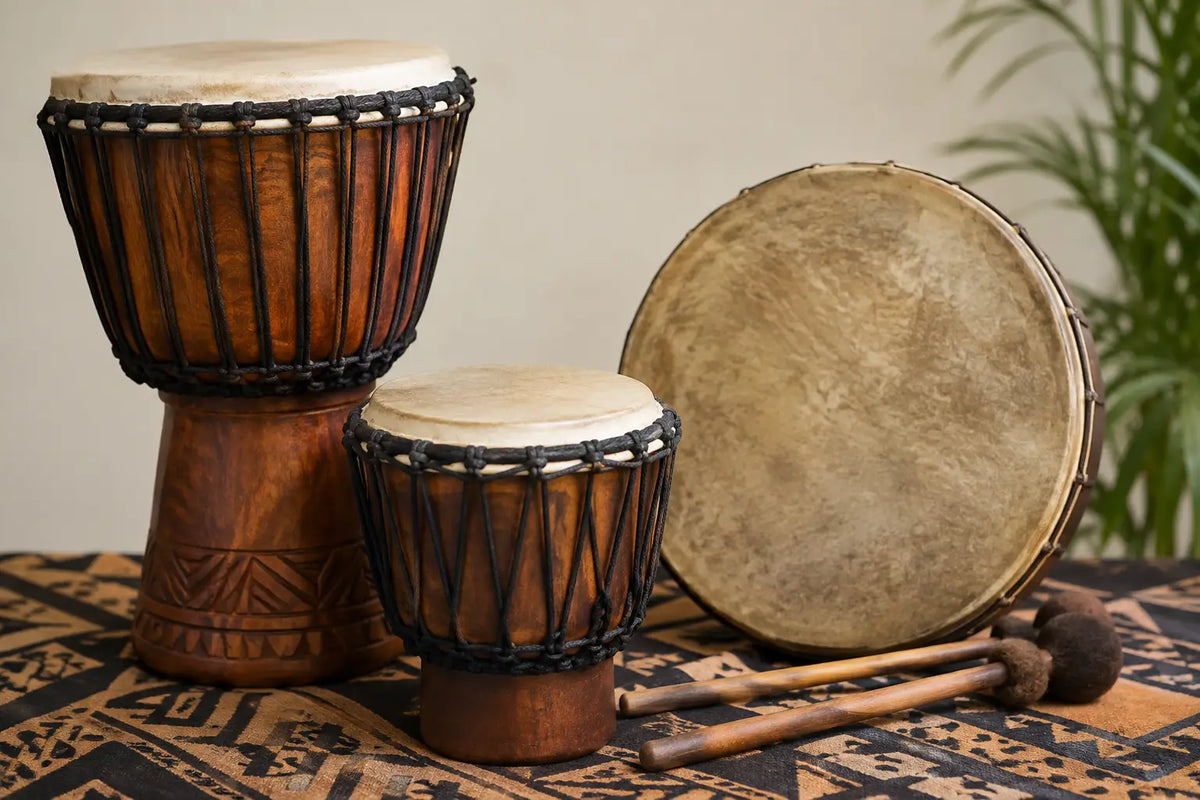
A convincing Afro House track can lose the room before the bassline even arrives if the drums feel too rigid, too crowded, or too generic. The essential Afro House drum elements are less about piling on percussion and more about creating a living, forward-moving conversation between a solid kick, earthy hand drums, restrained hats, and carefully shaped space.
This is a groove-first genre. Every drum choice needs to serve movement, whether you are building a deep late-night roller, a vocal-led anthem, or a more peak-time Afro House record. Get the foundation right and the melodic elements have somewhere powerful to land.
Essential Afro House Drum Elements Start With the Kick
The kick is the anchor. In most Afro House, a four-on-the-floor pattern drives the record, but its sound should not dominate every inch of the low end. Aim for weight, roundness, and a controlled transient rather than an aggressively clicky Tech House kick or a long, booming festival EDM tail.
A kick with a fundamental that works with the key of the track can make mixing far easier, especially when the bass is warm and repetitive. That does not mean tuning every kick perfectly is mandatory. It means listening for conflict. If the bass loses impact every time the kick hits, solve the relationship at the source before reaching for more processing.
Keep the low tail clean enough to leave room for the bass, then use light saturation or clipping to bring out audible character on smaller speakers. In a club, the sub gives the kick authority. On a phone or laptop, the upper harmonics help it remain present. The right balance depends on the arrangement: a sparse track can support a bigger kick, while a dense percussion section usually needs a shorter, more controlled one.
Let the Bass Follow the Kick's Authority
Afro House basslines often have a rolling, hypnotic function instead of a busy, riff-heavy one. The bass should reinforce the kick's pulse without copying its entire rhythm. Sidechain compression can create separation, but do not use it as a substitute for strong note placement, envelope design, and sample selection.
Try leaving a small gap after each kick before the bass speaks. That pocket creates the inhale-exhale motion dancers feel. If your groove sounds flat, the issue is often not the amount of sidechain. It is that the bass and kick are fighting for the same moment.
Build the Afro House Percussion Conversation
The genre's identity lives in the interplay of percussion. Congas, bongos, shakers, djembes, claves, rimshots, wood percussion, bells, and textured found sounds can all work, but only if each part has a purpose. A great loop feels human and interlocked, not like several unrelated loops stacked on top of each other.
Start with one primary percussion voice, such as a conga phrase or a low hand-drum pattern. This is your rhythmic hook. Then add a higher, lighter answer - perhaps a shaker, stick hit, or short bongo accent. Once those two parts speak to each other, introduce a third detail only if the groove needs more lift.
Velocity matters as much as timing. Repeating every hit at the same level makes even quality samples sound programmed. Accentuate a few notes, soften others, and avoid turning every percussion track into a constant wall of energy. The groove becomes more expensive-sounding when the quieter hits have room to exist.
Layering can add authority, but it comes with a cost. Two or three samples hitting similar frequencies can quickly cloud the low mids, particularly with toms and hand drums. Choose one source for body and another for attack if needed, then filter and shape them so they behave as one instrument. If a layer adds no clear function, remove it.
Swing Is Feel, Not a DAW Setting
Quantized drums can work in Afro House, but they rarely feel complete on their own. Small timing variations create the elasticity that makes percussion breathe around the steady kick. The goal is not random looseness. It is controlled push and pull.
Use swing selectively. A shaker or offbeat percussion line may sit slightly late, while a clave pattern can be tighter and more insistent. Try moving individual notes by a few milliseconds after setting a global groove. Then compare the track at low volume. If it still pulls you forward, you are close. If it feels drunk or hesitant, pull the timing back.
Pay close attention to the relationship between hats and hand percussion. A late shaker can make the rhythm feel deep and relaxed; a brighter, tighter hat can give it urgency. These choices define whether the record feels suited to sunset sets, open-air stages, or darker club hours.
Hats, Claps, and Top-End Energy
Afro House top end should energize the groove without turning it into a harsh wash. Closed hats often work best when they are short, dry, and used with restraint. Rather than running a busy 16th-note pattern from start to finish, create movement through gaps, velocity changes, and occasional alternate samples.
Open hats are useful for section changes and lift, especially before a drop or during a chorus. Keep their decay under control. Long, bright open hats can smear the groove and compete with vocal air, synth plucks, and rides.
Claps and snares usually support the backbeat rather than becoming the main event. A clean clap on beats two and four may be enough, but try a low-volume ghost clap, rim, or short percussion answer just before or after it. This adds depth without pulling the track toward a standard House template.
High-frequency percussion needs disciplined EQ. High-pass elements that do not need body, tame painful resonances, and avoid boosting the entire top end just to create excitement. Often, muting one abrasive shaker gives the remaining instruments more perceived brightness.
Use Space and Texture Like Drum Instruments
Dry drums provide punch. Space provides scale. Afro House often benefits from short, characterful rooms, plates, springs, or delays that place percussion in an environment without washing out the rhythm.
Set up a shared percussion reverb rather than placing a different long effect on every channel. This helps the drums sound like they belong in the same world and gives you one clear control for depth. Keep the reverb filtered: remove unnecessary lows and soften excessive high end so it does not interfere with the kick, bass, or lead vocal.
Texture also matters. A subtle vinyl-like noise, breathy shaker, organic foley hit, or distant crowd-style ambience can make a polished digital arrangement feel less sterile. Use these details sparingly. If the listener notices the texture as a separate gimmick, it is probably too loud.
Arrange the Groove for DJ-Ready Impact
A strong eight-bar loop is only the starting point. Club records need evolution without losing the rhythmic identity that made the loop work. Make changes one layer at a time: remove the shaker for four bars, introduce a new conga response, add a filtered hat, or let a clap disappear before the next section lands.
Energy should rise through contrast, not constant addition. A breakdown with fewer drums can make the returning kick hit much harder. Likewise, a drop does not always need every percussion channel active. Sometimes the most effective return is kick, bass, one signature drum phrase, and a vocal or synth hook.
Build reliable transitions with fills that sound like part of the kit. Short tom runs, pitched conga rolls, reversed hand-drum hits, and delayed percussion throws can signal change without resorting to generic snare-roll clichés. Keep fills rhythmically connected to the main groove, and they will feel intentional rather than pasted on.
For faster results, start with curated, genre-focused drum sounds instead of forcing unrelated samples to fit. Hot Grooves Afro House drums, loops, and one-shots can provide a polished starting palette, leaving more time for the decisions that make a track yours: the pocket, the arrangement, and the moments of restraint.
Before printing your next loop, mute half the percussion and ask whether the groove still moves. If it does, bring elements back only when they add a distinct pulse, texture, or transition. That discipline is where Afro House drums stop sounding busy and start sounding undeniable.
Producer Workflow: Finish Better Tracks Faster
Can I Release Sampled Vocals? Producer Rules