
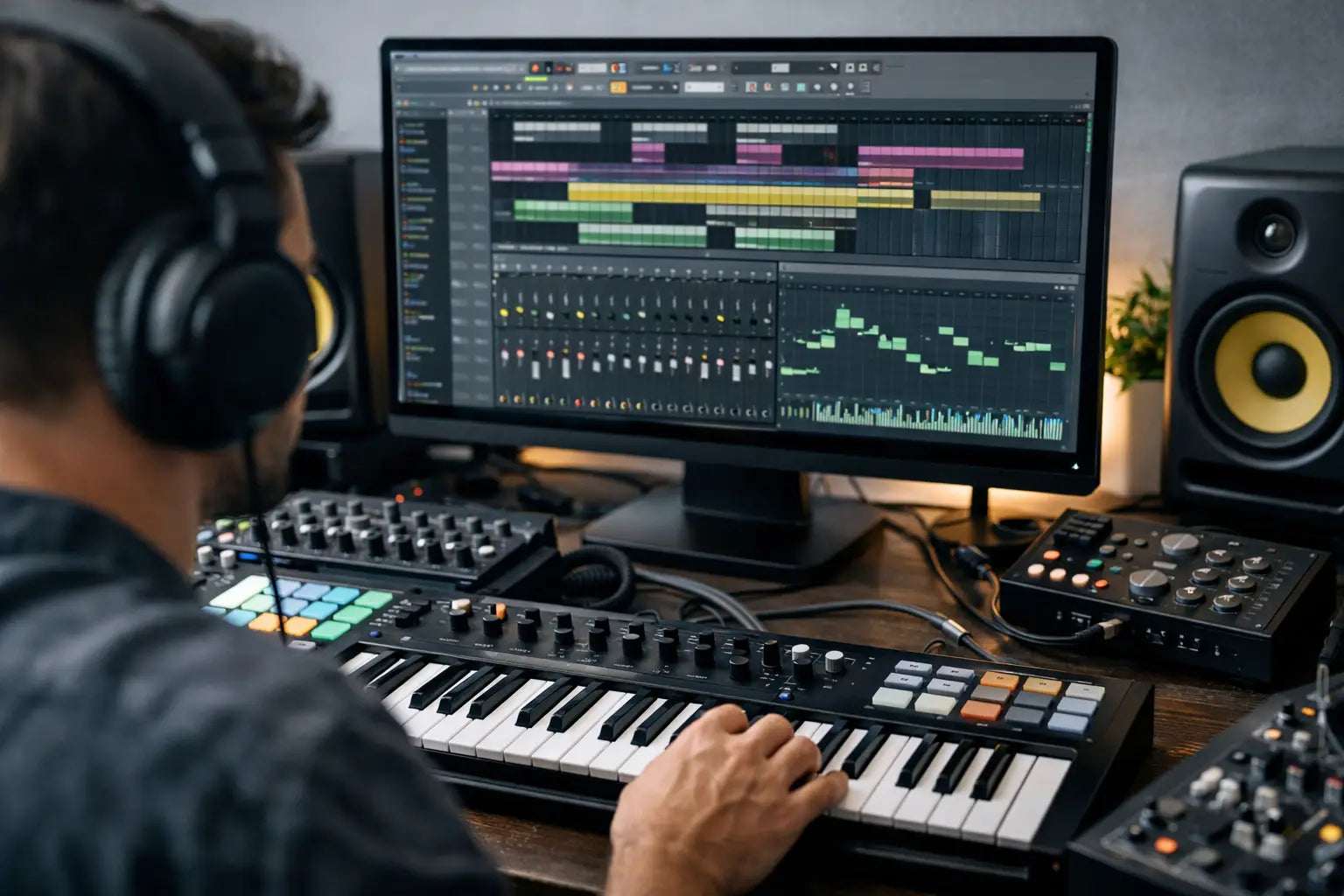
Open almost any modern house, techno, or EDM session and you will see the same pressure point: speed matters. Ideas fade fast, and if your DAW gets in the way, the track usually loses momentum. That is why FL Studio still holds so much weight with electronic producers. It is fast to sketch in, strong for loop-based writing, and flexible enough to turn a rough groove into a release-ready record.
For producers working in Afro House, Tech House, Melodic Techno, Techno, Bass House, and EDM, FL Studio makes sense for one simple reason - it rewards momentum. You can move from drums to bass to arrangement without feeling boxed in. But that does not mean it is perfect for everyone. Like any DAW, it shines in certain workflows and asks you to work around a few weak spots.
Why FL Studio still works in club-focused production
FL Studio has been part of dance music for years, and that staying power is not just nostalgia. The step sequencer, piano roll, and pattern workflow are still among the quickest ways to build rhythmic music. If your process starts with kick, percussion, bassline, and hook, FL Studio feels immediate.
That matters a lot in club genres. A Tech House idea often starts with groove before harmony. A Melodic Techno record might begin with a simple arp and a strong low-end pocket. Afro House needs percussion movement early, not after ten setup steps. FL Studio is good at getting those core ideas down while they still feel fresh.
Its browser also helps more than people give it credit for. When your samples are organized well, you can pull in one-shots, loops, vocals, and effects quickly, audition them in context, and keep building. For producers who rely on curated sample packs to stay efficient, that speed is a major advantage.
FL Studio workflow: where it feels fast and where it does not
The strongest case for FL Studio is workflow. The weakest case is also workflow, depending on how you write.
The fast part of FL Studio
Pattern-based writing is where FL Studio really earns its place. You can program drums quickly, duplicate ideas, test alternate grooves, and keep everything moving without stopping to think about track architecture. That is ideal for genres where variation comes from groove changes, fills, and automation rather than from fully live performance.
The piano roll is another major edge. It is still one of the best environments for programming basslines, stabs, rolling hats, and melodic phrases with precision. Slide notes, ghost notes, and quick velocity editing make it easy to push MIDI parts into something that feels musical instead of mechanical.
For electronic producers, automation is also a big win. Filters, reverbs, delays, distortion, pitch moves, and build transitions are easy to shape. If your productions depend on movement and tension, FL Studio gives you plenty of control.
Where FL Studio can slow you down
Arrangement in FL Studio is much better than it used to be, but some producers still find it less linear than DAWs built around traditional recording. If your sessions involve a lot of audio comping, detailed live recording, or band-style editing, the process can feel less direct.
Mixer routing can also get messy if you do not stay organized. In a dense electronic session with parallel drums, layered synths, return effects, and bus processing, poor labeling turns into confusion fast. FL Studio gives you flexibility, but flexibility without discipline creates clutter.
That is the trade-off. The DAW is fast when your ideas are clear. It becomes slower when your session management is sloppy.
FL Studio and genre-specific production
Not every DAW feels equally natural across electronic genres. FL Studio tends to perform best when groove, repetition, and sound manipulation are central to the track.
In Tech House and Bass House, it is excellent for drum programming, swing, and bassline iteration. You can test several groove variations in minutes and hear what actually drives. In Afro House, the pattern system makes it easy to stack percussion and build rhythmic conversation without losing the main pulse. In Melodic Techno and EDM, the automation tools and MIDI editing help shape emotional builds, melodic lifts, and polished drops.
The real benefit is not that FL Studio magically makes better music. It is that it removes friction from the parts of production that matter most in these genres. When you can get to a strong loop quickly, you are more likely to finish a strong track.
Using samples and presets in FL Studio without sounding generic
A lot of producers use FL Studio with sample packs, loop packs, and synth presets. That is smart, not lazy, if you know how to shape the material.
The mistake is dropping in a loop and building nothing around it. The better approach is to treat quality source sounds as a head start. A solid drum loop can define groove direction. A vocal chop can create a hook. A Serum preset can give you the right tonal lane immediately. From there, FL Studio makes it easy to cut, layer, automate, pitch, resample, and rework those ideas into something personal.
This is where producer-focused sound libraries matter. If the source material is already dialed for current club styles, you spend less time fixing weak sounds and more time making decisions that actually improve the track. That is a big reason brands like Hot Grooves resonate with working producers - the goal is not endless browsing, it is getting to usable, mix-ready sounds faster.
How to get better results in FL Studio
The difference between an average FL Studio session and a professional one usually comes down to structure, not software.
Build around strong source sounds
Do not try to rescue flat drums or weak synth patches with processing alone. Start with sounds that already fit the lane. Club records are competitive, and your raw material needs to hold up early.
Keep your template lean
A good FL Studio template should speed you up, not box you in. Set up drum routing, sidechain paths, basic returns, and a few go-to instruments. Leave enough space for decisions inside the session. Overbuilt templates often slow producers down because every track starts feeling pre-decided.
Commit earlier than you think
FL Studio gives you endless room to tweak, which is useful until it kills momentum. Print audio, consolidate ideas, and move on. Most tracks improve when you stop adjusting every hi-hat and start finishing arrangements.
Use the mixer like a system
Color-code channels, name buses, and group parts clearly. Your kick, bass, percussion, synths, vocals, and effects should have obvious homes. The cleaner the routing, the easier it is to balance and automate without second-guessing your own session.
Is FL Studio the best DAW?
That depends on what you value.
If you want fast MIDI writing, quick groove creation, strong piano roll control, and a workflow that suits loop-driven electronic production, FL Studio is one of the best options available. If you mainly record live instruments, comp vocals for long sessions, or prefer a more traditional linear environment, another DAW may feel more natural.
This is the part that gets missed in most DAW debates. There is no universal winner. There is only the DAW that helps you make better decisions faster. For a huge part of the dance music world, FL Studio still does exactly that.
It is especially effective for producers who understand that speed is not about rushing. It is about removing unnecessary steps between inspiration and execution. In club music, that gap matters. The producers finishing the strongest records are usually not the ones doing the most from scratch. They are the ones choosing the right sounds, shaping them with intent, and staying in flow long enough to finish the track.
FL Studio supports that process very well. If your goal is polished electronic music with real momentum, it remains a serious tool, not a beginner shortcut. And if your sessions are built with strong samples, focused presets, and clean decisions from the start, it can help you move from rough idea to club-ready record a lot faster than you might expect.
The smartest setup is the one that keeps you creating when the idea hits, because the best groove in your head is only useful if it makes it into the session.
How to Use Loop FL Studio the Right Way
Sample DnB: What Makes a Pack Worth Using