
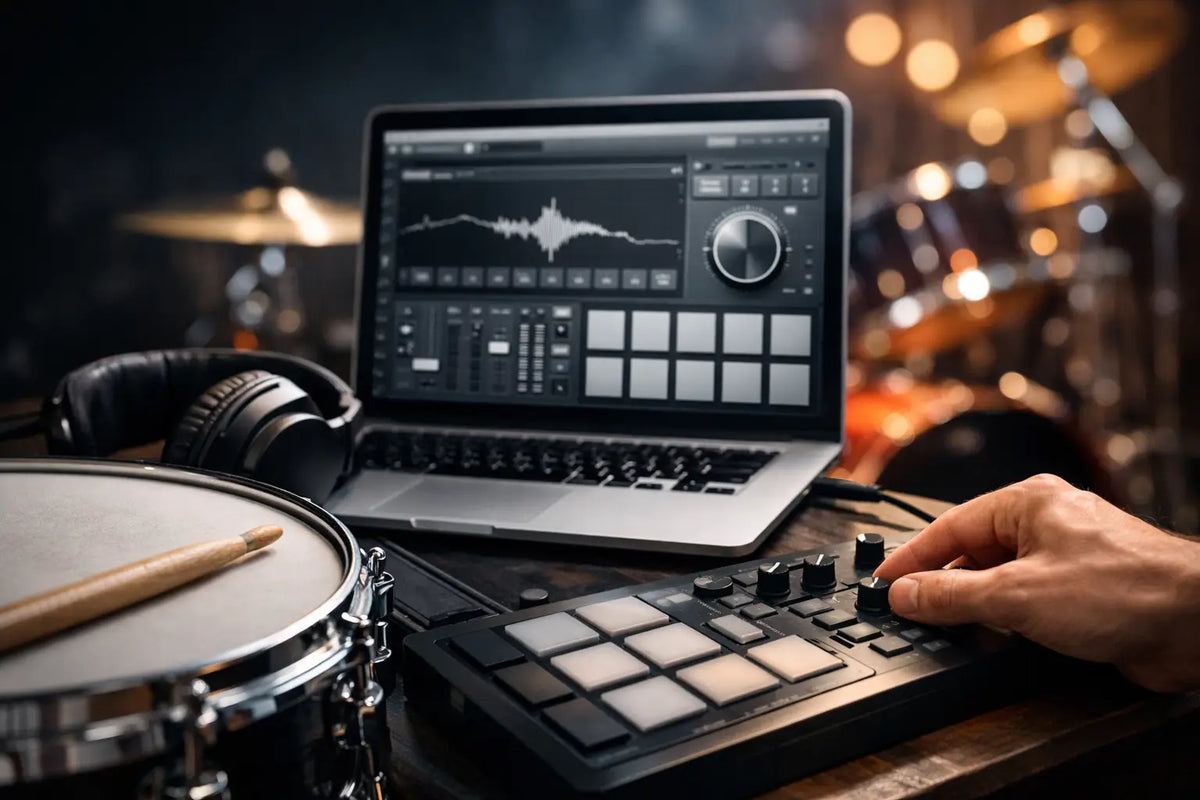
A kick can be clean, loud, and perfectly compressed yet still make a drop feel wrong. Usually, the problem is not the compressor. It is the note. When you tune drum samples with intention, the low end locks to the bass, snares carry more authority, and the entire groove feels like one record instead of a stack of unrelated sounds.
For club-focused electronic music, drum tuning is not a perfectionist ritual. It is a fast production decision that helps your track translate on monitors, headphones, and a loud system. The goal is not to force every drum into the key. The goal is to choose tuning that delivers weight, clarity, and the right energy for the arrangement.
Why Drum Tuning Changes the Whole Groove
Pitched drums occupy musical space, even when they sound mostly like noise. Kicks have a low-frequency fundamental. Toms can carry a very clear note. Cowbells, congas, rim shots, and metallic percussion often have strong resonances that either support the track or rub against it.
That friction is most obvious between the kick and bass. If your bassline is centered around F and your kick fundamental hangs around F#, the combination may feel unstable or overly thick. Sometimes that tension is useful, especially in tougher techno or bass house. More often, it costs you punch because the two sounds compete in the same low-end zone without reinforcing each other.
A tuned kit also makes processing easier. You do not need to EQ away as much energy when the source already works. Your limiter works less hard, the groove stays more defined, and you can get to a release-ready balance faster.
Start With the Track, Not a Tuner
Before reaching for a tuning plugin, identify the musical center of your track. In a simple Afro House or Melodic Techno arrangement, that may be the root note of the bassline. In Tech House, it could be the note that makes the bass groove feel resolved. If the track changes chords, focus on the root at the main drop or the section where the kick and bass need to hit hardest.
Then solo the kick with the bass. Ask a direct question: does the low end feel tighter when the kick plays, or does it seem to blur and lose impact? Your ears should make the final call. A tuner gives you a starting point, but it can misread short, transient-heavy audio or show a pitch that does not match what listeners perceive.
For a kick, use the tail rather than the initial click to find the fundamental. Loop a single hit, turn the level down slightly, and listen to the note that remains after the attack. If necessary, add a temporary low-pass filter to remove the click and make the body easier to hear. Remove the filter once you have made your decision.
Match, Relate, or Move Out of the Way
There are three reliable approaches to kick tuning. Matching the root note creates a direct, solid relationship with the bass and works well for modern house, EDM, and melodic records. Tuning to the fifth can retain harmonic connection while giving the bass more room. Moving the kick to another supportive note can work when a root-tuned kick is too boomy or simply does not carry the character you want.
Do not assume the root is always the winner. A kick tuned to the root may create excessive buildup around one frequency, particularly with sustained bass notes. A fifth or fourth can feel cleaner. It depends on the sample’s envelope, your bass patch, octave placement, and the system you are mixing on.
How to Tune Drum Samples in Your DAW
Most DAWs let you tune one-shots through a sampler transpose control, clip pitch control, or dedicated pitch-shifting plugin. The workflow is simple: determine the sound’s approximate note, calculate the distance to your target note, then transpose by semitones.
If a kick reads as E and the track centers on F, move it up one semitone. If you are moving more than three or four semitones, stop and listen critically. Large moves can shift the balance of attack and body, introduce artifacts, or make the kick feel unnaturally short or flabby. In that case, audition another sample instead of forcing the wrong one to fit.
A practical method is to duplicate the kick channel before committing. Keep one version at the original pitch and tune the duplicate in small semitone moves. Switch between them while the bassline plays. Level-match the channels so the louder version does not trick you into thinking it sounds better.
When using a pitch-shifter, check whether it changes duration. Some tools preserve the length, while others shorten a sample when pitching up and lengthen it when pitching down. Neither is automatically bad. A slightly shorter, higher-pitched kick might be exactly what a fast Tech House groove needs. Just make the choice deliberately.
Tune the Kick Before Layering It
If your kick has a separate click, top, or sub layer, tune the main body first. Once the fundamental works with the bass, add the supporting layers and check polarity, timing, and phase. A top layer usually does not need exact pitch matching, but it must reinforce the transient instead of softening it.
For sub layers, be more precise. A sub that is a semitone away from the kick can create wobble, inconsistent impact, and low-end movement that becomes obvious on large speakers. Try tuning it to the same note as the kick body, then test it an octave above or below if the combined sound gets crowded.
Which Drums Need Exact Tuning?
Not every sound deserves the same level of attention. Kicks, 808-style booms, toms, tuned percussion, cowbells, and resonant congas are high-priority sounds because their pitch is audible and they can interfere with the musical foundation.
Snares sit in the middle ground. A snare often has a tonal ring, but its noise component may be more important than its exact note. Tune a snare when it sounds noticeably sharp, dull, or disconnected from the record. In Melodic Techno, a snare or clap with a tonal body can add emotional lift when it supports the key. In rawer Techno, a slightly dissonant snare can add edge and tension.
Claps, shakers, hats, and noise-based percussion generally do not need key-based tuning. Still, a small pitch adjustment can improve their place in the groove. Pitching a clap down may add weight without more EQ. Pitching hats up slightly can add air and urgency. These are arrangement and tone choices, not rules of harmony.
Use Your Ears to Avoid the Common Tuning Traps
The most common mistake is tuning in solo and never returning to the full mix. A kick that sounds enormous alone may swallow the bass when everything plays. Always audition tuning changes in context, especially during the busiest part of the track.
Another mistake is chasing the exact reading on a tuner. Drum samples are not clean sine waves. A kick may display several notes depending on where the analyzer looks, and a pitch envelope can fall dramatically from attack to tail. Choose the note that produces the best relationship with the bass, not the neatest-looking meter.
Be careful with downward pitching, too. Lower often feels bigger at first, but it can remove transient definition and consume headroom. If your kick loses its knock after being tuned down, try a different sample with a shorter tail or a more defined attack. Source selection is faster than repairing a sound that was never right for the track.
Finally, do not retune an entire drum loop blindly. A loop may include kick, snare, percussion, and tonal texture that each react differently to pitch shifting. If the loop is central to the groove, major pitch changes can alter its timing and feel. Use it at its natural pitch when possible, or slice and treat the musical elements separately.
Build a Faster Drum-Tuning Workflow
Create a short habit: identify the track’s center note, audition your main kick against the bass, move it in semitone steps, then commit once the groove feels stronger. Check any sub layer next. After that, only tune other drums if their pitch is obvious or they are fighting the mix.
High-quality one-shots make this process much faster because they are cleanly recorded, consistently edited, and built for modern electronic production. Hot Grooves drum sounds are designed with that practical reality in mind: you should be spending your session arranging tension, movement, and impact, not rescuing weak source material.
The best test is simple. Bypass your tuning change after a few minutes of producing. If the drop loses weight, focus, or confidence when you return to the original sample, keep the tuned version. If you cannot hear a meaningful improvement, move on and protect the momentum of the track.
How to Design Bass House Drops That Hit Hard
Best Club Percussion Samples for Bigger Grooves