
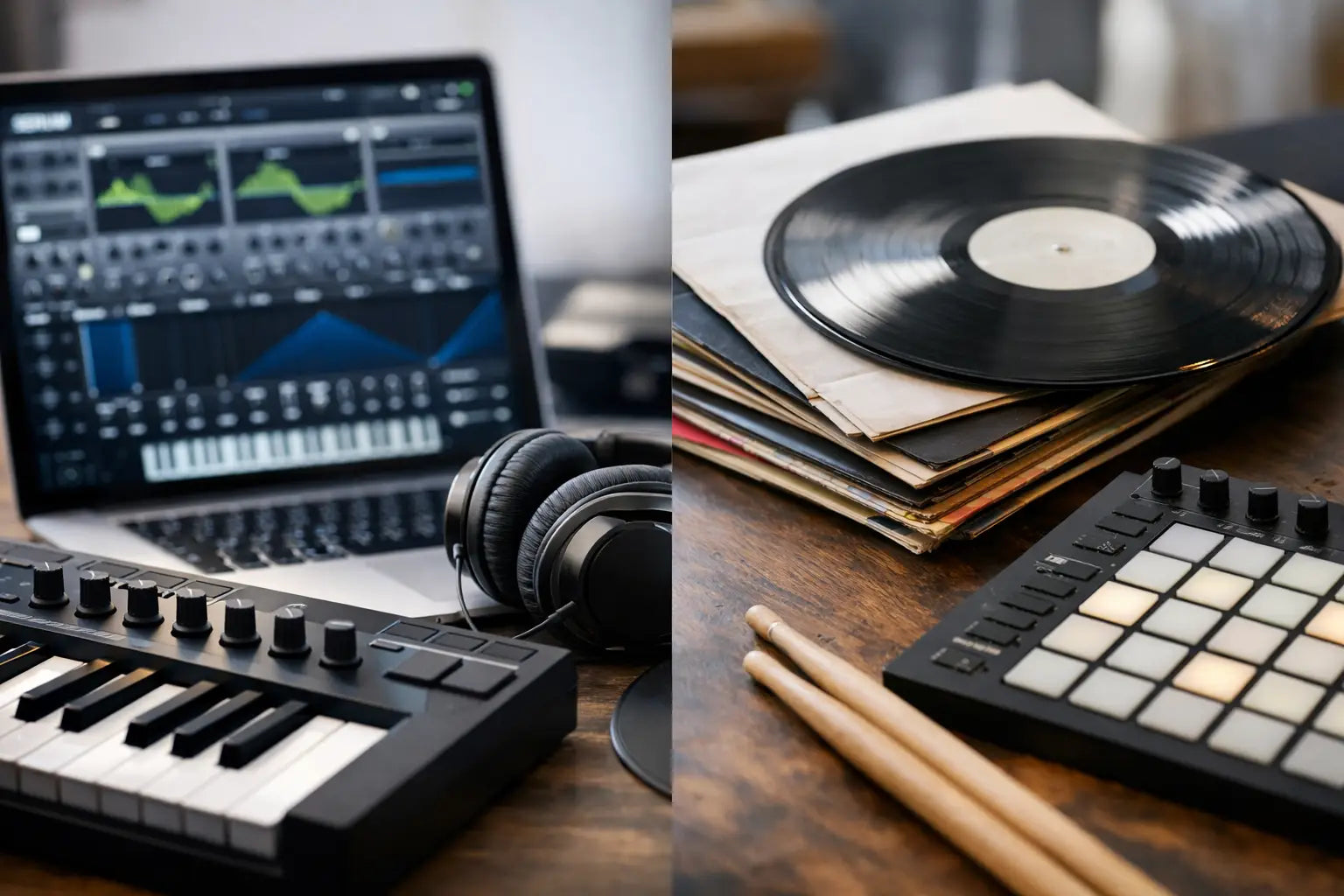
When a drop feels flat, the problem usually is not your limiter. It is the source. That is why the serum presets vs samples question matters more than most producers think. If you are making Afro House, Tech House, Melodic Techno, Bass House, or EDM, your sound selection shapes the track before mixing even starts.
A lot of producers treat presets and samples like competing options. They are not. They solve different problems, and the fastest producers know exactly when to reach for each one. If your goal is polished, club-ready records without wasting hours rebuilding sounds from scratch, you need to understand the role of both.
Serum presets vs samples: the real difference
A Serum preset is a patch loaded inside Xfer Serum. It gives you a playable, editable sound source. You can change the wavetable, envelopes, filter movement, macro assignments, and FX chain. That makes presets ideal when you want flexibility, musical control, and a sound that responds to MIDI.
A sample is rendered audio. That could mean a drum one-shot, vocal chop, bass loop, synth phrase, FX hit, percussion groove, or texture. Samples are immediate. You drag them in, shape them, and move on. There is less freedom at the source level, but the speed is hard to beat.
That trade-off is the whole story. Presets give you control. Samples give you instant results.
When Serum presets are the better choice
If you need the sound to follow your harmony, rhythm, or automation in a detailed way, presets usually win. A bassline in Tech House or a rolling arp in Melodic Techno often needs note-level control. You want to adjust decay, open the filter in the buildup, automate macro movement, or strip back FX so the sound sits around your kick and vocal.
That is where Serum presets pull ahead. They let you keep the musical idea while reshaping the tone for your track. You are not locked into one recorded phrase or one exact sound print. You can write your own MIDI, transpose freely, and make the patch work across different sections of the arrangement.
This matters even more if you already know the sound category you need. Maybe you need a tight pluck for an Afro House groove, a metallic lead for peak-time Techno, or a clean supersaw layer for EDM. Starting from a well-designed preset is often much faster than building the patch manually.
The catch is that presets still need a synth and a little decision-making. A preset can sound huge in solo and wrong in a full mix. You may need to simplify it, remove built-in reverb, or rebalance the top end. So presets are flexible, but they are not always instant.
When samples are the better choice
Samples shine when speed matters most and the part does not need deep synthesis control. Drums are the obvious example. A solid kick, clap, shaker loop, or percussion top line can move a track forward in seconds. The same goes for vocal phrases, impacts, risers, atmospheres, and groove loops that already carry the right tone and energy.
In club genres, a good sample often gives you the confidence of a finished sound right away. A well-processed clap or percussion loop already has the transient shape, texture, and genre identity you need. You do not have to build that from an initialized patch.
Samples are also strong when you want movement without extra programming. A textured synth loop, chopped vocal, or percussion stem can bring rhythm and detail into the session quickly. If you are working against a deadline, that speed is not a luxury. It is workflow.
The limitation is obvious. Samples are less editable at the source. You can warp, pitch, slice, layer, and process them, but you cannot fully reprogram how the original sound was built. If the sample almost fits, you may spend time forcing it into place.
Serum presets vs samples for workflow
For most producers, this is not really a purity debate. It is a workflow decision.
Use presets when the musical part is still being written. If you are composing the bassline, lead, stab progression, or chord riff, a Serum preset keeps the idea fluid. You can change notes, groove, articulation, and automation without rebuilding the sound every time.
Use samples when the role is already clear and you just need impact. If the track needs a sharper clap, a stronger uplifter, a vocal texture, or a groove layer that lifts the drums, samples get you there faster.
The fastest sessions usually combine both. You might build the core musical identity with presets, then use samples to add finish, character, and momentum. That is a smarter way to think about arrangement because it mirrors how strong electronic tracks are actually built.
Which is better for specific electronic genres?
Genre matters. In Afro House, groove and percussion detail often come from samples, while key melodic hooks and bass parts benefit from presets because they need to follow the harmony cleanly. In Tech House, drums and vocal chops often arrive through samples, while bass stabs and synth riffs may start with Serum presets for tighter MIDI control.
In Melodic Techno, presets are especially useful because expressive arp lines, pads, and leads usually need automation and note-based variation. But samples still play a big role in transitions, texture, impacts, and background rhythm. In EDM and Bass House, the split is similar. Presets handle the playable synth identity, while samples bring energy, weight, and arrangement support.
So if you are asking which format is better for your genre, the honest answer is that each format tends to dominate different parts of the same track.
Cost, originality, and mix control
Some producers assume presets are more original because they can be edited, while samples are more generic because they are audio. That is too simple.
A preset used straight out of the box can sound just as recognizable as an overused loop. And a sample can become highly original once it is chopped, layered, pitched, stretched, and processed in context. Originality comes more from your decisions than the format itself.
Mix control is another factor. Presets let you remove built-in width, reduce effects, and shape the source before it hits the channel. That can make them easier to fit in dense productions. Samples, on the other hand, often arrive already polished, which is great for speed but can limit how much you can separate the baked-in character from the sound.
If your mixdowns often feel crowded, presets may give you more room to tailor the source. If your problem is finishing tracks, samples may be the better answer because they reduce decision fatigue.
How experienced producers actually use both
Most serious producers do not choose a side. They assign a job to each sound source.
A common approach is to start with drums and groove from samples because that sets the energy fast. Then they write bass, chords, leads, or plucks with Serum presets so the record has a musical core that can evolve. After that, they add sampled vocals, FX, fills, and transitional elements to make the arrangement feel finished.
That approach keeps the session moving. It also avoids a common trap: spending two hours designing a synth patch for a part that would have worked better as a loop, or forcing a loop into a role that really needed MIDI control.
If you are building a toolkit for faster production, you do not need to think in terms of either-or. You need the right assets for the right stage of the process. That is why producer-focused catalogs that cover both samples and Serum presets are useful. You can move from idea to arrangement without switching your whole workflow. Hot Grooves is built around that exact need.
A simple way to decide faster
Ask one question before choosing the sound source: do I need to play this, or do I need to place this?
If you need to play it, edit the notes, automate the tone, and make it react to your harmony, start with a preset. If you need to place it into the track, grab the vibe instantly, and support the groove or arrangement, start with a sample.
That one filter will save you a lot of wasted time. It also keeps your sessions focused on output, not endless option hunting.
The producers who finish the strongest tracks are rarely the ones doing everything from zero. They are the ones choosing sounds with intent, building around quality sources, and knowing when control matters more than speed - and when speed is exactly what the track needs.
Release Ready Techno Sounds That Hit Hard
How to Finish Tracks Faster in Ableton