
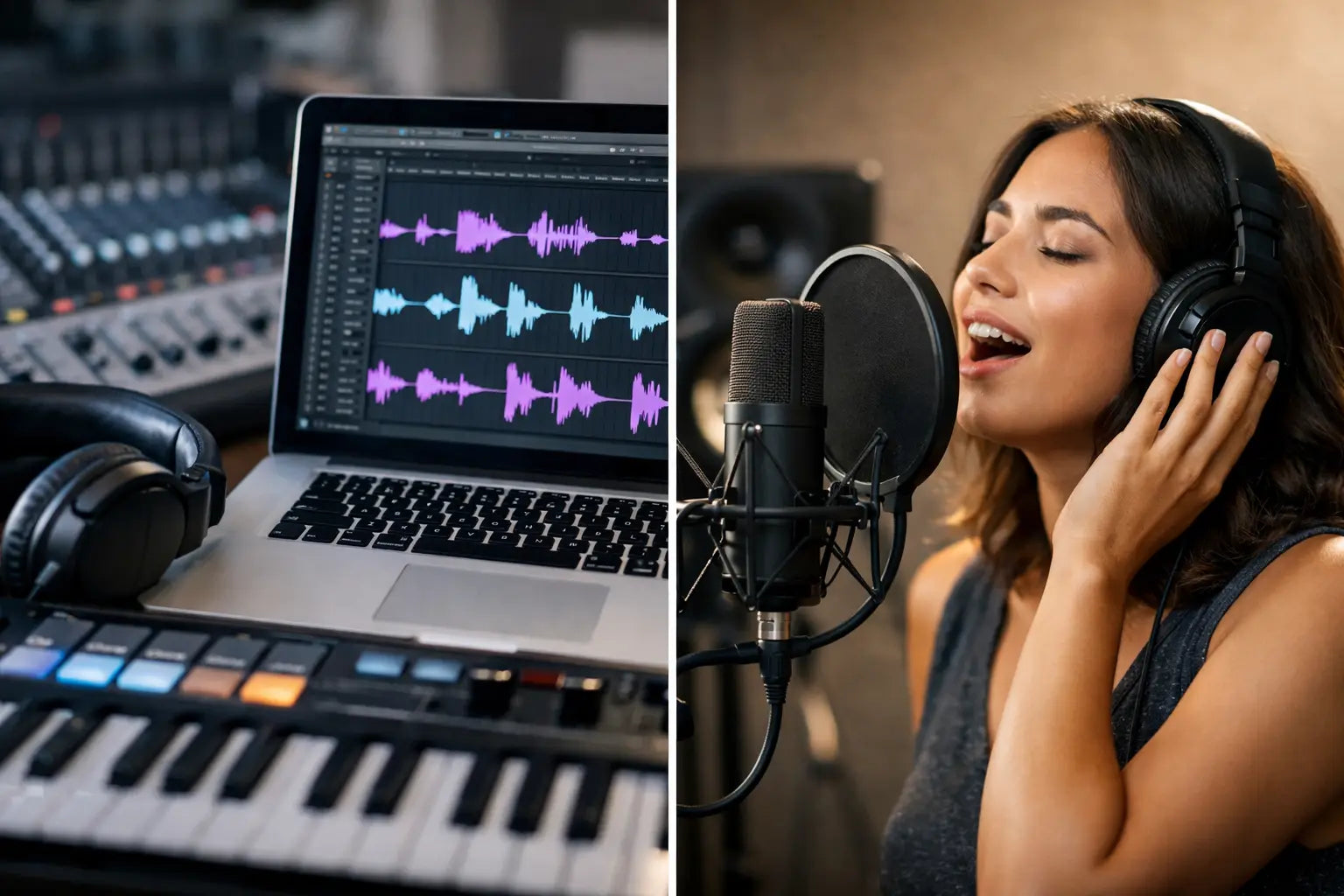
A four-word acapella can turn a drop into a moment. A heavily processed vocal chop can make the same drop feel like an instrument. That is the real decision behind vocal chops versus acapellas: are you looking for a recognizable vocal statement, or a rhythmic, melodic texture that locks into the groove?
For electronic producers, both can add identity fast. But they perform different jobs in an arrangement, demand different processing, and can either elevate a track or overcrowd it. Choosing the right source before you start arranging saves time and gets you closer to a polished, release-ready result.
Vocal Chops Versus Acapellas: The Core Difference
An acapella is an isolated vocal performance. It may be a full verse, hook, chorus, spoken phrase, ad-lib, or short lyrical line, but the defining feature is that it is presented as a vocal performance without instrumental backing. The listener can understand the words, recognize the delivery, and connect with the vocalist's personality.
A vocal chop is a fragment of a vocal that has been cut, rearranged, pitched, stretched, layered, or otherwise transformed into a musical element. The source might have started as an acapella, but the final result is usually less about lyrical meaning and more about rhythm, melody, energy, and tone.
Think of an acapella as a featured voice in the track. Think of a vocal chop as part of the production itself, closer to a synth lead, stab, or percussion layer.
That distinction matters because each option changes how you build the rest of the record. A full vocal phrase tends to lead the arrangement. Chops give you more freedom to create a hook without asking every other element to move out of the way.
When an Acapella Is the Better Choice
Use an acapella when the vocal needs to deliver a clear emotional message. A memorable lyric can give a Tech House track attitude, add tension to a Melodic Techno breakdown, or create the repeatable hook that makes an Afro House record stay in a listener's head.
Acapellas are especially effective when your instrumental already has space. If the drop is built around a focused bassline, a clean drum groove, and one or two supporting musical ideas, a strong vocal phrase can become the center of attention without fighting the mix.
They also help when the arrangement needs direction. Producers often finish an eight-bar loop, then struggle to turn it into a complete track. An acapella naturally suggests structure: introduce a phrase, answer it with the groove, repeat it with variation, then hold back the strongest line for the peak section.
The trade-off is that acapellas are demanding. Words occupy attention. If your track has a busy lead, an aggressive bass riff, dense percussion, and a vocal all competing in the same range, the listener will not know what to follow. You may need to simplify the instrumental, automate elements out of the way, or reserve the vocal for specific moments.
How to Make an Acapella Sit in a Club Mix
Start by setting the vocal level against the drums and bass, not against a soloed instrumental. A phrase that sounds huge in headphones can disappear on a crowded dance floor once the kick and low end enter.
Clean up unnecessary low frequencies with EQ, then control harsh consonants and sharp top-end energy with de-essing or dynamic EQ. Compression can keep the performance stable, but avoid flattening every bit of movement. A vocal that is too controlled can lose the human tension that made it compelling in the first place.
Timing matters as much as tone. Even a professionally recorded acapella may need small warp, stretch, or timing adjustments to sit inside your groove. In House and Tech House, a phrase that lands slightly behind or ahead of the beat can change the entire feel. Trust the pocket, not just the grid.
Use delay and reverb as arrangement tools. Keep a vocal relatively dry and upfront when you want intimacy or authority. Throw a delay on the last word of a phrase to create momentum into the next bar. Expand the reverb in a breakdown, then pull it back before the drop so the drums hit with impact.
When Vocal Chops Give You More Control
Vocal chops are ideal when you want vocal character without committing to a literal lyrical message. They can make a simple two-chord progression feel more musical, fill the space between drum hits, or create a recognizable drop hook from a single syllable.
This is why chops work so well in Bass House, EDM, Tech House, and modern Melodic Techno. They provide the familiarity of a human voice while leaving room for the listener to focus on the groove, the bassline, and the energy of the record.
A chop can also solve a common production problem: the instrumental is technically solid, but it has no signature element. Rather than adding another synth preset, try taking one vocal sound and writing a short rhythmic motif. The organic texture often gives the record the contrast it needs.
Chops are not automatically easier, though. Random slicing rarely sounds intentional. The best vocal chop hooks are written like melodies, with a clear rhythm, a limited note set, and enough repetition for the ear to recognize the phrase.
Building a Vocal Chop Hook That Feels Intentional
Begin with a source that has character. Breath, rasp, a sharp consonant, a sustained vowel, or a distinctive inflection can all become useful material. You do not need a long lyric. In fact, one or two strong syllables are often enough.
Slice the phrase into manageable pieces, then load them into a sampler. Play the fragments rhythmically before you start adding heavy effects. If the pattern does not work dry, processing will not fix the composition.
Keep the first pass simple. Use a small group of notes that fits your chord progression or bassline. Pitching chops too widely can create unnatural artifacts, which may be exactly the sound you want in a high-energy EDM drop, but it can feel out of place in a deeper Afro House production.
Once the hook works, add movement with formant shifting, saturation, filtering, stereo width, delay, and reverb. Formant control is particularly useful because it changes the perceived size and character of the voice without forcing a major pitch shift. A pitched-up chop can feel bright and urgent; a lower, formant-shifted chop can add weight and attitude.
Do not process every chop identically. A dry central chop paired with wider, wetter response chops creates depth while protecting the center of the mix. This call-and-response approach is effective in drops because it leaves space for the kick, snare, and bass to keep their impact.
Choose Based on the Job in Your Arrangement
The most practical way to choose between vocal chops and acapellas is to ask what your track is missing.
If it needs a lyric, a story, a recognizable phrase, or a human focal point, reach for an acapella. Build the arrangement around it and let the performance earn its space.
If it needs rhythm, melodic texture, ear candy, or a unique drop motif, use vocal chops. Treat them like an instrument and write them into the groove rather than placing them on top of it.
You can also use both in the same production. A short acapella phrase can establish the track's message in the intro or breakdown, while chopped fragments of that phrase become the drop hook. This creates continuity without repeating the full lyric until it loses impact.
For example, a spoken vocal line can set a darker mood before a Techno build. After the tension peaks, take the final word, slice it into a syncopated pattern, and pitch it across a few notes in the drop. The audience recognizes the vocal identity, but the energy shifts from listening to moving.
Source Quality and Licensing Still Matter
Whether you use an acapella or chop it beyond recognition, start with a clean, properly recorded source. Excessive noise, uncontrolled sibilance, poor tuning, and baked-in effects limit how far you can process the sound before it starts to feel cheap or brittle.
Equally important, know what your license allows. Royalty-free vocal content is built for producers who want to release music without chasing separate clearance for every session. But royalty-free does not mean careless use. Read the terms for the pack, avoid presenting the raw vocal as your own standalone product, and transform the material enough to give your track its own identity.
A focused vocal collection can speed up this entire stage of production. At Hot Grooves, genre-specific vocal tools are designed to give producers usable tone, character, and club-ready inspiration without losing hours to source hunting or vocal cleanup.
Avoid the Most Common Vocal Mistakes
The biggest mistake with acapellas is forcing them into an arrangement that was never built to support a lead vocal. If the instrumental is already saying everything, do not stack a lyric on top just because the vocal sounds good in isolation.
With chops, the most common mistake is using them as decoration without a musical purpose. If the pattern is not part of the rhythm or hook, it can sound like a preset being triggered at random. Give the chop a defined role: answer the lead, reinforce the offbeat, fill the end of a phrase, or carry the drop melody.
Also watch your frequency balance. Both full vocals and chops can build up quickly in the upper mids, especially after saturation, distortion, and layered effects. Check the mix at low volume. If the vocal remains clear without feeling sharp, you are close.
The stronger option is the one that gives your track a role to play. Use an acapella when the record needs something to say. Use vocal chops when the record needs something to make people move.
Can Loops Be Copyrighted? What Producers Need to Know
Tech House Production Starts With the Groove