
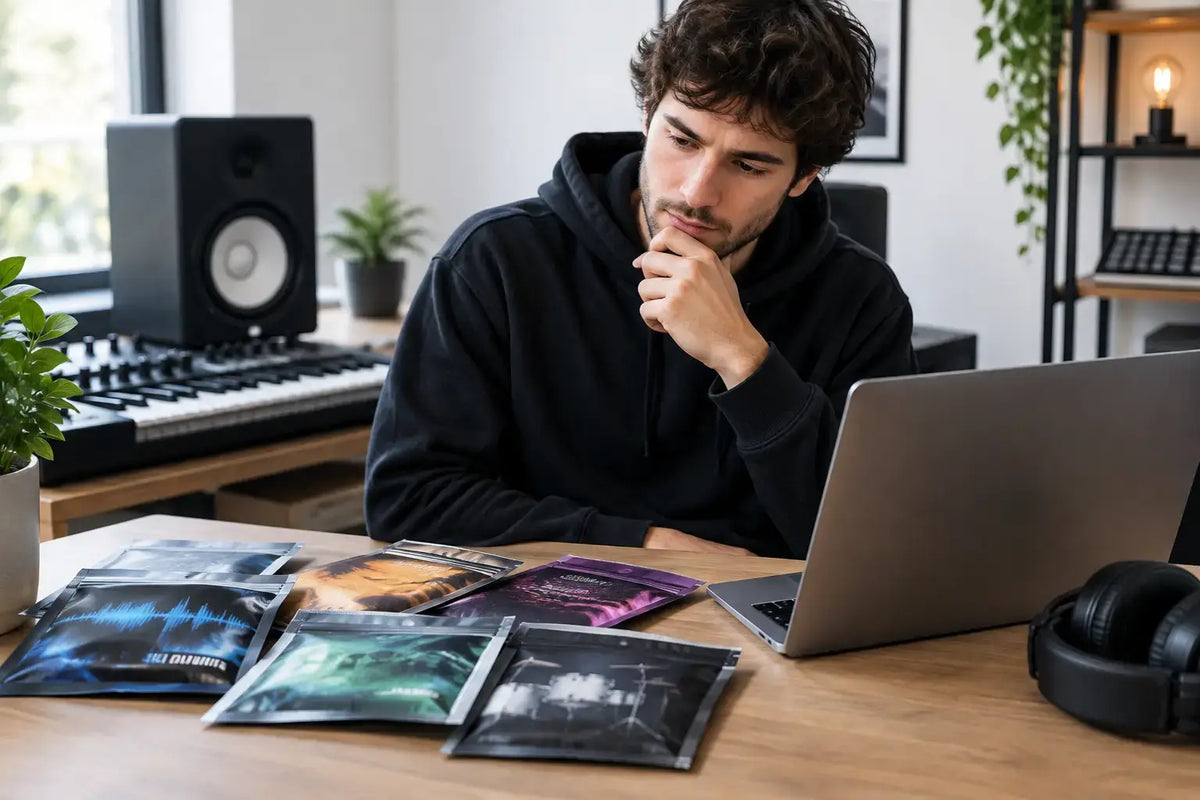
A free kick loop can be the sound that gets a stalled Tech House idea moving again. It can also become another forgotten folder on your hard drive. So, are free sample packs worth it? Yes, when you treat them as production tools rather than random downloads. The right free pack can sharpen your workflow, reveal a new sound designer, and put genuinely usable drums, vocals, or presets within reach. The wrong one just creates noise in your library.
For electronic producers, the value is not about whether the files cost $0. It is about whether they help you finish stronger tracks faster.
What free sample packs are actually good for
Free packs work best at the start of a relationship with a sound source. A producer may download a small collection of Afro House percussion, melodic vocal chops, or Serum presets to hear how the sounds translate in a real session. That is more useful than trying to judge a pack from a product image or a short audio demo alone.
A quality free pack gives you a low-risk way to test three things: the sound selection, the technical standard, and the genre knowledge behind it. Do the drums hit with enough weight without swallowing the mix? Are the loops cleanly edited and labeled with BPM and key? Do the sounds feel like they belong in current club records, or do they feel generic and dated?
When the answers are right, a few free files can solve a very real production problem. Maybe your Techno arrangement needs one more tension-building synth texture. Maybe your Bass House drop lacks a vocal phrase that creates a memorable hook. Maybe you are tired of programming the same percussion pattern every time you open your DAW. Free samples can provide the spark without pulling you into an hour of sound design.
They are also useful for building habits. Newer producers can study how professionally prepared loops are arranged and processed. More experienced producers can use one-shots as starting points for layering, resampling, and creative processing. Either way, the pack earns its place when it helps you make a decision and move the record forward.
Where free sample packs fall short
Free does not automatically mean poor quality. But it often means less depth. Most free packs are designed as a preview, a promotional offer, or a small utility collection. You may get a handful of strong sounds, but not the full palette needed to build an entire track with a consistent identity.
That limitation becomes obvious when you are deep into a project. A free pack might contain a great clap, two solid tops, and one usable bass loop, yet offer no matching fills, alternate drum variations, MIDI, or complementary musical content. You can still make it work, but you will likely spend more time searching across other folders to complete the idea.
There is also the issue of overuse. Popular free packs can land in thousands of producer libraries. If you drag in an untouched vocal phrase or signature loop, there is a chance another producer has done the exact same thing. This is not a reason to avoid free sounds, but it is a reason to produce with intention. Chop the vocal, change the rhythm, repitch the loop, resample it, or layer it with your own elements.
The biggest drawback is often inconsistency. Free packs from unknown sources may have uneven levels, vague naming, poor loop points, cluttered processing, or unclear usage rights. A distorted file, an awkwardly cut loop, or a sample with questionable licensing can cost more time than it saves. That is the opposite of what a production library should do.
How to tell if a free pack is worth downloading
Before adding another ZIP file to your collection, look for signs that it was made by producers who understand how dance music gets built. A worthwhile pack should be clear about format, genre, BPM range, key information where relevant, and licensing. These details are not boring admin. They tell you whether the content will fit into a working session without friction.
Listen for mix-ready quality, not just flashy sound design. A huge demo can sound impressive in isolation but be difficult to place in a track. Focus on whether the kick has a usable transient, whether percussion sits naturally around the mids, whether bass sounds have controlled low end, and whether vocals have enough clarity to process your own way.
Genre focus matters too. Electronic music is full of small details that separate a convincing record from a broad imitation. Afro House percussion needs movement and character. Melodic Techno synths need emotional tone without crowding the arrangement. Tech House drums need swing, punch, and space for the groove to breathe. A targeted pack usually gets you closer to that sound faster than a massive, unfocused folder labeled "EDM Samples."
Finally, check the source. A free pack from a producer-led brand with a catalog built around club genres is more likely to be organized and commercially usable than a random download collected from an old forum. Hot Grooves, for example, uses free samples as a way for producers to hear the same genre-focused quality found across its premium collections.
Make free sounds feel like your sounds
The fastest way to get value from a free sample pack is to avoid using it passively. Do not build your entire arrangement around the first loop that sounds good. Treat that loop as raw material.
Start by auditioning only what fits the track in front of you. If you are making a 126 BPM Afro House groove, filter the folder by tempo and choose percussion that supports the rhythm already working. If you are writing a Melodic Techno breakdown, audition pads, atmospheres, and vocal textures before reaching for a full musical loop that could take over the composition.
Then commit to changes. Slice a percussion loop into hits and create your own pattern. Transpose a vocal chop into a new key. Print a Serum preset to audio, reverse part of it, and automate a filter into the transition. Layer a free clap with a short noise burst and a tighter transient from your own library. Small moves make widely available material feel specific to your record.
This approach also protects your mix. Instead of forcing a full loop into the project because it sounds polished on its own, take the elements that serve the arrangement. A shaker pattern may work while the included kick does not. A vocal tail may be perfect even if the main phrase is not. Your job is not to use every file. Your job is to choose the sounds that create momentum.
Free packs versus paid packs: the real trade-off
The choice is not free or paid. Most productive sample libraries use both.
Free packs are excellent for discovery, quick inspiration, and filling occasional gaps. They let you test a sound designer’s taste before committing. They can also be enough when you need one extra riser, a fresh top loop, or a handful of new presets to restart your creativity.
Paid packs become more valuable when you need depth and consistency. A well-built premium collection gives you variations that work together: drums designed for the same sonic space, basses that complement the musical loops, vocals that match the genre, and enough options to develop an idea from intro to final drop. That consistency reduces browsing time, which is often the hidden cost of relying only on scattered free downloads.
For producers releasing music regularly, this matters. If you are trying to finish demos for labels, build a DJ-ready set, or maintain a weekly content schedule, a focused paid pack can be cheaper than losing several sessions to searching, repairing, and replacing weak sounds. You are paying for selection, organization, and a faster route to a competitive result.
A smarter way to build your sample library
Keep your free collection curated. Download fewer packs, but actually learn what is inside them. Tag the sounds you use, delete duplicates, and move your favorite one-shots into a dedicated folder in your DAW browser. A small library you know well is more powerful than 100 gigabytes of files you never audition.
It also helps to organize by function, not only by pack name. Separate your go-to kicks, claps, percussion, bass one-shots, vocal chops, FX, and presets. When inspiration hits, you should be able to find a tool in seconds instead of scrolling through endless folders.
Free sample packs are worth it when they earn a role in that system. Download with a specific purpose, test the sounds in a real project, and keep only what improves your workflow. One great shaker, vocal hook, or bass preset that helps you finish a track is worth far more than a hard drive full of untouched freebies.
AI Assisted Sampling for Faster Club Tracks
Sample Bundles vs Individual Packs Compared