
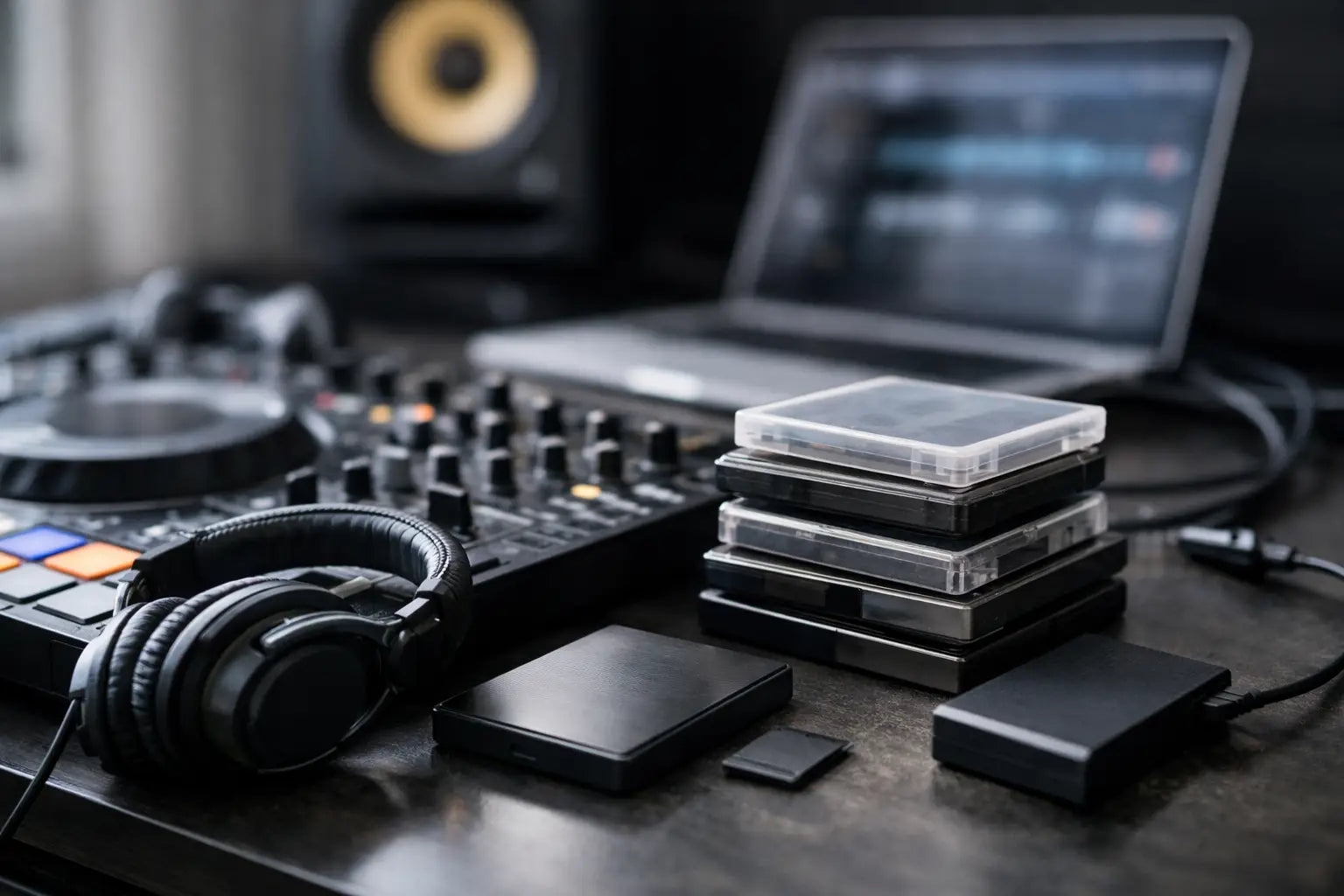
A weak intro drum loop can kill a club idea before it even gets past bar eight. That is why finding the best sample packs for DJs is less about collecting more sounds and more about choosing the right source material for the way you actually work. If you DJ, produce, or do both, the packs that matter most are the ones that drop straight into your session, hold up on a loud system, and save you from fixing bad source audio later.
For club producers, a good sample pack is not just a folder of WAV files. It is a shortcut to better groove, faster arrangement, and a cleaner mix. The catch is that not every pack labeled for DJs is useful in real production. Some are stuffed with generic loops, overprocessed vocals, or sounds that feel dated the second you audition them.
What makes the best sample packs for DJs?
The best packs do three things well. First, they sound current inside a specific lane, whether that is Afro House, Tech House, Melodic Techno, Techno, Bass House, or EDM. Second, they are organized for speed, with clearly labeled tempos, keys, and file types. Third, they give you usable material at multiple levels, from full loops for sketching to one-shots and presets for custom work.
That last point matters more than most producers admit. A full drum loop can get your session moving fast, but if the pack does not also include the individual kicks, tops, percussion, and fills, you will hit a wall when you want to make the groove your own. The same applies to synth content. Presets are useful, but only if the underlying MIDI ideas and audio references are strong enough to support a finished track.
12 best sample packs for DJs by use case
1. Tech House drum packs for instant groove
If your tracks live or die on swing, low-end punch, and tight percussion placement, Tech House drum packs are usually the best place to start. Look for packs with dry kicks, crisp claps, top loops that are not overly saturated, and percussion one-shots you can rearrange quickly. Packs that lean too hard on full loops can make everything sound preset.
The strongest Tech House packs give you enough loop content to sketch fast, but also enough clean one-shots to rebuild the groove around your own bassline.
2. Afro House packs with musical percussion
Afro House sample packs can be a huge win for DJs who want movement and identity in the groove. The best ones balance live-feeling percussion, deep drums, tonal rhythm elements, and melodic hooks without turning into a cluttered arrangement kit.
This is one category where quality control matters a lot. Great Afro House packs feel alive and spacious. Weak ones sound busy, stiff, or too polished to breathe. If the percussion does not naturally lock with a kick and sub, it will cost you time.
3. Melodic Techno packs for emotional hooks
Melodic Techno works when the atmosphere, synth tone, and rhythmic tension all support each other. A strong pack in this lane should include more than cinematic pads. You want focused arps, driving bass material, sequence-ready percussion, risers that do not feel cheesy, and presets that still leave room for your own automation.
The trade-off here is obvious. Packs that sound huge on first listen can also be too pre-built, which makes it harder to create a track that feels like yours. The better choice is usually a pack with restrained but polished source sounds.
4. Techno packs built for pressure, not noise
There is a difference between hard-hitting and harsh. The best Techno packs for DJs deliver drums and textures that feel powerful on big systems without wrecking the top end. Focus on transient quality, low-end control, and percussion that creates tension without becoming static.
If every loop is fully crushed and every effect is exaggerated, your mix will fight you from the start.
5. Bass House packs with clean low-end design
Bass House needs impact, but it also needs space. The best packs in this category usually combine punchy drums, aggressive bass one-shots, growls, stab loops, and transition effects that fit modern club arrangements. Serum presets can be especially useful here, since a strong patch gives you flexibility without making you build everything from zero.
The mistake many producers make is choosing packs with flashy bass demos but weak drums. In club music, the drums still carry the record.
6. EDM packs for big arrangement moments
If you are writing crossover records, festival drops, or vocal-driven club tracks, an EDM-focused sample pack can speed up almost every stage of production. Good packs offer punchy drums, build tools, leads, chords, impacts, and vocal chops that sit in a commercial mix.
Just be selective. Some EDM packs are too broad, which means they do many things decently but nothing exceptionally well.
7. Vocal packs that actually fit modern club records
Vocals are one of the fastest ways to move from loop sketch to finished idea. The best vocal packs for DJs include dry and wet versions, clear key labeling, and phrases that feel modern without sounding overused. Short hooks, spoken textures, ad-libs, and chopped phrases often give you more mileage than full toplines.
This category is all about restraint. A recognizable vocal style can help, but if the content is too specific, your track can feel boxed in.
8. Percussion packs for better movement
A dedicated percussion pack is one of the smartest buys if your tracks feel static. Shakers, rides, hats, congas, rims, fills, and groove layers can completely change how your drums move. For DJs who produce, this matters because movement is what keeps a tool track useful across six minutes, not just in a 15-second preview.
9. One-shot packs for producers who like control
Some DJs prefer to build everything from scratch once the idea is there. In that case, one-shot packs are often more valuable than loop-heavy collections. Kicks, snares, claps, hats, percussion hits, stabs, FX hits, and bass shots give you more control over arrangement and mix decisions.
The process is slower upfront, but the results usually feel more personal.
10. Starter bundles if you need range fast
A bundle makes sense when you are building a library from zero or covering multiple genres. The best bundles are curated, not random. You want a clear spread of drums, synths, vocals, percussion, and presets that complement each other across club-focused styles.
This is one place where shopping by workflow beats shopping by hype. A smaller, better-organized bundle often outperforms a giant library full of filler.
11. Free sample packs for testing quality
Free packs are useful, but only as a quality check. They can show you how a brand records, processes, labels, and organizes its content. That is valuable. What free packs usually do not provide is enough depth to carry multiple finished tracks.
Still, if a free pack already sounds mix-ready and genre-accurate, that is a good sign the paid catalog is worth your time.
12. Producer-led packs with a clear genre edge
This is less a format and more a buying rule. Packs built by active producers tend to feel better in real sessions because the sounds are made with arrangement, DJ testing, and current references in mind. That often means tighter low end, more useful drum layering, better key choices, and fewer novelty sounds that never make it into a track.
That is also why focused catalogs often beat giant marketplace libraries. If you make club music, specialized sources like Hot Grooves usually make decision-making easier because the sounds are built around current electronic genres instead of trying to serve everybody at once.
How to choose the right pack for your workflow
Start with the bottleneck in your sessions. If your drums always take too long, buy drum-first packs. If your grooves are fine but your tracks lack identity, look at vocals, melodic content, or presets. If you finish very few ideas, choose packs with construction-friendly loops that help you get from blank project to working arrangement fast.
Genre fit matters, but format fit matters just as much. A bedroom producer working quickly in Ableton might get more value from loops and MIDI. A more advanced producer may want mostly one-shots and Serum presets. Neither approach is better. It depends on how fast you need results and how much customization you want.
Red flags to avoid when buying sample packs
If the demos sound exciting but the core drums are buried under mastering-style limiting, be careful. If the folder structure is messy, file names are vague, or keys and tempos are missing, expect friction. If every sound is drenched in effects, you may be paying for polish that falls apart once you try to fit it into your own mix.
Another red flag is genre labeling that is too broad. A pack that claims to cover Tech House, Afro House, Techno, Melodic Techno, and EDM all at once usually lacks the detail that makes any one of those styles convincing.
Why the best sample packs for DJs save more than time
Time is the obvious benefit, but the bigger win is consistency. Better source sounds lead to better decisions. Your low end comes together faster. Your groove feels stronger earlier. You spend less energy repairing weak drums or replacing filler loops, and more energy finishing records that actually stand up in playlists, sets, and promo submissions.
That is what separates a decent pack from one you keep using. The best sample pack is not the one with the biggest folder count. It is the one that helps you get to a club-ready result without second-guessing every sound you load.
If your tracks are close but not quite landing, start upstream. Better samples will not write the record for you, but they will make it a lot easier to hear where the record wants to go.
Techno Rumble Kick Samples That Hit Hard
Release Ready Techno Sounds That Hit Hard