
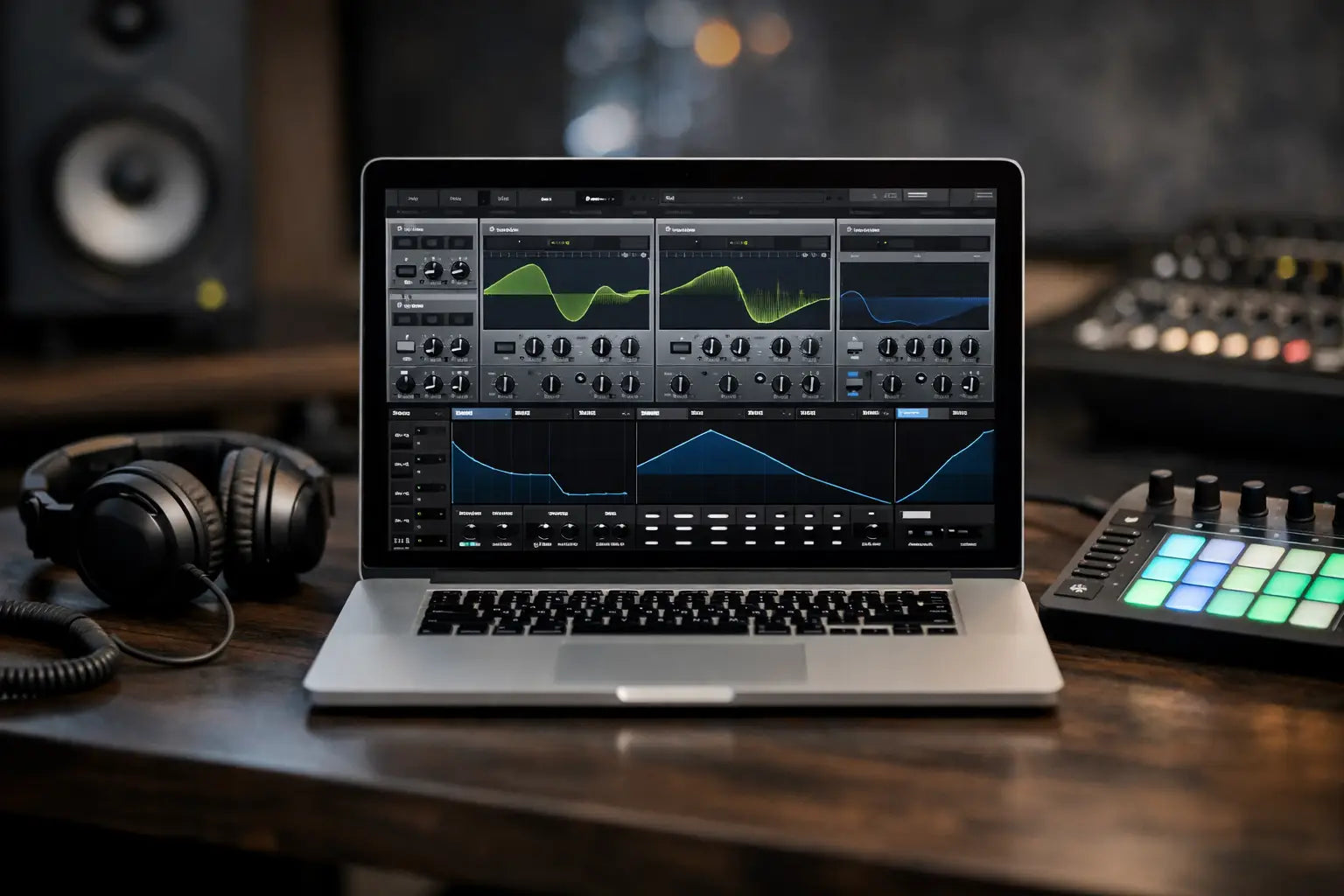
The difference between a bass house drop that hits and one that folds usually starts before the first note is written. If your sound source is weak, muddy, or too generic, no amount of post-processing will fully save it. That is why the right serum presets for bass house matter so much - they do more than speed up workflow. They give you a stronger starting point, which means less fixing, less second-guessing, and more time making records that actually move.
Bass house is unforgiving. The bass has to feel aggressive without swallowing the kick. The leads need attitude without turning brittle. The top layer has to cut in a busy club mix, but the groove still needs space to breathe. Good presets help with all of that, but only if they are built for the genre instead of just labeled for it.
What makes serum presets for bass house actually useful
A solid bass house preset is not just loud or distorted. It is shaped around the way the genre works. That usually means a clear low-mid focus, enough movement to keep repeated patterns alive, and a harmonic profile that sounds dirty in a controlled way. You want weight, but you also want definition. If the preset sounds huge in solo and disappears once the drums come in, it is not doing the job.
The best Serum presets for bass house also leave room for arrangement. Some sounds are over-designed, packed with modulation, stereo tricks, and effects that feel impressive for ten seconds and unusable for a full track. In real production, a strong preset should give you impact while still letting you shape fills, automate intensity, and build variation across the drop.
That balance is what separates producer-built tools from filler content. In bass house, a preset needs to work not only as a sound, but as a usable musical part.
The core preset types every bass house producer needs
If you are building a serious bass house folder, variety matters more than sheer quantity. Fifty nearly identical wobble basses will slow you down. A smaller set of well-designed sounds will get you to a finished track much faster.
Main bass presets
This is the center of the record. Your main bass preset needs enough character to carry the drop, but it also has to stay tight rhythmically. Plucks, talking basses, reese-style growls, and mid-heavy stabs all have a place here, depending on whether your track leans more toward UK-inspired swing, festival energy, or a tougher club angle.
A good main bass preset should respond well to velocity, macro automation, and note length. Bass house relies on phrasing as much as sound design. If the preset only works on one static MIDI pattern, it will become limiting fast.
Sub-support presets
Not every bass house preset needs to cover the entire frequency range. In fact, trying to make one patch do everything often creates a messy low end. Clean sub-support presets matter because they let you pair movement and attitude in the mids with consistency underneath.
Sometimes the best move is splitting the role - one preset for the talking or distorted character, another for solid low-end support. That gives you more control when the kick and bass start competing.
Top bass and stab layers
A lot of modern bass house drops get their impact from layers above the core bass. These can be noisy stabs, metallic transients, FM-driven clicks, or bright synth textures that add edge to the rhythm. They are easy to overlook, but they often create the part of the drop people actually remember.
The trade-off is harshness. If these presets are too bright or too wide, they can wreck your mix quickly. The best ones feel sharp without taking over the whole track.
FX and transition presets
Risers, downers, tonal impacts, and automation-ready sweep presets are not the glamorous part of a pack, but they keep energy moving. In bass house especially, transitions have to feel tight and intentional. A drop can have great sounds and still feel flat if the build and turnaround sections are weak.
How to choose the right Serum presets for your workflow
Not every producer needs the same type of pack. If you write fast and arrange around loops, you will probably want presets that hit hard with minimal tweaking. If you enjoy customizing patches, a cleaner and more flexible bank might be better.
The key question is simple: do the presets help you finish music faster without boxing you into one exact sound? That is the sweet spot.
If you are shopping for Serum presets for bass house, listen for three things. First, does the sound already sit in a believable genre lane? Second, does it still have room for your own processing and arrangement choices? Third, are the macros actually useful, or are they there just to make the product page look better?
Useful macros change tone, movement, filter shape, width, or distortion amount in a way that helps arrangement. They should make it easier to go from intro to build to drop variation without rebuilding the patch from scratch.
Why genre-focused presets beat generic EDM banks
Generic EDM preset packs usually promise everything and deliver a little of nothing. You get some big supersaws, a few random basses, and a handful of effects that do not really connect to a current production style. That might be fine if you are sketching ideas, but it is not ideal when you are aiming for a convincing bass house record.
Genre-focused packs work better because the sound design choices are more intentional. The envelopes are shaped for the groove. The distortion is dialed with club weight in mind. The stereo image is usually tighter where it needs to be tighter. You spend less time stripping out unnecessary effects and more time writing.
That is especially valuable for producers who want chart-ready results but do not want to lose half a session inside sound design menus. A strong preset pack should feel like production momentum, not homework.
When presets save time - and when they do not
Presets are a shortcut, but only the good kind. They save time when they solve the right problem: getting you to a polished starting point quickly. They do not save time when they are poorly leveled, badly tagged, or designed to sound flashy instead of practical.
There is also an arrangement issue here. Some producers load a great preset and expect it to carry the whole track. That is usually where things fall apart. Bass house still needs groove, contrast, tension, and spacing. A preset gives you a sound. It does not replace decision-making.
So yes, use presets to move faster. Just do not confuse speed with autopilot. The best results happen when a strong source sound meets a producer who knows how to place it.
How to get more out of Serum presets for bass house
Even high-quality presets need context. Small adjustments make a big difference once the drums and vocals are in place. Shorter note lengths can tighten a bass line instantly. Slight envelope edits can make a patch feel more percussive. Pulling back reverb or unison width often helps the sound lock into a club mix better.
It also pays to think in layers instead of one miracle patch. A leaner main bass plus a separate top texture often sounds bigger and cleaner than one oversized preset doing too much. The same applies to fills. Sometimes a simple variation with macro movement does more than introducing an entirely new sound.
If you want a faster route, use packs built by producers who clearly understand the genre from the inside. That is where brand specialization matters. A focused catalog like Hot Grooves is useful because you are not digging through unrelated sounds to find a few workable patches. You are starting closer to the target.
What to expect from a professional bass house preset pack
A professional pack should feel curated, not padded. You should hear a clear direction across the basses, leads, stabs, plucks, and FX. The levels should make sense. The macros should be performance-ready. And the sounds should feel current enough to compete, while still flexible enough to avoid sounding copied.
You should also expect presets that work beyond the demo. That sounds obvious, but it is where a lot of cheaper packs miss. If every patch relies on the same MIDI rhythm, the same processing chain, or the same over-compressed preview style, the pack will fall apart the moment you try to write with it.
A better standard is simple: the preset should still feel strong when you drop it into your own session, on your own drums, in your own arrangement. That is the real test.
Bass house moves fast, and producers who release consistently usually have one thing in common - they do not waste prime studio time building every sound from zero. They start with source material that already sounds competitive, then shape it into something personal. If your presets help you get there quicker, cleaner, and with less friction, they are doing exactly what they should. The right patch will not write the drop for you, but it can absolutely put you in the lane where the right idea shows up sooner.
How to Make Melodic Techno Drums
Electronic Music Sample Bundles That Deliver