
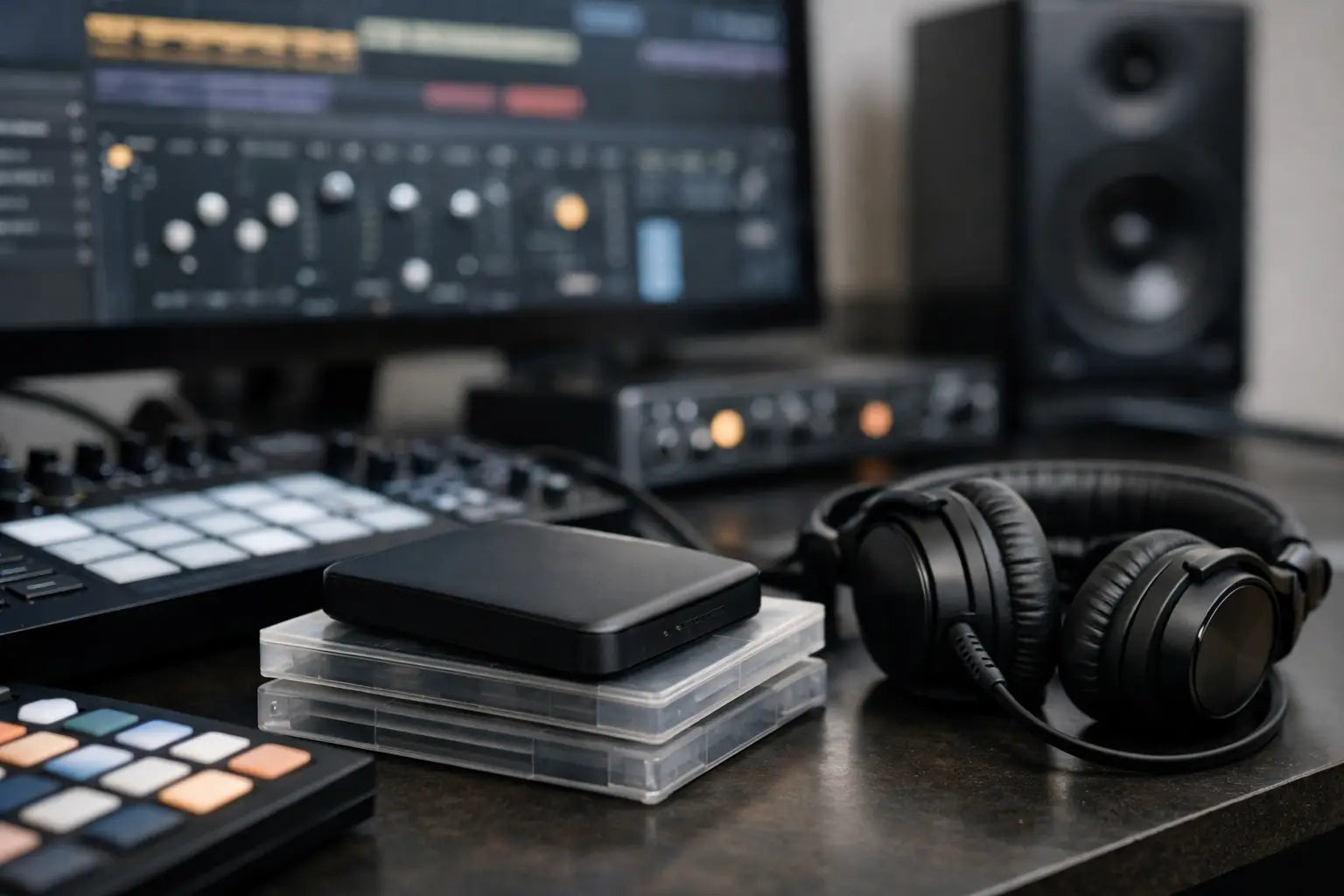
A weak drum folder can kill a session fast. You open the DAW, sketch a groove, then spend the next hour digging through random kicks, mismatched tops, and synth loops that sounded better in the preview than they do in your track. That is exactly why electronic music sample bundles matter. When the sounds are curated around a real genre, level-matched, mix-ready, and built by producers who understand club records, you stop hunting and start finishing.
For producers working in Afro House, Tech House, Melodic Techno, Techno, Bass House, and EDM, the best bundles are not just a bigger pile of files. They are a workflow tool. A strong bundle gives you the right drums, hooks, vocals, one-shots, FX, and presets in one ecosystem, so your ideas stay moving and your track keeps its identity.
What makes electronic music sample bundles worth buying
The obvious benefit is value. Bundles usually cost less than buying several packs one by one, which matters if you are building a serious sound library without blowing your budget. But price is only part of it.
The real advantage is consistency. In club-focused production, that matters more than most people admit. If your percussion has one tonal character, your synth loops come from a completely different aesthetic, and your vocals feel disconnected from the drums, you create more work for yourself. You spend time forcing sounds together instead of arranging, writing, and mixing.
A good bundle solves that by giving you sounds that already speak the same language. The low end feels intentional. The tops sit where they should. The synths carry the genre attitude you need. You still shape the final track, of course, but you are not starting from a box of unrelated ideas.
There is also a speed factor. For many producers, sound design is fun until deadlines show up. If you are pitching records, sending demos, making edits for DJ sets, or trying to keep a consistent release schedule, speed matters. Ready-to-use loops, one-shots, and presets help you move from idea to arrangement much faster.
Not all sample bundles are built the same
This is where many producers waste money. A giant bundle can look impressive on a sales page, but file count alone means very little. Ten thousand mediocre sounds are still mediocre sounds.
The first thing to look for is genre accuracy. A Tech House producer does not need generic EDM supersaws cluttering the session. A Melodic Techno producer usually wants atmosphere, tension, movement, and tonal depth, not just loud drums and filler loops. If the bundle is trying to be everything at once, it often ends up feeling unfocused.
The second thing is usability. Ask a simple question: can these sounds go straight into a track today? If the answer is no, the bundle may not be saving you any time. Great electronic music sample bundles are organized clearly, labeled by key and tempo where needed, and designed to drop into real projects without major cleanup.
The third factor is mix readiness. That does not mean every sample should be over-processed. In fact, overly crushed sounds can limit your options. What you want is a clean, polished starting point. Drums should hit. Bass should feel controlled. Vocals should sound intentional, not messy or harsh. There should be enough polish to compete, but still enough space to shape the record your way.
How to choose the right electronic music sample bundles
The right bundle depends on how you actually produce. If you build tracks from drums first, prioritize bundles with strong kick, clap, top loop, percussion, and groove content. If your records start with harmony and mood, you will get more value from bundles with melodic loops, Serum presets, bass one-shots, and tonal FX.
It also depends on whether you are sketching ideas or finishing release-ready records. Newer producers often benefit from broader bundles because they need enough source material to learn arrangement, layering, and genre structure. More advanced producers usually want tighter curation. They do not need endless options. They need a smaller set of excellent sounds that hold up in professional mixes.
There is a trade-off here. Large bundles are great for building a library, but they can also slow you down if the quality control is inconsistent. Smaller, more focused bundles are easier to use quickly, but they may not cover as many production scenarios. The best choice depends on whether your priority is exploration or efficiency.
Genre focus matters too. If most of your work lives in one lane, buy for that lane first. A producer making Afro House will usually get more results from a focused bundle with organic percussion, deep grooves, textured vocals, and genre-appropriate bass content than from a mixed bundle trying to cover every dance subgenre at once.
The formats inside a bundle matter more than the file count
Producers often shop by total number of files, but the file types are what actually shape your workflow.
Loops are the fastest way to build momentum. They are useful for starting ideas, layering movement, and filling out transitions. The downside is that loop-heavy bundles can feel generic if you rely on them too heavily. You still need to chop, process, and arrange with intent.
One-shots are where control comes back. Strong drum hits, bass stabs, synth shots, and FX let you build original patterns while keeping high-end source quality. If you want your records to feel less template-driven, one-shots matter.
Vocals can change the value of a bundle completely. In genres like Afro House, Tech House, and EDM, the right vocal phrase can turn a solid groove into a track people remember. But vocal content needs to feel current. Cheap or dated vocals can drag a production down fast.
Presets are a major time-saver for producers using Serum or similar synths. A great preset does not just sound big in solo. It sits in a mix, responds well to automation, and gives you a strong foundation for your own tweaks. If a bundle includes presets built around current electronic styles, that adds real production value.
When bundles save money and when they do not
Bundles make financial sense when you genuinely use multiple categories inside them. If you need drums, vocals, loops, and presets for the same genre, a bundle is often the smartest buy. You get a more complete toolkit and usually a better cost per usable sound.
But not every producer should default to the biggest option. If you only need fresh Techno drums or a specific set of Afro House vocals, buying a massive bundle can actually create more friction. You pay for content you will never touch, then spend extra time sorting through it.
That is why shopping by project need is often smarter than shopping by discount. Think about your next five tracks. What are they missing right now? Better low end? More convincing percussion? Hooks that feel less stock? Choose bundles that solve those exact problems.
What serious producers usually want from a bundle
At a higher level, producers are not looking for filler. They want sounds that can survive real-world use - club systems, label demos, playlist competition, and A&R scrutiny. That changes what matters.
They care about transients that hit without falling apart. They want bass material that feels modern but still leaves room for mastering. They want vocals that can take processing. They want melodic content that inspires an idea, not just decorates the background. Above all, they want sounds that reduce friction.
That is why producer-built catalogs tend to stand out. When the people making the packs actually understand arrangement pressure, drop energy, and mix translation, the sounds are usually easier to use. They are made for tracks, not for browsing.
On a store like Hot Grooves, that kind of specialization shows up in the way categories are built around real electronic genres and practical formats rather than vague all-purpose collections. That makes decision-making easier, especially if you already know the lane you produce in.
The best bundle is the one that helps you finish
It is easy to overthink sample buying. Producers compare file counts, chase sales, and stack hard drives with content they never fully learn. Meanwhile, the tracks stay unfinished.
A strong bundle should do three things immediately. It should give you inspiration when the session feels flat, speed up choices when you already have an idea, and raise the baseline quality of your production without forcing you into someone else’s sound.
If it does that, it is doing its job.
The smartest move is to choose electronic music sample bundles the way you choose plugins or monitors - based on results, not hype. Go for curation over clutter, genre accuracy over generality, and sounds you can use tonight instead of files you might use someday. Your next record will tell you very quickly whether you chose well.
And if a bundle makes you spend less time digging and more time finishing drops, building tension, and shaping records people actually want to play, that is money well spent.
Best Serum Presets for Bass House
Club Ready Sample Packs That Actually Hit