
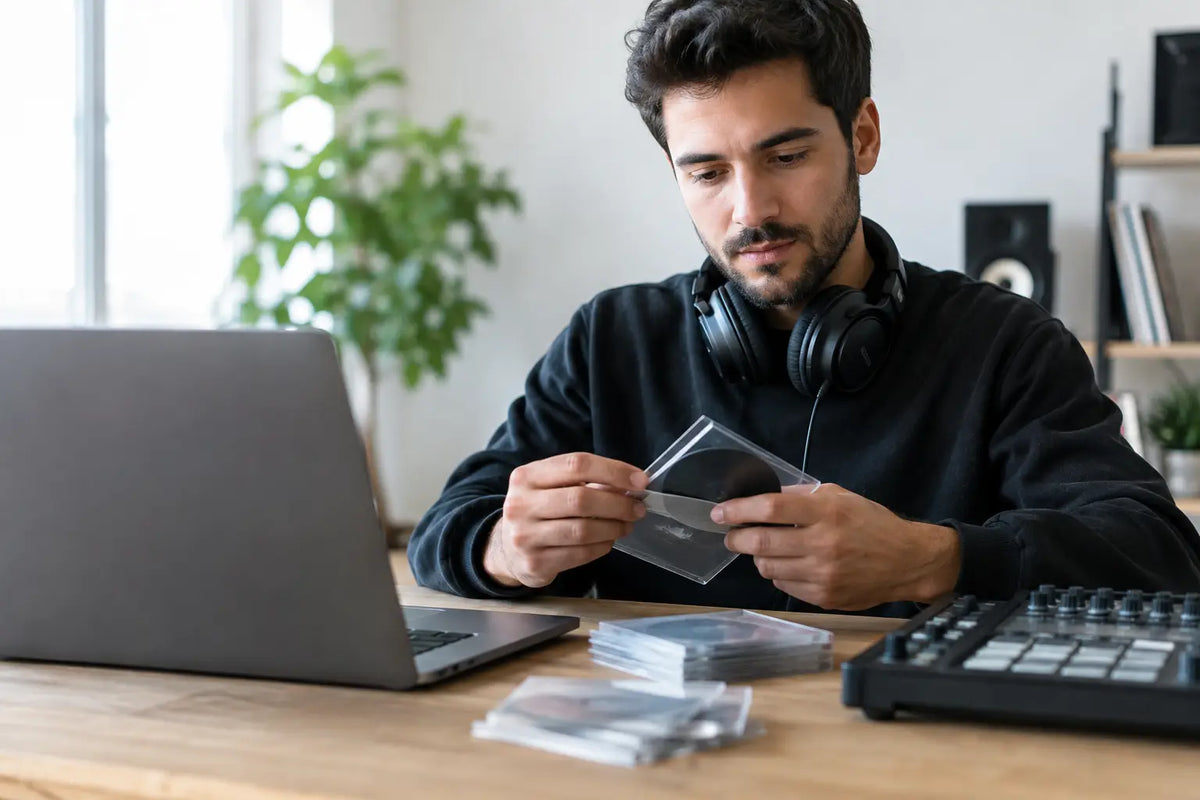
A finished tech house track built with a royalty-free kick, rolling percussion loop, vocal chop, and Serum preset can be released, streamed, DJed, and monetized. Put those same source files into a new sample pack for sale, though, and you may be breaking the license that made them usable in the first place.
Can Producers Resell Samples?
Usually, no. Producers generally cannot resell samples they downloaded or purchased from a sample pack, even when the pack is labeled royalty-free. Royalty-free typically means you do not owe recurring royalties to use the sounds in your original music. It does not mean you own the raw files or can redistribute them as standalone audio assets.
That distinction matters because sample packs are licensed, not transferred outright. The creator or sample-pack company retains ownership of the underlying loops, one-shots, vocals, MIDI files, presets, and construction kits. Your license gives you permission to use those materials in a production. It rarely gives you permission to repackage, share, upload, sublicense, or sell them as samples.
For producers working fast, this is not a small technicality. A clean rights chain protects the track you are building, your reputation, and the store or label relationships you may rely on later.
What Royalty-Free Actually Lets You Do
A royalty-free license is designed to help you make and release original music without clearing every clap, bass hit, or top loop. In most cases, you can use licensed sounds in songs, remixes, beats, DJ sets, videos, podcasts, client work, and commercial releases, subject to the terms of the specific pack.
If you use a percussion loop in an Afro House track, layer it with your own drums, arrange it into a full record, and release that record, that is normally the intended use. The same usually applies when you use a vocal phrase in a finished production or build a drop around a synth preset.
The key is transformation and context. A sample becomes part of a larger musical work. The listener is buying or streaming your track, not acquiring the original source file for reuse.
A sample pack works differently. Buyers expect isolated, reusable production assets. If your pack includes a loop from another creator, even if you EQ it, pitch it, reverse it, or add effects, you may be distributing that creator's source material to new users. That is the activity most licenses expressly prohibit.
The Difference Between a Track and a Sample Pack
Think about the end product. A club-ready release is a composition and recording with creative decisions layered throughout: arrangement, processing, synthesis, performance, mixing, and mastering. Licensed samples can be ingredients in that record.
A sample pack is a library of ingredients. When you sell it, you are granting other producers the ability to extract, manipulate, and reuse each file. That creates a direct conflict with the original sample license.
This is why a loop cannot simply become “your loop” because you added a sidechain, changed the tempo, or ran it through a saturation chain. Processing may make it fit your production, but it does not automatically create resale rights. The same applies to one-shots. A kick layered with another kick may work perfectly in a track, yet exporting that layer as a new kick for commercial resale can still be restricted if it contains a protected source sound.
When Reselling May Be Allowed
There are exceptions, but they need to be clear in writing. You may be able to resell a sound if you created it from scratch, recorded it yourself, or acquired a license that explicitly permits redistribution or resale. Some sounds are released under special commercial terms, and some creators negotiate custom agreements for larger projects.
You may also own the rights to samples made by a collaborator if your agreement says so. If you hire a vocalist, percussionist, or sound designer to create content for your pack, establish who owns the recordings and who can sell them before files change hands. A simple verbal understanding is not enough when the pack begins earning money.
Do not assume that a free download is automatically safe to resell. Free samples often come with the same no-redistribution restriction as paid products. “Free” describes the price, not the ownership terms.
Why Editing a Sample Does Not Solve the Problem
Producers often ask where the line sits: What if the sample is chopped beyond recognition? What if it is resampled through hardware, blended with original layers, or turned into a granular texture?
There is no universal percentage of change that makes a reused sample legally yours to resell. A heavy transformation may reduce the chance that a source is recognizable, but license restrictions can still apply. The question is not only whether someone can identify the sample. It is whether the license permitted you to use that material in a resale product.
For finished music, creative transformation is part of the job. For sample-pack creation, the safer standard is much higher: every sound intended for sale should be wholly original, properly commissioned, or cleared for redistribution.
That approach also makes your catalog more valuable. Producers buying club-focused drums, vocals, bass loops, or melodic textures want confident, clean rights. They do not want to wonder whether the pack contains recycled content from another library.
A Safer Workflow for Making Your Own Pack
If you want to sell samples, build the pack around assets you can genuinely license to others. Start by recording or designing the core material yourself. Program original drum patterns, synthesize your own bass stabs, record your own foley, create fresh patches, and capture custom vocal performances with documented permission.
Keep source sessions organized from day one. Save project files, MIDI, synthesis patches, raw recordings, and notes about how each asset was made. This is useful for revisions, but it also gives you a record of authorship if questions arise later.
For collaborative content, use a written agreement that covers payment, ownership, credit, exclusivity, and resale rights. Vocal packs deserve particular care. A vocalist may approve use in a song but not approve their phrases being sold as reusable audio. Those are different permissions.
Before export, audit every file in the pack. Remove anything that began as a third-party loop, preset recording, construction-kit stem, or downloaded one-shot unless your license specifically allows redistribution. If you cannot verify the origin or permission status, do not include it.
Finally, write clear license terms for your customers. State what they can do in music productions and what they cannot do with the raw files. A professional license protects both sides and makes your product easier to trust.
What About Presets, MIDI, and Drum Kits?
The same principle applies beyond WAV files, although the details can vary. You can sell Serum presets you designed yourself, including presets inspired by a genre or sound palette. You should not copy another producer's preset bank, make cosmetic edits, and sell it as your own.
MIDI is often easier to create from scratch, but it can still raise issues when copied from another pack, song, or tutorial. Original chord progressions and drum patterns are generally the smarter foundation, especially when your goal is a premium product rather than a quick upload.
Drum kits require extra discipline because individual sounds can feel interchangeable. If a clap or snare came from a purchased library, treat it as licensed production material, not inventory for your own kit. Build your commercial kit from original recordings, synthesis, and sound design instead.
Read the License Before You Build
Every sample provider can set different terms, so always read the license attached to the exact product you downloaded. Look for language around redistribution, resale, sublicensing, standalone use, derivative sample packs, and content identification systems.
If the wording is unclear, pause before releasing anything. A quick written clarification from the rights holder is far cheaper than taking down a product, refunding buyers, or dealing with a dispute after the pack has spread across producer communities.
Hot Grooves samples are built to help producers turn ideas into polished electronic records faster. Use licensed sounds where they belong: inside your next record, remix, set, or client production. When it is time to sell a pack of your own, make the source material unmistakably yours. That is how you create assets you can stand behind long after the first download.
Best EDM Producer Starter Bundles for 2026
Mixing Sampled Vocals Cleanly for Club Tracks