
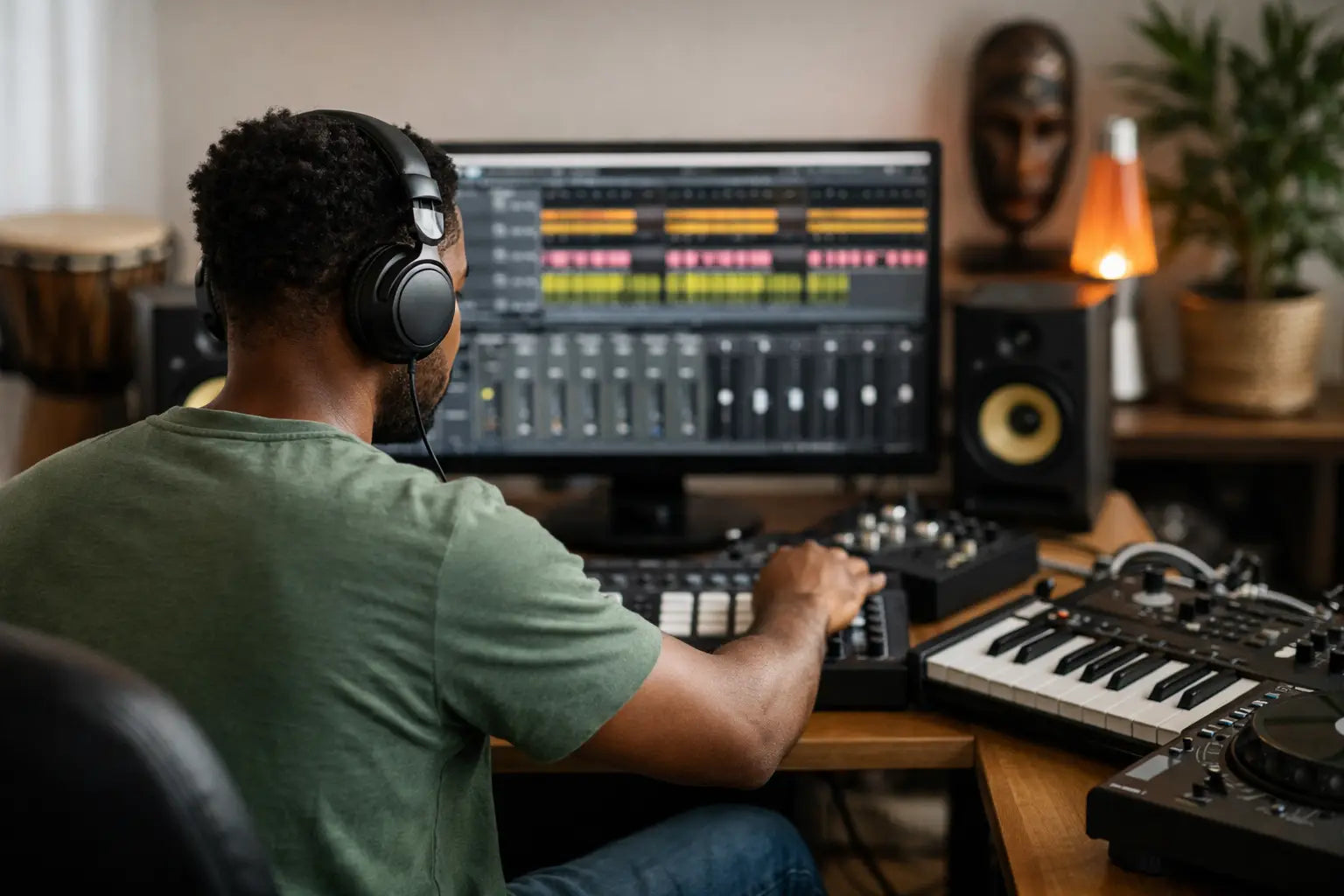
That moment when your groove hits for eight bars and then falls apart at bar nine is exactly why a solid afro house track workflow example matters. Afro House is not hard because it needs more tracks. It is hard because every element has to earn its place - groove, tension, space, and movement all need to feel intentional from the first loop to the final drop.
This workflow is built for producers who want results fast without ending up with a flat, over-layered project. It is practical, club-focused, and realistic for anyone working in Ableton, FL Studio, Logic, or a similar DAW. The goal is not to force one formula. The goal is to show a repeatable structure that gets you from idea to a release-ready draft with fewer dead ends.
Afro house track workflow example: start with groove, not chords
A lot of producers begin with a big melodic idea and try to fit Afro House drums around it later. That usually weakens the track. In this genre, rhythm is the lead system. If the drums and low-end conversation are not right, no vocal chop or atmospheric pad will save it.
Start with a percussion-first loop. Build around a kick that feels warm and controlled rather than overly clicky. Add a shaker or top loop with clear swing, then bring in one or two supporting percussion layers like congas, rim hits, bongos, or textured hand drums. The key is contrast. One layer can carry the fast movement, while another fills the off-beats with a looser, more human feel.
At this stage, keep the loop short - eight or sixteen bars is enough. Do not stack ten percussion tracks just because the genre allows density. Afro House grooves feel expensive when each layer has a job. If two loops fight for the same rhythmic space, mute one.
The groove should already make you move before any chords arrive. If it does not, fix that first. Adjust timing by hand if needed. A tiny push or pull on percussion often does more than adding another sound.
Build the low end around the drums
Once the drum pocket works, add the bass. In Afro House, bass is usually less about flashy fills and more about pulse, hypnosis, and call-and-response with the percussion. A simple one- or two-bar phrase often works better than a busy pattern.
Try starting with a sub-focused bass line that follows the kick pattern selectively, not constantly. Leave space. A bass note that lands after the kick can create more movement than one that doubles every transient. Then test a second layer if the track needs more character - maybe a mid bass with texture or a subtle analog-style pluck that helps the line read on smaller speakers.
This is where workflow discipline matters. If your bass sounds huge soloed but muddies the percussion, it is not helping the record. Afro House low end needs weight, but it also needs air around it. High-pass anything that is not contributing to the sub area, and keep checking the groove at low volume.
Add harmony that supports the rhythm
Chords in Afro House are often there to create emotion and width, not to dominate the arrangement. That means your chord choice, voicing, and sound selection should support the groove instead of pulling attention away from it.
A good starting point is a short chord stab, a warm organ, a deep piano, or a textured synth with movement. You do not need a complex progression. Two or three chords with the right timing can carry a whole track if the rhythm section is strong. Try playing the chords in shorter phrases and leaving obvious gaps. Space is part of the groove.
If you want a more melodic direction, add a lead after the chords, not before. It could be a pluck, a flute-like synth, a vocal fragment, or a tuned percussion line. Keep asking one question: does this part deepen the trance, or does it turn the track into something else? Afro House can handle melody, but it still needs restraint.
Use vocals as a focal point, not filler
Vocals can elevate an Afro House record fast, but they can also cheapen it fast if they feel pasted on. A vocal in this style usually works best when it adds identity and atmosphere rather than trying to behave like a full pop topline.
That could mean a short phrase, a chant-like hook, a spoken line, or a chopped texture that repeats with subtle variation. Build around the natural rhythm of the vocal. If the phrase already has swing, let it influence the percussion edits and arrangement decisions.
This is one area where high-quality source material saves serious time. A strong vocal that already sits in the genre gives you a center of gravity for the whole project. You spend less time forcing unrelated samples to fit and more time shaping the record around something that already sounds current.
Arrange early before the loop gets stale
The best afro house track workflow example is not just about sound choice. It is about when you stop looping and start arranging. Producers lose hours polishing a 16-bar section that never turns into a full track. The fix is simple - arrange earlier than feels comfortable.
Once your core loop has drums, bass, harmony, and one hook element, sketch the full structure. A practical club arrangement might open with stripped percussion, bring in low-end gradually, tease the main theme before the first payoff, then cycle through tension and release without overcrowding the middle.
Think in energy stages rather than rigid sections. Your intro needs DJ usability. Your first payoff needs enough information to hook the listener without giving away the whole track. Your breakdown should create contrast, but not kill momentum. Your final section can either reintroduce the main groove with extra force or pull back into a more tool-like ending.
Automation does a lot of heavy lifting here. Filter movements, send effects, percussion mutes, vocal throws, and reverb tails create progression without requiring new parts every eight bars. If the loop is strong, arrangement is mostly about controlled reveals.
Keep the sound palette tight
One common mistake is trying to make Afro House feel bigger by adding more layers. Usually the opposite works better. Tight palette, better decisions. If your percussion is detailed, your bass is locked, and your lead element is memorable, the track already has enough.
Choose sounds that sound finished early. A polished top loop, a strong kick, a genre-appropriate vocal texture, and a few well-designed synth patches can move the project forward much faster than endless sound design from scratch. That is why producer-focused sample packs and presets matter - not because they replace skill, but because they remove friction where it does not need to exist.
For producers trying to finish more club-ready tracks, this is where curated source material gives a real advantage. A well-built Afro House toolkit shortens decision time and keeps the session pointed toward arrangement and mix choices instead of endless browsing.
Mix as you build, then do a focused finish pass
You do not need to wait until the end to start mixing. In fact, for Afro House, basic mix decisions should happen from the first loop. Gain staging, EQ cleanup, stereo placement, and transient balance all affect whether the groove feels right.
Keep the kick and bass relationship under control first. Then make sure your percussion layers are not masking each other in the high mids. If the shaker, clap texture, and vocal air all live in the same zone, one of them needs to move. Pan supporting percussion carefully, but keep the main groove elements stable enough for club playback.
When the arrangement is done, move into a dedicated finish pass. This is where you refine transitions, smooth automation, tighten frequency conflicts, and check whether the track actually lifts where it should. If the drop does not feel bigger, the answer is not always more limiting. Sometimes it is as simple as reducing competing layers in the bars before impact.
Reference your track against current Afro House releases for low-end level, brightness, and energy flow. Not to copy them, but to catch blind spots. A lot of workflow problems are really perspective problems.
What this workflow gets right
The reason this process works is that it follows the genre's priorities in the right order. Groove first. Low-end second. Harmonic mood third. Identity elements after that. Arrangement before overthinking. Final polish at the end.
Can you start with chords or a vocal idea instead? Sure. But if you keep ending up with tracks that sound good in isolation and weak in the club, there is a good chance your workflow is backward. Afro House rewards producers who build from movement outward.
If you want faster results, make your next session about decisions, not options. Choose better raw sounds, commit earlier, and let the groove lead. That is usually the difference between another unfinished loop and a track that actually leaves your hard drive.
10 Best Afro House Sample Packs
10 Best Melodic Techno Presets That Hit Hard