
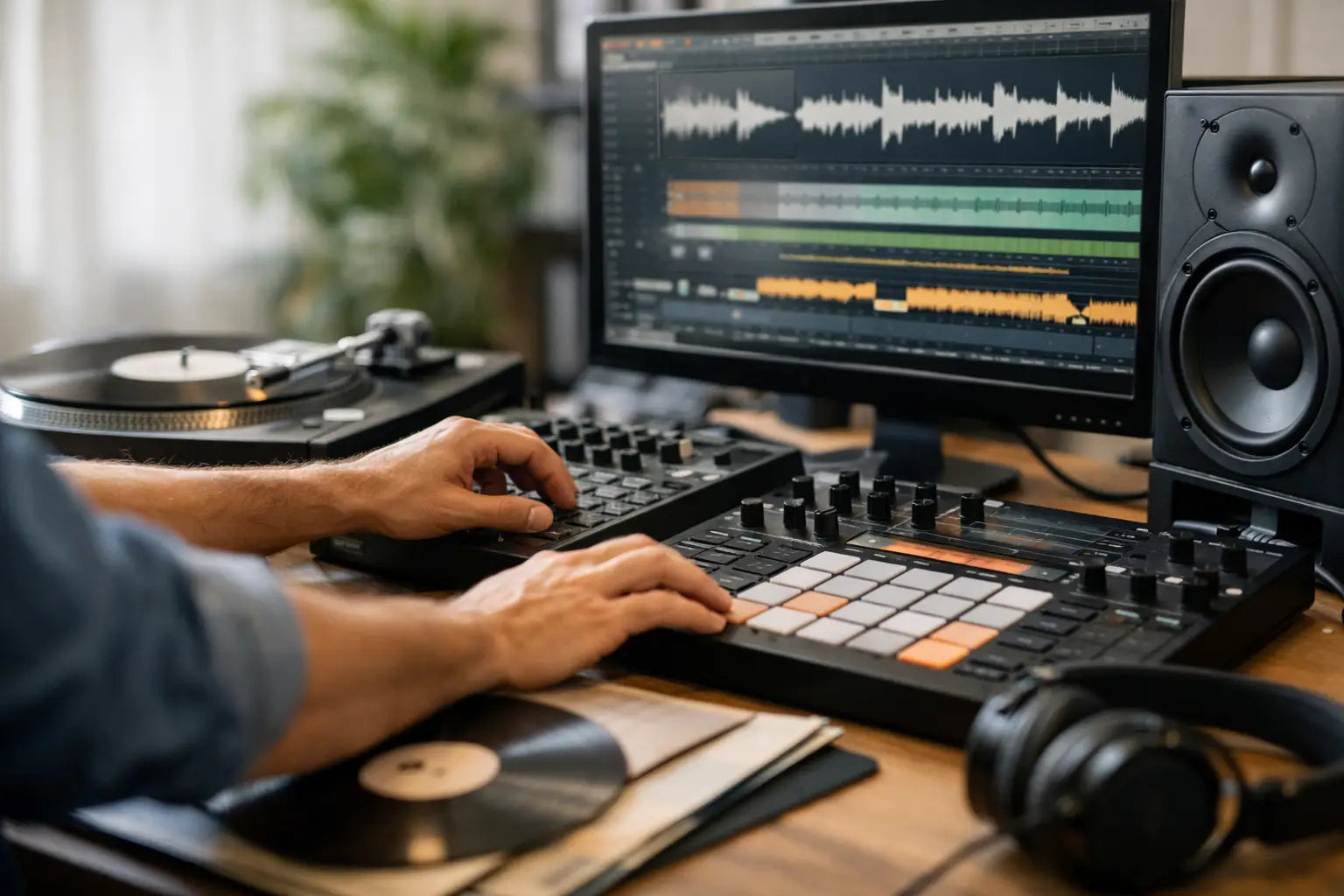
You finish a club-ready track at 2 a.m., the groove is hitting, the vocal chop sounds expensive, and then the question shows up right before export - can you release songs using samples? The short answer is yes, often. The real answer depends on what kind of sample you used, where it came from, and what the license actually allows.
For electronic producers, this matters because sampling is not some edge-case workflow. It is the workflow. Drums, top loops, FX, vocal phrases, one-shots, texture layers, and even full musical phrases are built into modern production. But "using samples" can mean two very different things legally, and mixing those up is where tracks get stuck, demonetized, or pulled.
Can you release songs using samples legally?
Yes - if you have the right to use them.
That sounds obvious, but producers get tripped up because not all samples are sold or shared under the same rules. A royalty-free drum loop from a legitimate pack is a very different situation from lifting eight bars out of an old soul record. One is usually pre-cleared for musical use under a license. The other usually requires permission from the copyright holders.
So if you're asking can you release songs using samples, the first thing to check is whether you're dealing with royalty-free sample content, licensed sample library material, or copyrighted audio taken from an existing song, film, broadcast, or online upload.
Those categories are not interchangeable, and platforms, distributors, and labels will treat them differently.
The three sample types producers confuse most
Royalty-free samples
These are the safest and most common option for producers making release-ready music fast. Royalty-free usually means you can use the sounds in your own original productions without paying ongoing royalties every time the track streams, sells, or gets played.
That does not mean you own the sample itself. It means you are granted a license to use it under certain terms. In most cases, you can release songs commercially, pitch them to labels, upload them to DSPs, and perform them. What you usually cannot do is resell the raw sample, redistribute it in a sample pack, or claim the isolated sound as your own product.
For dance music producers, this is the most practical lane. Good royalty-free packs are built for speed. You get polished source material that already fits the genre, the mix, and the energy level you need.
Cleared or licensed third-party sample material
Some platforms offer samples with special usage frameworks, and some labels or publishers will clear a sample for you on a case-by-case basis. This is more controlled than buying a standard sample pack and usually comes with stricter terms, split requirements, or limited release conditions.
If a sample requires attribution, revenue share, or pre-approval before release, read that carefully. Do not assume "downloaded legally" means "free to release anywhere."
Uncleared copyrighted samples
This is the classic flip-a-record situation. If you sampled a commercial recording you did not create, you usually need clearance for both the master recording and the underlying composition. That means permission from whoever owns the recording and whoever owns the songwriting.
Even if you pitched it down, chopped it hard, reversed it, ran it through granular processing, and made it nearly unrecognizable, that does not automatically make it legal. Creative processing is production skill. It is not legal clearance.
Royalty-free does not mean no rules
This is where producers should slow down. A lot of people buy a pack, drag in a loop, and assume they can do anything with it forever. Usually, you can release a song with it. But licenses still have boundaries.
Some sample providers prohibit using exposed melodic or vocal loops in isolation. Some restrict use in sample-based products, beat packs, or stem resales. Some require that the sample be part of a new original composition rather than uploaded as a near-raw loop with a kick under it. And some vocal packs have extra language around trademark, impersonation, or sync use.
If you're working with loop-heavy genres like Afro House, Melodic Techno, or Tech House, this matters even more. A distinctive vocal or lead loop can become the identity of the track. If that same loop is also available to thousands of producers, you are not just thinking about legality. You're also thinking about uniqueness, Content ID conflicts, and whether your release sounds too generic to stand out.
What happens when you sample an existing song?
If you sampled from a released record, you should assume you need clearance before commercial release.
That process can be expensive, slow, or completely unrealistic for independent artists. Rights holders can deny permission, ask for a large upfront fee, demand a publishing split, or request ownership terms that kill the deal. Even if your distributor accepts the upload, that does not mean you're protected. Distribution approval is not the same as legal approval.
This is why many producers rebuild the idea instead of directly sampling the original audio. Interpolating a melody or replaying a musical idea may reduce the problem to composition rights instead of master rights, but it still can require permission if the source is protected. Replaying is not a loophole. It is just a different rights issue.
Can distributors detect sample issues?
Sometimes yes, sometimes no. But that is the wrong benchmark.
A lot of producers frame the question around whether DistroKid, TuneCore, CD Baby, or a label will catch it. The better question is whether you have the right to exploit the recording commercially. Detection tech is improving, and rightsholders, publishers, and platforms are far more aggressive than they used to be. A track might clear upload today and trigger a problem later after release gains traction.
That is especially true with vocals and recognizable melodic phrases. Those elements are easier to identify and more likely to generate claims. Drums and heavily processed textures are less obvious, but "harder to detect" is still not the same as legally usable.
The smart producer workflow before release
If you want clean releases and fewer surprises, build sample checks into your process before you finish the arrangement.
Start by tracking every sample source while producing. Keep the pack name, creator, marketplace, and license details organized in your project notes or folders. If you grabbed something free from a random post five months ago and cannot verify the license, do not build your single around it.
Next, listen critically for exposed material. A top loop buried under percussion is one thing. A solo vocal hook carrying the drop is another. The more exposed and recognizable the sample, the more carefully you should verify usage rights and consider creative processing.
Then check whether the sample is overused or likely to trigger conflicts. Even fully legal royalty-free vocals can create headaches if dozens of released tracks use the same phrase. You might not lose the legal right to release, but you could face false claims, duplicate-content issues, or just a weaker brand as an artist.
Finally, if you are aiming for a label release, clear your sample situation before pitching. Labels do not want preventable rights problems. A great record with murky sample usage becomes admin-heavy fast.
Best practice for electronic producers
If speed matters and release-readiness matters, build from trusted royalty-free sources and make the material yours.
That means choosing packs with clear licensing, then reshaping the sounds through arrangement, layering, resampling, automation, and processing. Use the sample as a launch point, not the finished identity of the track. That approach gives you two advantages at once: fewer legal problems and stronger originality.
This is where producer-focused sample brands earn their value. The best packs are not just legal to use. They are designed to slot into real sessions fast, hold up in modern club genres, and save hours of corrective work. If you're pulling drums, vocals, or synth material from a specialized source like Hot Grooves, the point is not just convenience. It is getting pro-level source audio that helps you finish records with fewer compromises.
When you should get legal advice
If your release depends on a recognizable sample from an existing song, if a label is asking for warranties you are unsure about, or if a licensing term seems vague, get actual legal guidance. This article can help you make smarter production decisions, but it cannot clear a sample for you.
A good rule is simple: if the sample came from someone else's copyrighted release, assume permission is required. If it came from a legitimate royalty-free pack, read the license and use it as intended.
The strongest producers are not just good at sound selection. They are disciplined about what they build with. That habit keeps the momentum up, protects your releases, and gives you more time to focus on what actually moves records - making tracks people want to play again.
Electronic Music Producer Workflow That Works
Afro House Production Trends That Matter