
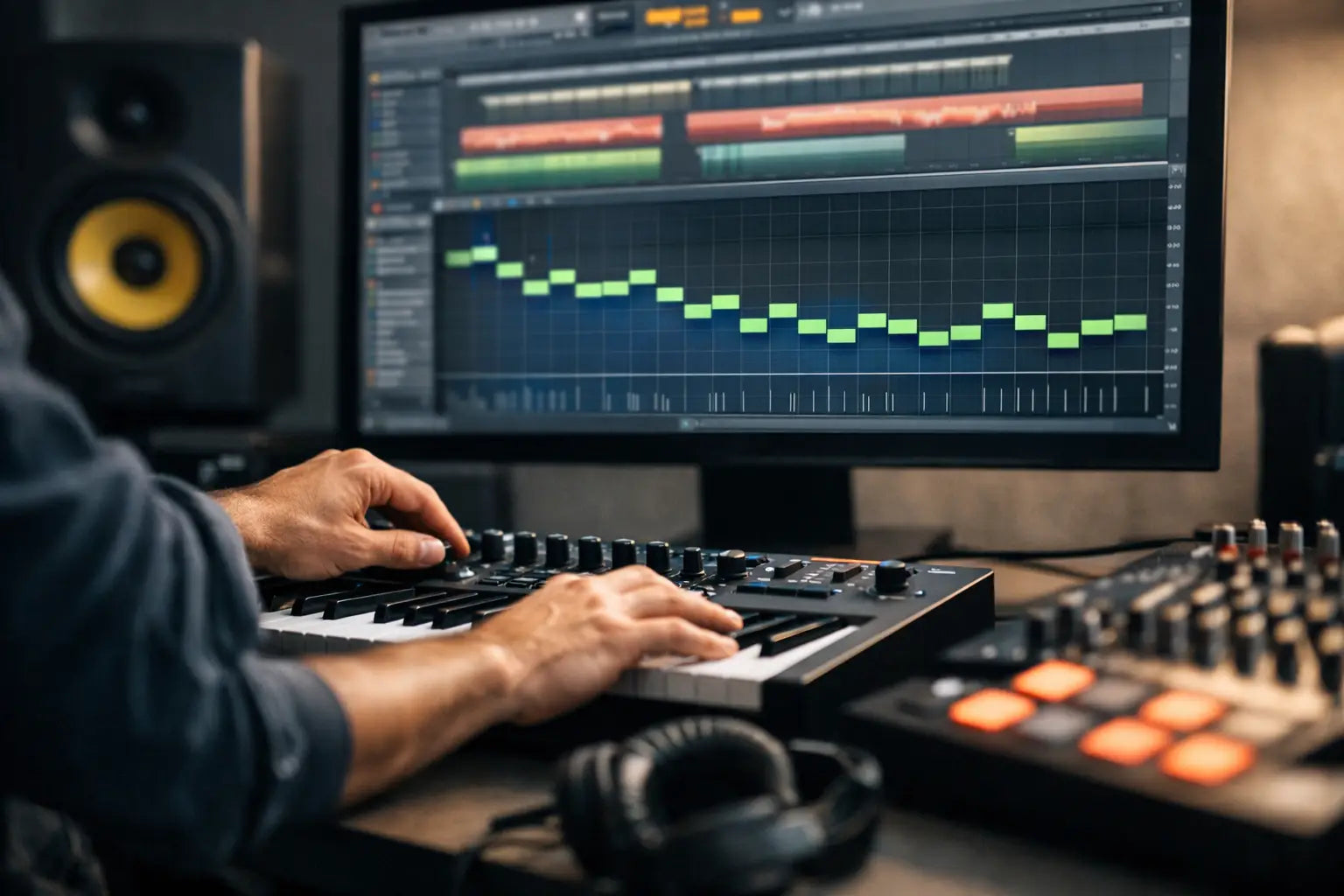
A rolling bassline can make an eight-bar idea feel like a record DJs actually want to mix. It creates forward motion, supports the kick, and gives the drums a reason to hit harder. The fastest way to create rolling basslines quickly is not hunting for complicated notes. It is getting the rhythmic relationship between kick, bass, groove, and sound choice right from the first bar.
For club-focused music, a bassline does not need to prove how musical it is. It needs to hold down the room. That means fewer notes, better placement, controlled low end, and enough movement to keep the loop alive without stepping on the vocal, lead, or percussion.
Start With the Rhythm, Not the Notes
Before choosing a bass preset or drawing MIDI, program a basic kick pattern and lock in the tempo. A rolling bassline should answer the kick rather than compete with it. In Tech House, that often means short offbeat notes between four-on-the-floor kicks. In Afro House, the rhythm may be more syncopated and leave more space for organic percussion. Melodic Techno can sustain longer bass notes, but it still needs clear gaps where the kick can punch through.
Start with one or two notes. Seriously. A lot of producers waste time writing a four-note bass melody when a single root note with a strong rhythm would carry the drop better. Set the bassline to the root note of your chord or scale, then experiment with timing before changing pitch.
A reliable starting point is to place a short bass note just after each kick, then add one quieter pickup note before the next kick. The result is a push-pull pattern: kick, bass response, small lead-in, kick again. Once that works, vary only one note in the final beat of the bar. That small change can create anticipation without breaking the groove.
Build One Bar That Works on Its Own
Do not write a 16-bar bassline until the first bar feels solid. Loop one bar with the kick and clap, then listen for whether it makes you move without any chords or effects. If it feels stiff, adjust note position by a few milliseconds before adding more notes.
Quantization is useful, but full grid lock can make electronic basslines sound mechanical in the wrong way. Try nudging selected notes slightly late for a heavier, laid-back feel. For more urgent Techno or Bass House grooves, keep the main notes tight and use a short early pickup note to create tension.
The important trade-off is clarity versus swing. Too much timing variation makes the low end loose. Too little makes the pattern feel programmed. Keep the core bass hits consistent and use variation on lighter notes, transitions, and fills.
Use Note Length as a Groove Tool
Rolling basslines often get their energy from note length, not extra notes. Short notes create a dry, punchy bounce. Slightly longer notes connect the pattern and make it feel more fluid. If the bass is masking the kick, reduce the MIDI note length before reaching for aggressive EQ or sidechain settings.
A good test is to shorten every bass note by around 20 percent, then bring length back only where the groove loses momentum. This exposes which notes are doing real work and which ones are creating mud. It also leaves room for your bass envelope to shape the rhythm naturally.
Choose a Bass Sound That Can Move
The quickest MIDI pattern in the world will still sound weak if the bass patch has the wrong envelope. For rolling club basslines, start with a focused low end and a controlled decay. You want enough transient attack to define the rhythm, but not so much click that it fights the kick.
A simple saw or square-based patch can work well when filtered and shaped properly. Add a sub layer only if the main sound lacks weight. Stacking too many bass layers is one of the fastest ways to lose punch, especially once you add percussion, vocals, and leads.
For a practical starting point, use a monophonic patch with a quick attack, medium-short decay, low sustain, and release that stops before the next important kick. Add subtle saturation for density, then filter the top end until the bass feels present but not fizzy. A touch of glide can work for Bass House or Melodic Techno, but keep it selective. Constant portamento can blur the rhythm and make a clean groove feel sloppy.
This is where genre-focused presets can save serious time. A well-designed bass preset gives you a usable harmonic balance before you begin mixing, so you can focus on the pattern and arrangement rather than building every oscillator from scratch. Hot Grooves bass sounds and Serum presets are designed with that workflow in mind: club-ready starting points that still leave room for your own processing and character.
Create Rolling Basslines Quickly With a Simple MIDI Framework
When inspiration is moving fast, use a repeatable framework rather than staring at an empty piano roll. Write the root note on the offbeat. Add one short pickup note near the end of beat two or beat four. Then test a fifth, octave, or neighboring scale note as a single variation at the end of the phrase.
The root keeps the track grounded. The pickup creates momentum. The variation tells the listener that the loop is going somewhere.
Avoid adding a new pitch simply because the bar looks empty. In dance music, empty space is often what makes the next bass hit feel expensive. If your percussion already has a busy shuffle, the bass should probably simplify. If the drum groove is sparse, the bassline can take on more rhythmic responsibility.
Velocity matters, even with heavily compressed electronic sounds. Lower the velocity on pickup notes and secondary hits so the main offbeat bass notes remain the anchor. If velocity does not noticeably change your synth patch, map it to filter cutoff, amp level, or saturation drive. Small tonal differences make repetition feel intentional instead of static.
Make the Kick and Bass Work as One System
A rolling bassline is only as good as its relationship with the kick. Solo both elements and check whether the bass note begins while the kick still needs room. If the low end feels crowded, first adjust the bass note timing and envelope. Then set sidechain compression or volume shaping to create a clean, predictable pocket.
There is no single correct sidechain setting. A short, punchy Tech House kick might need a fast duck that recovers quickly. A longer Melodic Techno kick can require a deeper or longer reduction. Let the kick tail and the bass rhythm determine the curve, not a preset labeled “EDM sidechain.”
Keep the deepest sub frequencies centered and mono-compatible. You can add width higher up with saturation, chorus, or a duplicate layer filtered above the sub range, but do not spread the foundation of the bassline across the stereo field. Club systems reward focused low end.
Also check the bassline at lower volume. If you can still hear its rhythm and pitch movement without turning up the speakers, the midrange harmonics are doing their job. If it disappears completely, a little saturation or carefully shaped upper-bass content may help more than simply boosting sub frequencies.
Add Movement Without Rewriting the Groove
Once the core loop works, make it evolve through sound changes instead of constant new MIDI. Automate a low-pass filter to open slightly over eight or 16 bars. Increase distortion in the pre-drop section. Bring in a higher octave layer for the last two beats before a transition, then remove it when the drop lands.
Small arrangement moves keep the bassline exciting while preserving the pattern listeners have already connected with. This is especially effective in DJ-friendly arrangements, where a stable groove gives the track mixability and the gradual changes create energy across a longer section.
If the bassline starts feeling repetitive, remove a note before adding one. A missing offbeat in the final bar of a phrase can create more tension than a complicated fill. Let the kick carry that moment, then bring the full bass pattern back with confidence.
A Faster Decision Process for Better Results
Set a time limit. Give yourself 10 minutes to choose a sound, write a one-bar groove, and make the kick-bass relationship work. Print or bounce a quick reference, then move on to the next production element. Endless bass tweaking can drain energy from a session that was already heading in the right direction.
Return later with fresh ears and ask one useful question: does this bassline make the drums feel bigger? If the answer is yes, protect the simplicity. If not, change the rhythm before replacing the sound. The strongest rolling basslines are rarely the busiest part in the project. They are the part that makes every other element feel like it belongs on the same dance floor.
Afro House Production: Build a Club-Ready Groove
How a Sample Library Speeds Up Your Tracks