
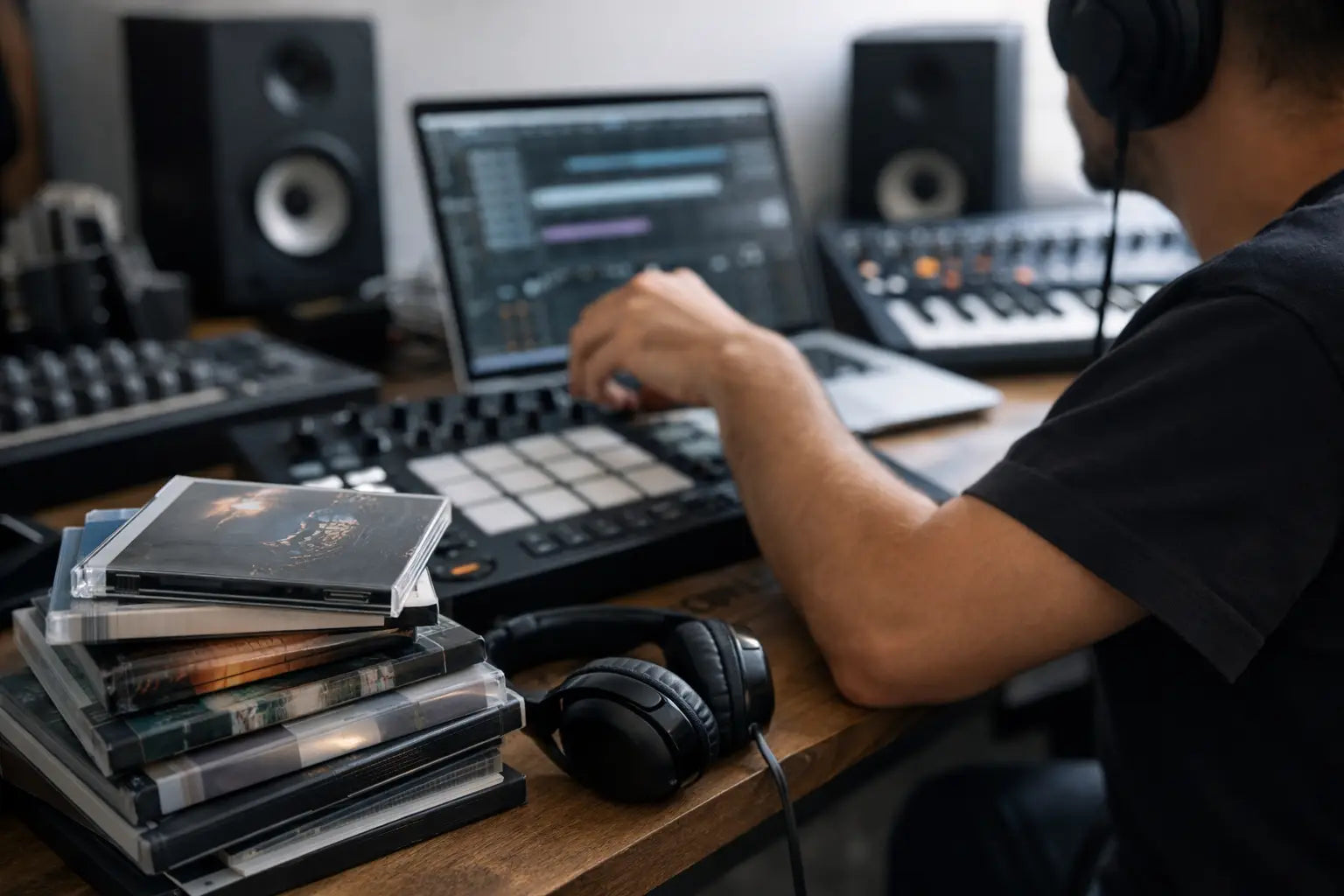
If you have ever dragged a drum loop into your DAW and immediately wondered whether that somehow made you less legit, you are not alone. The short answer to do producers use sample packs is yes - constantly. Beginners use them, working DJs use them, label artists use them, and plenty of producers with strong sound design skills still keep a hard drive full of go-to packs.
The real question is not whether sample packs get used. It is how they get used, and whether the producer knows how to turn raw source material into a track that feels current, personal, and release-ready.
Do producers use sample packs in professional tracks?
Absolutely. In electronic music especially, sample packs are part of the normal production workflow. Club records are built fast, trends move fast, and no serious producer wants to waste six hours synthesizing a shaker top loop if the right one already exists and fits the record in thirty seconds.
That does not mean pros are lazy. It means they understand leverage. If a pack gives you a punchy kick, a clean top loop, a textured vocal chop, or a Serum preset that already sits in the lane you need, you start further down the field. That matters when you are trying to finish more music, test more ideas, and keep your quality consistent.
In genres like Afro House, Tech House, Melodic Techno, Techno, Bass House, and EDM, producers often lean on sample packs for drums, percussion, transitions, FX, vocals, bass one-shots, and synth presets. Some tracks use obvious sample-based building blocks. Others use packs so heavily processed you would never know where the original source came from.
Why sample packs are so common
The biggest reason is speed. Sound design is valuable, but it is also a time sink when you are building every element from scratch. A focused sample pack can get you to the fun part faster - writing grooves, arranging drops, shaping tension, and finishing records.
The second reason is quality control. A strong pack gives you sounds that are already clean, balanced, and genre-aware. That matters more than people admit. If your clap already has the right transient shape and your percussion loop already carries the right swing, the track starts sounding competitive much earlier.
There is also a taste factor. Good producers are not just collecting sounds. They are choosing sounds that fit a lane. A modern Tech House groove needs a different drum character than a Melodic Techno record. Afro House percussion needs movement and feel that generic drum folders often miss. Sample packs help producers get into the right sonic territory without guessing.
Using packs does not mean copying
This is where a lot of confusion starts. Some people hear “sample pack” and picture a producer dropping in a full construction loop, adding a kick, and calling it done. That happens sometimes, but it is not the full story and it is not how most serious producers work.
Most producers use sample packs as starting material. They layer kicks, chop loops, retune vocals, slice percussion, resample synths, process tops through saturation, and stack one-shots into something new. Even when the source is pre-made, the final record depends on choices - arrangement, processing, groove, tension, mix balance, and restraint.
That is the difference between using tools and depending on shortcuts. The pack gives you ingredients. The producer still has to cook.
Where sample packs help the most
Drums are probably the clearest example. A lot of producers can write a solid groove, but not everyone has a deep library of kicks, claps, hats, rides, and percussion that already sound expensive. Good packs solve that immediately.
Vocals are another major advantage. If you produce club music, finding usable royalty-free vocal phrases, hooks, ad-libs, and chops can save an enormous amount of time. A strong vocal pack can spark an entire track idea in minutes.
Presets also matter more than purists like to admit. A finished Serum preset does not remove creativity. It removes setup time. You can tweak macro settings, reshape envelopes, change FX, automate movement, and fit the sound to your mix instead of starting from a blank patch every time.
FX and transitions are similar. Risers, impacts, downlifters, noise sweeps, fills, and transitional textures are rarely the part producers want to spend the most time building. Using polished source material here is just smart workflow.
When sample packs can hurt your track
There are trade-offs. Not every sample pack is good, and not every sound that is good on its own is good for your record.
If a pack is too generic, over-processed, or poorly labeled, it slows you down instead of speeding you up. You spend more time auditioning weak sounds than making music. That is why focused, genre-specific packs usually outperform giant random libraries.
There is also the issue of overuse. If you drag in a recognizable loop and leave it untouched, your track can feel obvious fast. The same goes for vocals that show up in ten other releases or presets that everybody uses with no editing. None of that makes sample packs bad. It just means source selection and customization matter.
A producer who relies on packs without developing taste usually ends up sounding like everyone else. A producer who uses packs with intent can sound sharper, faster, and more current.
How good producers actually use sample packs
They usually start with a purpose. Instead of scrolling forever, they know what the track needs - a tighter low-end kick, a swung hat loop, a tonal percussion layer, a late-night stab, a vocal phrase, or a bass preset with more movement.
Then they edit aggressively. That might mean shortening a clap tail, high-passing a loop, pitching a tom, slicing out one bar from a four-bar groove, or layering a clean transient over a heavier drum hit. Small changes go a long way.
They also think in combinations. One sample rarely carries a full track. What works is the relationship between sounds. A dry kick with a wider clap. A busy top loop with a simple shaker. A clean vocal phrase against a dirtier bass texture. Sample packs become powerful when producers stop hearing individual files and start hearing systems.
Finally, they commit. One of the biggest workflow mistakes is collecting endless sounds without building anything. The best producers audition fast, choose fast, and move on. That is part of why curated packs matter.
Do producers use sample packs if they know sound design?
Yes, all the time. Knowing sound design does not mean you need to reinvent every hi-hat. It means you know when to build from scratch, when to tweak a preset, and when an existing sample already solves the problem.
A producer might design a signature bass from zero but still use sample packs for percussion, vocals, impacts, or layered drum textures. Another might start with a preset, then reshape it until it barely resembles the original. Technical skill and pack usage are not opposites. In practice, they usually work together.
This is especially true when deadlines are real. If you are finishing tracks for labels, DJ sets, clients, or content output, efficiency matters. The goal is not to prove how difficult your process is. The goal is to make records that hit.
Choosing sample packs that actually help
The best packs are not the biggest. They are the most usable. That means clean organization, strong sound selection, consistent quality, and a clear genre target.
If you make club-focused electronic music, broad “everything packs” often create more friction than value. You want sounds that already understand the lane - drums with the right weight, loops with the right movement, vocals that feel current, and presets built for modern production rather than generic demo material.
That is why producer-built collections tend to work better. They are usually designed by people who know what is missing in real sessions. At Hot Grooves, that producer-first mindset is the point: packs built to get you from idea to polished track faster, without digging through filler.
The real answer
So, do producers use sample packs? Yes - and the better question is whether they use them well.
Sample packs are not a cheat code, and they are not a red flag. They are production tools. In electronic music, where speed, polish, and genre accuracy matter, they are often the fastest route to stronger ideas and better finishes.
If a sample helps your groove land harder, your drop hit cleaner, or your track get finished this week instead of sitting half-done for a month, use it. The audience is not grading your process. They are reacting to the record.
How to Choose Sample Packs That Fit
How to Use Serum Presets the Right Way