
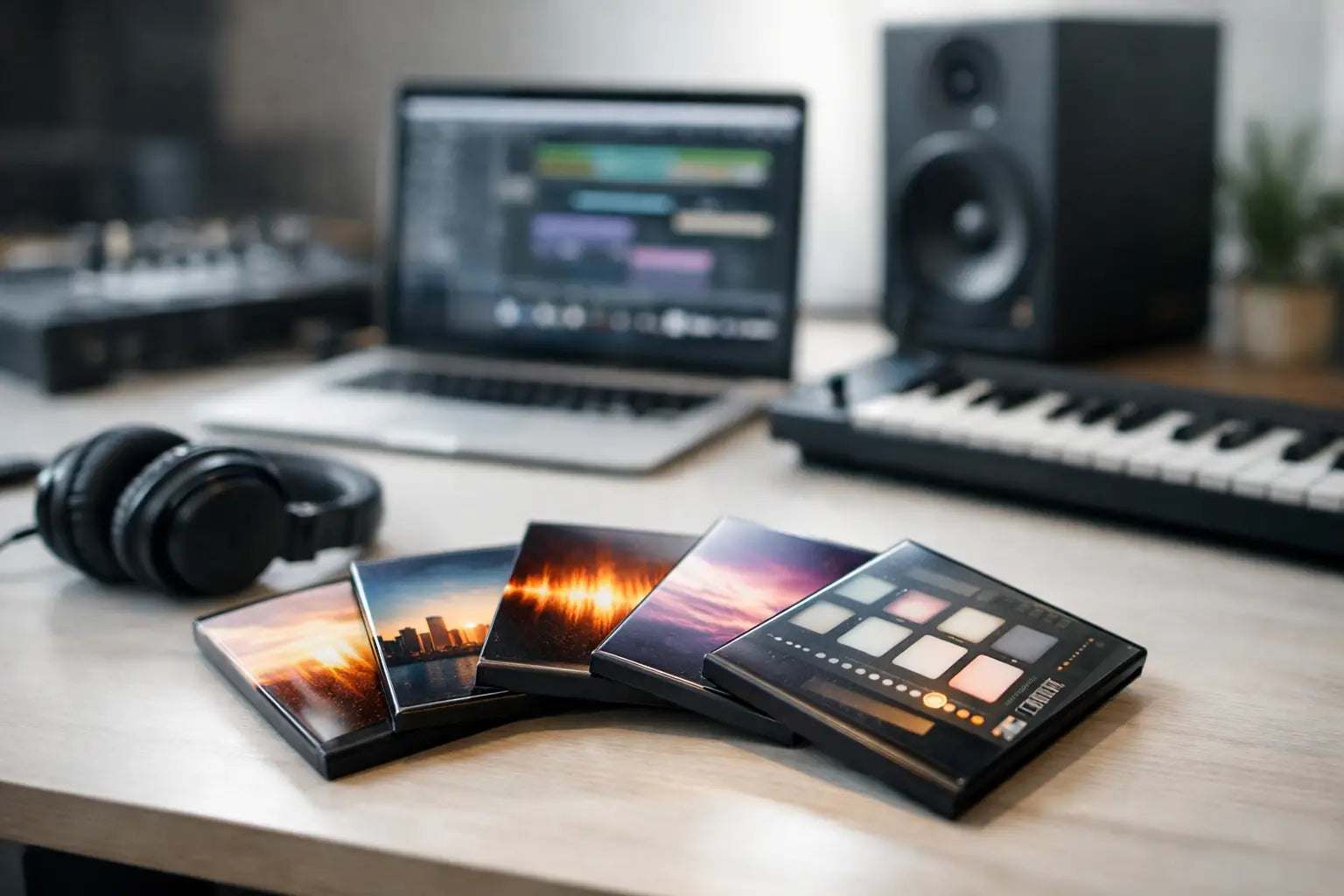
You do not need more samples. You need the right samples.
That is the real answer to how to choose sample packs when your folders are full, your projects are half-finished, and every new download promises instant inspiration. The wrong pack slows you down. The right one gives you drums that hit, loops that sit fast, and presets that push a track toward release territory instead of another abandoned idea.
How to choose sample packs without wasting money
Most producers buy sample packs for one of two reasons. Either they need a quick creative spark, or they need reliable source material that saves time. Those are both valid, but they lead to different buying decisions.
If you want inspiration, look for packs with strong musical identity. That usually means themed melodic loops, vocals, signature percussion, and presets with obvious character. If your goal is speed and consistency, go for packs built around core production assets like drum one-shots, top loops, bass shots, transitions, and mix-ready construction elements. A pack can be high quality and still be wrong for you if it solves the wrong problem.
A smart buy starts by asking what your current sessions are missing. Not what sounds cool in a preview, but what actually blocks your workflow. Maybe your Afro House drums never feel authentic. Maybe your Tech House drops are fine, but your breakdowns lack movement. Maybe your Melodic Techno ideas are strong, but your synth sound design is eating two hours per project. Buy the pack that removes friction.
Start with genre accuracy, not pack size
Big numbers sell sample packs. Thousands of sounds, hundreds of loops, massive bonus content. That can be useful, but pack size is not the same as value.
Genre accuracy matters more. If you produce club-focused electronic music, you need sounds that already speak the language of your lane. A Techno kick can be excellent and still feel wrong in Bass House. An Afro House percussion loop can be beautifully produced and still clash with a more stripped Tech House groove. The closer the pack is to your target style, the less editing you need to do later.
This is where niche packs usually outperform broad, catch-all collections. A focused pack tends to give you tighter curation, more relevant groove choices, and sounds that work together out of the box. That is a major advantage when you are trying to finish tracks quickly.
If you work across multiple genres, it still makes sense to buy with intent. Build a small library of specialized packs instead of one giant folder of random sounds. You will spend less time auditioning and more time producing.
Look for current references
Genre accuracy is not just about labels like House or Techno. It is about whether the sound feels current.
Ask yourself if the drums, synth textures, vocals, and FX feel close to the records and DJ sets you are aiming at now. Some sample packs are technically clean but dated in tone, arrangement, or processing. That can still be useful if you want a retro angle, but if your goal is competitive club music, current references matter.
Check the format before you buy
A lot of disappointment comes from buying the wrong type of content, not low-quality content.
If you like to build tracks from scratch, one-shots and MIDI-friendly drum hits will give you more flexibility than full loops. If you need speed, loops and song-starter material may be exactly what keeps momentum high. If your productions depend heavily on custom synth work, presets can be a better investment than another folder of audio.
Think about how you actually produce, not how you think you should produce. Some producers love chopping loops. Others prefer designing every pattern manually. Some want vocal hooks they can drop into an arrangement quickly. Others only need textures and transitions. There is no correct format. There is only what fits your workflow.
A good product page should make this clear fast. You should be able to tell whether the pack includes loops, one-shots, vocals, MIDI, presets, or construction kits, and whether those assets match the way you build tracks.
One-shots vs loops
One-shots are better when you want control over rhythm, layering, and originality. Loops are better when speed and groove are the priority. If you struggle to get drums moving, loops can teach arrangement and feel. If you already know the groove you want, one-shots often make more sense.
Presets vs audio samples
Presets are ideal when you want editable synth sounds that fit your project key, automation, and mix decisions. Audio samples are faster when you just need instant placement. If you use Serum heavily, a strong preset pack can save more time than a generic loop collection.
Quality is more than sound design
When producers talk about quality, they usually mean whether the samples sound polished. That matters, but real quality has a few layers.
First, the sounds should be mix-ready. That does not mean over-processed beyond usability. It means they should feel intentional, balanced, and usable in modern productions without major repair work. Second, the pack should be curated. Fifty excellent claps are more valuable than two hundred average ones. Third, the naming and organization should be clear enough that you can find what you need fast.
This is where producer-built packs have an edge. When a pack is made by people who actually finish records in the genre, the content usually reflects real session needs. You get practical assets instead of filler. That means stronger drum selections, more usable loops, and presets that land in the right tonal space without endless tweaking.
Previews matter here. Listen for consistency, not just standout moments. One amazing demo does not mean the full pack is strong. You want a high floor, not just a high ceiling.
Buy for the track you are making next
One of the easiest ways to choose badly is to shop for a fantasy version of your future sound.
It is smarter to buy for the next three tracks you are likely to finish. If you are currently making rolling Tech House, a cinematic EDM pack with huge festival leads may not help, even if it sounds impressive. If your sessions keep needing better percussion, transitions, and low-end tools, buy for that reality.
This approach also keeps your library lean. Instead of collecting sounds because they might be useful someday, you build a catalog that reflects your actual output. That gives you faster choices and more consistent results.
If you are still developing your style, start with foundational packs rather than ultra-specific concept packs. Drums, bass tools, versatile synth presets, FX, and genre-appropriate top loops usually deliver more mileage than novelty content.
Consider bundle value carefully
Bundles can be excellent value, but only if the included packs are relevant.
The trap is obvious: the discount looks strong, but half the content does not match your style. That is still wasted money, and it also creates more clutter. A smaller purchase with tighter fit often gives better return than a huge bundle full of sounds you will never open.
That said, bundles make sense when you already know the label's quality level and the included genres or formats overlap with your work. If you produce several shades of house or techno, a well-built bundle can give you enough range to move fast without sacrificing consistency. Brands like Hot Grooves are strongest when that curation stays tight and club-focused, because the sounds are built around how producers actually shop and build tracks.
How to choose sample packs as your skills improve
Your needs change as you level up. Beginners often benefit from more complete packs because they need help with arrangement, genre feel, and sound selection. Loops, vocals, and construction elements can speed up learning.
Intermediate producers usually get more value from targeted upgrades. Better drums, sharper FX, stronger bass material, or more useful presets can fix clear weak points. Advanced producers tend to buy even more selectively. They often want signature textures, top-tier percussion, or niche tools that complement an established process rather than replace it.
There is no badge for doing everything from scratch. If a sample pack helps you move faster and hit harder, that is a production advantage. The only real question is whether it improves your output.
A quick filter before you hit buy
Before you commit, run the pack through a simple check. Does it match your genre right now? Does it fit your workflow? Does the preview sound current? Will you use at least a meaningful portion of it in the next month? If the answer is no to most of those, skip it.
Good sample buying is less about collecting and more about selecting. The best packs do not just sound good in isolation. They help you finish stronger tracks, faster, with less second-guessing.
Choose like a producer, not like a browser. Your hard drive will be cleaner, and your next session will start in the right place.
10 Best Royalty Free Vocal Collections
Do Producers Use Sample Packs?