
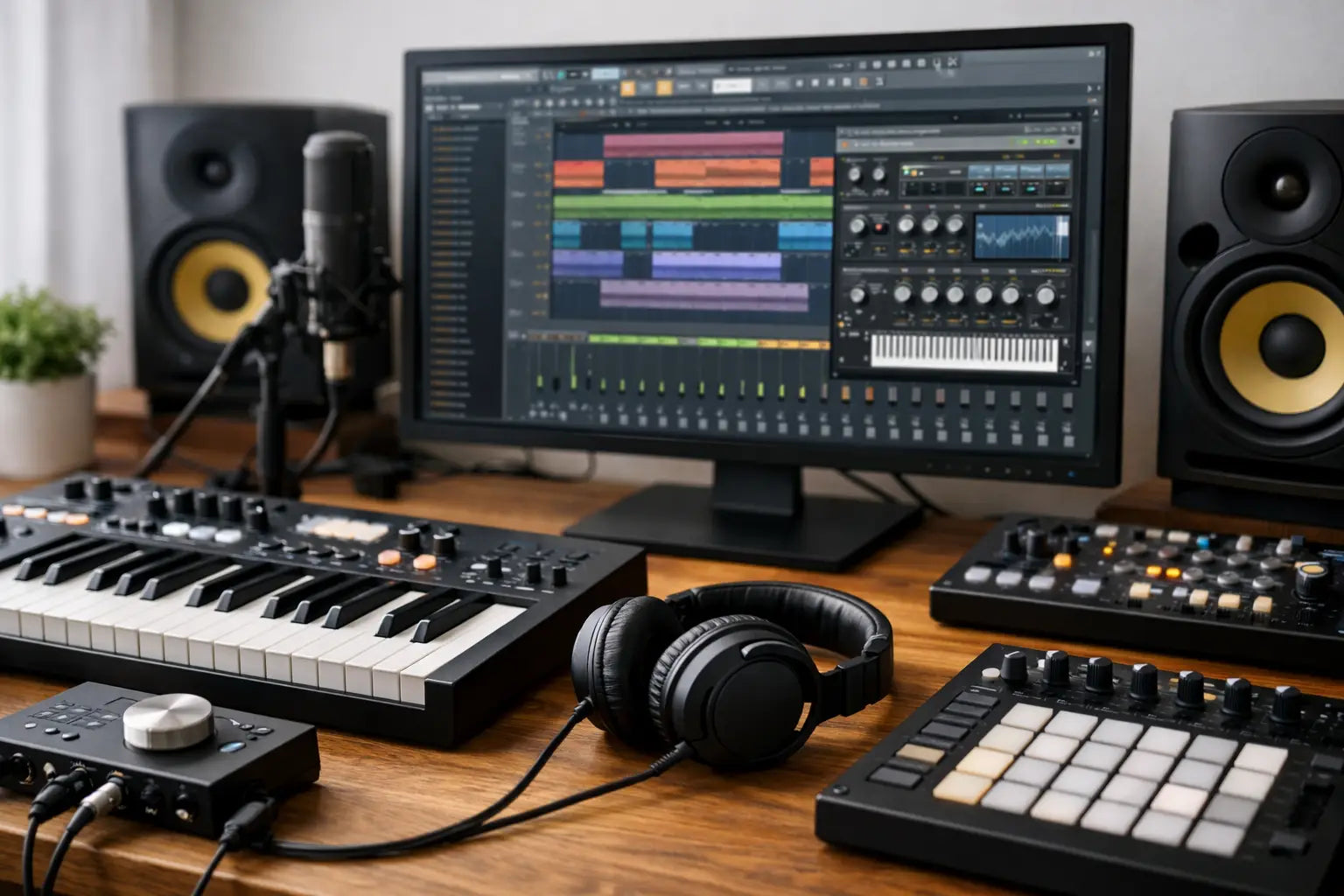
If your drums sound disconnected, your drops feel generic, or every new project starts with 20 minutes of scrolling, the problem usually is not FL Studio. It is the kit FL Studio is loading into your workflow. A strong kit gives you instant access to sounds that already fit your genre, your mix goals, and your pace. A weak one turns every session into admin.
For club-focused producers, that difference matters. In Afro House, Tech House, Melodic Techno, Techno, Bass House, and EDM, the source material does a lot of the heavy lifting. The right kick already has the weight. The clap already sits in the pocket. The top loop already creates movement before you touch a plugin. That is why building a usable kit is less about collecting thousands of files and more about choosing sounds that are current, mix-ready, and easy to reach.
What a kit FL Studio producers actually need
A lot of producers use the word kit to mean anything from a ZIP of random one-shots to a fully organized production system. Those are not the same thing. If you want faster sessions and stronger results, your FL Studio kit should act like a curated toolbox, not a storage dump.
At minimum, that means core drums, musical elements, transitions, and a few go-to presets. For most electronic producers, the essentials are kicks, claps, snares, hats, percussion, bass one-shots or loops, stabs, FX, risers, downlifters, vocals, and instrument presets for plugins you actually use. If Serum is part of your setup, a small bank of proven bass, lead, pad, and pluck presets can save a lot of time.
The part many people miss is cohesion. A kit is only useful when the sounds belong together. You can absolutely make a track from mixed sources, but if your kick comes from a raw techno pack, your clap from a pop folder, and your perc loop from an over-processed house pack, you will spend more time fixing than producing. A good kit shortens decisions because the sounds already speak the same language.
Why most FL Studio kits slow producers down
Big kits feel like value at first. You download 10 GB of content, open the browser, and think you are set for months. Then the reality kicks in. Too many similar sounds create choice fatigue. Bad file naming kills momentum. Weak leveling tricks you into picking sounds that seem exciting alone but collapse in a full arrangement.
There is also a genre problem. A general-purpose pack might include decent material, but club records live or die on details. The swing of a tech house shaker, the low-end shape of an Afro House kick, or the tonal aggression of a Bass House stab is specific. If your source sounds are broad instead of targeted, you end up forcing them into place.
That is why specialist packs often outperform larger bundles of random content. Not because more files are bad, but because more files without a clear use case add friction. Producers who finish tracks consistently usually have smaller, sharper libraries than producers who collect endlessly.
Build your kit around genre, not file count
The fastest way to improve your FL Studio setup is to stop asking how much should be in your kit and start asking what kind of records you are trying to make.
If you produce Afro House, your folder structure should prioritize organic percussion, textured tops, hypnotic loops, deep kicks, melodic hooks, and vocals that create movement without overcrowding the groove. If you produce Tech House, you will likely need punchy low-end, dry drums, bold stabs, short vocals, and transitional FX that keep energy high without sounding overdone. Melodic Techno calls for a different balance - more tonal atmosphere, better synth presets, stronger arps, and drums that support the emotional arc instead of dominating it.
This is where producer-led curation matters. A kit built by people who actually work in these genres tends to feel immediately usable because the sounds were made for real-world arrangements, not just solo auditioning.
The fastest kit FL Studio workflow is organized from day one
FL Studio is quick when your browser is quick. If your folders are messy, your sessions will be too.
Start with a clean top-level structure inside your sample library. Keep drums separated into kicks, claps and snares, hats, percussion, tops, and fills. Put music loops in folders by mood or key if available. Keep vocals, FX, and presets separate. If you use multiple genres, label those clearly so you are not dragging a peak-time techno ride into a laid-back afro groove by accident.
Inside FL Studio, add only the folders you use regularly to the browser. That small move makes a bigger difference than most workflow hacks. When your best material is visible immediately, you make decisions faster and second-guess less.
Another smart move is creating a favorites layer. This can be a personal folder of your top kicks, top claps, top hats, top bass shots, and top transitions. Ten great choices beat 300 average ones every time.
What to include in a high-performance FL Studio kit
Not every producer needs the same ratio of content, but the best kits usually cover a few key roles.
Your drums should do most of the groove work with minimal repair. That means kicks with clear low-end focus, claps and snares that cut without harshness, hats with usable brightness, and percussion that adds movement rather than clutter. In club genres, percussion quality is often the difference between a loop that feels alive and one that feels stock.
Your melodic content should support quick idea generation. Chord loops, bass loops, synth hooks, and stab shots can all help, but they need to leave room for arrangement. Overly busy loops can sound impressive in preview and become unusable once vocals, bass, and drums are added.
FX should solve transitions, not just fill folders. Risers, impacts, sweeps, and downlifters are useful when they are clean, current, and easy to place. Cheap-sounding FX can make an otherwise strong drop feel dated fast.
Presets are a force multiplier if they are genre-aware. A small bank of Serum presets made for Melodic Techno or Bass House is worth more than a bloated preset dump with no direction. The same goes for vocal content. Short, mix-ready vocal chops or hooks often work better than long acapellas if speed is the goal.
How to tell if a sample pack belongs in your FL Studio kit
Use one standard: does it help you finish tracks faster without lowering quality?
That means the sounds should be processed enough to feel polished, but not so crushed that you cannot shape them. It means file names should be clear. It means loops should be tight, tempos should make sense, and one-shots should feel intentional. If you constantly need to fix transients, tame harshness, or guess what a file is supposed to do, it probably does not deserve a place in your main kit.
Social proof can help here, but only if the sounds back it up. A pack used by respected DJs and working producers carries more weight when it is obvious that the material was built for current release standards. The goal is not just inspiration. It is conversion from idea to finished record.
That is why many producers prefer focused libraries from brands that stay inside specific lanes. At Hot Grooves, that producer-first approach is the point - tighter genre targeting, faster selection, and sounds that are built to land in modern electronic mixes without unnecessary cleanup.
Keep your kit lean as your standards rise
One of the best upgrades you can make is removing sounds. As your ear improves, you will notice which folders you never touch, which loops always need too much work, and which presets sound good only in isolation. Cut them.
A leaner kit creates confidence. You stop browsing and start building. You know where your best clap is. You know which top loop adds width without masking the vocal. You know which bass preset gives you the right movement before automation even starts.
There is a trade-off, of course. A very tight kit can make your ideas feel familiar if you never refresh it. The fix is not to go back to chaos. It is to rotate in a few high-quality additions by genre, then keep only what earns repeat use.
The real goal is not more sounds
The best kit FL Studio can run is the one that removes friction between idea and execution. Not the biggest folder. Not the loudest preview. Not the pack with the most screenshots.
When your samples are curated, your presets are relevant, and your folders are organized for the music you actually make, FL Studio gets out of the way. That is when sessions move faster, grooves hit harder, and tracks stop dying in the sketch stage. Build a kit that works like a finisher, not a collector’s shelf.
How to Choose the Right Vocal Pack
Best Techno Sample Pack Picks for Producers