
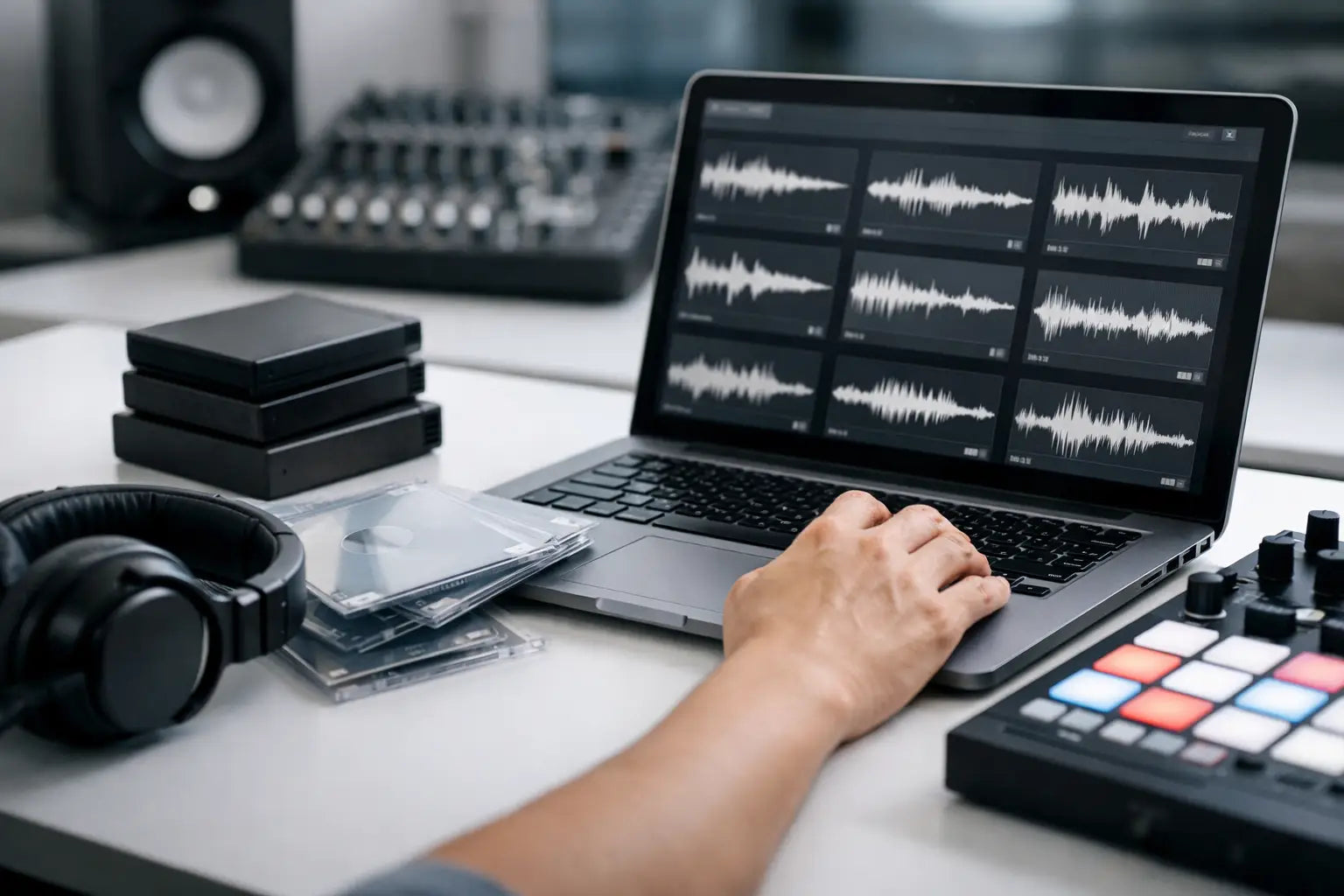
The wrong techno sample pack costs you twice. First at checkout, then again when you waste an hour dragging flat kicks, weak hats, and overprocessed loops into a project that still does not hit. The right pack does the opposite - it gets you to a strong eight-bar idea fast, keeps your groove focused, and gives you sounds that already feel at home in a club mix.
That is why choosing a techno sample pack is less about quantity and more about fit. A folder with 2,000 files sounds impressive until you realize only 80 of them actually match the record you are trying to make. Producers who finish tracks consistently tend to buy with intent. They know the subgenre, they know the role the pack needs to play, and they know whether they want instant inspiration or deeper building blocks.
What a good techno sample pack should actually do
A strong pack should shorten the distance between an idea and a finished record. That means the drums should already carry weight, the percussion should create motion without clutter, and the synth content should feel current without forcing you into someone else’s exact arrangement. If you have to repair every sound before it sits in the mix, the pack is not saving time.
In techno, that matters more than in almost any other electronic genre. The whole record can live or die on small details - the shape of the kick tail, the brightness of the ride, the texture in the hat groove, the tension in a single atmospheric layer. A pack built by producers who understand that will usually feel tighter from the start. You hear less filler, more purpose, and better balance across the files.
There is also a practical difference between sounds that are loud and sounds that are usable. Overhyped demos can hide brittle tops, muddy low mids, or loops that sound finished on their own but fight the second you add your own elements. A quality pack gives you punch and attitude without boxing you into one exact mix.
Match the techno sample pack to your lane
Techno is not one thing, and shopping like it is usually leads to folders you never open again. Peak-time techno, hypnotic techno, industrial techno, melodic techno, and raw warehouse styles all ask for different sound priorities.
If you make peak-time or festival-leaning techno, you probably need harder transient detail, bigger low-end control, and more obvious tension tools. Kicks need to lead. Percussion needs to cut through dense arrangements. Risers, impacts, and synth stabs can be more aggressive because the records are built to command attention quickly.
If your sound leans hypnotic or minimal, the details shift. You may care less about giant FX and more about rolling percussion, subtle modular textures, offbeat movement, and loops that evolve without sounding busy. In that case, a pack with fewer but better groove elements is often more valuable than a massive cinematic library.
Melodic techno sits in its own lane. Here, presets, tonal sequences, arps, and emotional atmospheres matter more. But even then, the drums still need club weight. A melodic pack with soft or generic rhythm content creates extra work, because you end up replacing half the kit just to get the track moving.
This is where genre specialization matters. A focused catalog usually makes decision-making easier because the content is built around how producers actually shop: by style, by format, and by immediate use case.
Start with the files you use most
Most producers do not need every format in every pack. They need the right core assets. Before buying, be honest about how you actually build tracks.
If you start from drums, prioritize one-shots and top loops. You want kicks with clear low-end identity, claps and snares that do not feel dated, hats with enough variation to avoid copy-paste grooves, and percussion loops that add motion without swallowing your own programming.
If you sketch ideas from harmony or texture, presets and tonal loops may carry more value. A good Serum bank or set of synth loops can help you find a hook fast, especially when you are trying to move from a blank session to a usable motif in minutes.
If arrangement is your weak spot, look for construction-ready content. That can mean drum loop variations, tension FX, fills, and transitional material that help a track feel finished instead of looped. There is nothing wrong with buying for workflow. In fact, that is often the smartest reason to buy.
Why drums make or break the pack
In techno, weak drums are almost impossible to hide. You can cover a basic synth with processing, but a kick that lacks weight or a hat loop with no character will expose the track immediately.
The best techno sample pack usually earns its value in the drum folder first. Kicks should feel intentional, not like recycled EDM leftovers. You want a range of body and knock, with enough consistency that auditioning does not become a volume-matching exercise. Hats should offer multiple shades - crisp, dusty, bright, metallic, tight. Percussion should give you both glue and edge.
Pay attention to how the drum content is organized too. Clean labeling sounds boring until you are on your tenth project of the week. Clear naming, BPM info where needed, and logical categories save real time. Hot Grooves leans into that producer-first approach because usable sounds matter, but usable organization matters too.
Loops versus one-shots - buy for control or speed
This is one of the biggest trade-offs. Loops are fast. One-shots are flexible. Neither is better in every situation.
If you are working against deadlines, loops can get you to a finished groove quickly. They also help when you want genre-authentic swing and texture without programming every hit from scratch. That is especially useful for layered percussion and top-end rhythm, where feel matters as much as sound selection.
One-shots give you more control over phrasing, space, and originality. They are better when you want to build your own drum language or avoid using obvious loop signatures. The catch is that they take longer. If your workflow already stalls in the setup phase, a one-shot-only pack may not solve your actual problem.
For most producers, the best answer is balance. A pack with strong one-shots, a tight selection of loops, and a few polished musical ideas usually gives the most mileage.
Presets, vocals, and FX are not extras if they fit your process
A lot of producers treat presets, vocals, and FX like bonus content. Sometimes they are. Sometimes they are the reason the pack pays for itself.
A well-made Serum preset bank can speed up writing, especially in melodic or modern techno where sound identity matters. You still need to tweak and make it yours, but starting from a polished patch is faster than building every lead, stab, and bass from zero.
Vocals are more situational. In straight techno, they may be a texture rather than a lead feature. But short hooks, spoken phrases, and processed atmospheres can create a signature moment fast. The key is relevance. Generic pop vocal cuts do not help much if your records live in darker club spaces.
FX matter more than many producers admit. Good uplifters, downshifters, sweeps, impacts, and noise textures can save an arrangement that feels static. They are not a substitute for structure, but they help maintain tension and release across long sections.
How to tell if a pack is built for real-world production
You can usually spot the difference between a serious pack and a padded one within a few minutes. Look for curation. Look for consistency. Look for files that sound like they belong in the same world.
If every kick feels like it came from a different decade, the pack was probably assembled for volume. If the loops are all too busy, they may impress in previews but become useless in actual sessions. If the synth content is trendy in a way that already feels tired, it will date your record fast.
A better sign is when the pack sounds focused. The drums sit in a similar quality range. The percussion complements the subgenre. The presets feel mix-aware. The melodic content leaves room for customization. That is what producer-led curation sounds like.
Price matters, but value matters more. A cheaper pack that gives you ten usable sounds is worse than a premium pack that gives you fifty sounds you reach for every week. On the other hand, if you already own a deep drum library, buying another drum-heavy pack may be redundant. It depends on the gap you are trying to fill.
Buy with the next three tracks in mind
The smartest way to choose a pack is not to ask, "Is this good?" Ask, "Will this help me finish my next three records faster and at a higher level?" That question cuts through a lot of marketing noise.
Maybe you need tougher drums for club-ready low end. Maybe you need hypnotic loops that stop your grooves from sounding stiff. Maybe you need melodic presets that get ideas moving before the session loses energy. The best purchase is the one that solves the bottleneck you already know you have.
A techno sample pack should give you momentum, not more browsing. Choose the one that fits your lane, supports your workflow, and sounds ready the second it hits your DAW. When the source material is right, finishing strong starts to feel a lot more normal.
Mixing Mastering for Club-Ready Tracks
How to Choose Tech House Sample Packs