
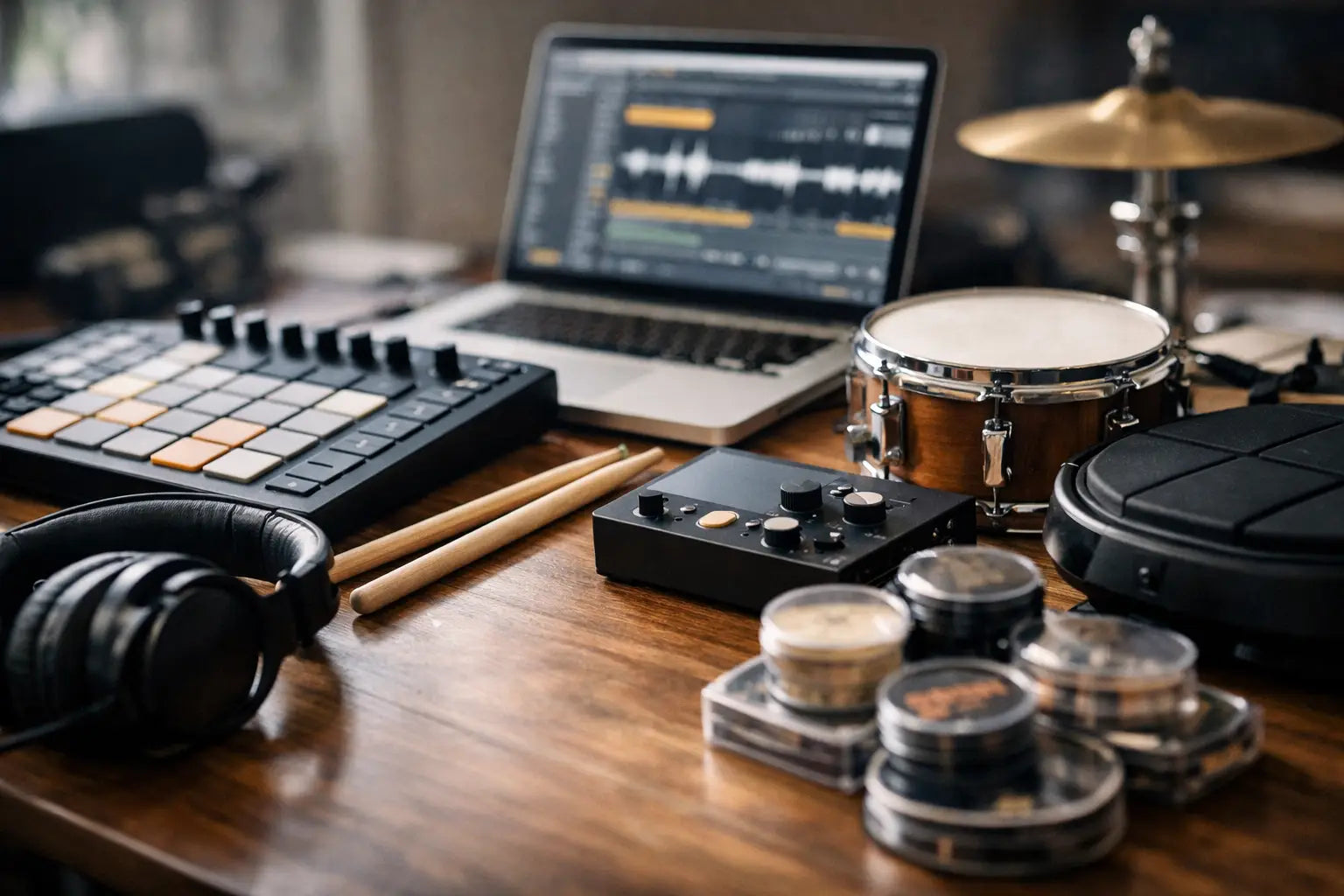
A weak groove can kill a track before the drop even has a chance. You can have a strong bassline, a polished lead, and a great arrangement, but if the drums pack is flat, muddy, or off-genre, the whole record feels smaller than it should.
For electronic producers, choosing the right drum material is less about collecting more files and more about getting sounds that actually move a track forward. The best packs save time, lock into the pocket fast, and sound current without forcing you to rebuild every hit from scratch. That matters whether you are sketching a tech house tool, building a melodic techno arrangement, or tightening an Afro House groove for club playback.
What makes a drums pack worth using
A good drums pack does three things right away. First, it gives you drums that sound finished enough to use quickly. Second, it stays flexible enough for layering, tuning, and processing. Third, it matches the genre language producers and DJs expect to hear.
That last part gets overlooked. A kick that sounds huge in isolation can still be wrong for the track. Tech House wants punch and definition in the low mids. Melodic Techno often needs a kick that feels controlled and deep without swallowing the mix. Afro House lives or dies on percussion movement, so the pack has to provide swing, texture, and human feel, not just loud one-shots.
This is where a lot of generic sample libraries fall short. They may give you thousands of files, but not enough direction. Quantity looks good on a product page. In a real session, it slows you down.
A drums pack should fit your genre fast
If you produce club music, speed matters. You should be able to load a few one-shots, audition loops, and know within minutes whether the pack speaks your genre.
For House and Tech House, that usually means tight kicks, bright claps, clean tops, rolling percussion, and loops that already suggest movement. For Techno, the sweet spot may be harder transient impact, more industrial texture, and percussion that can carry repetition without sounding static. For EDM and Bass House, you often need drums with more edge, more weight, and more obvious mix presence.
The key is not whether a pack can technically work across styles. Most decent packs can. The real question is how much work it takes to make the sounds feel native to your track. If every sample needs heavy EQ, transient shaping, saturation, and cleanup, the pack is costing you time instead of buying it back.
One-shots vs loops in a drums pack
A serious producer usually needs both, but the balance depends on workflow.
One-shots give you control. You can build your own groove, layer kicks and claps, tune drums to the key area of the track, and keep your arrangement custom. If your productions are detail-heavy or you want a distinct drum identity, one-shots matter most.
Loops are about momentum. A strong top loop or percussion loop can get an idea moving in seconds. That is especially useful in Afro House, Tech House, and groove-led styles where swing and movement are hard to fake if you start from silence. Good loops also teach arrangement choices. You hear where the energy comes from, what the syncopation is doing, and how the groove breathes.
There is a trade-off. Loops can make sketching faster, but they can also make tracks feel less personal if you rely on them unchanged. One-shots take longer, but they usually lead to more control and better mix decisions. The best packs support both approaches instead of forcing one.
How to judge sample quality beyond loudness
A lot of producers still confuse loud with good. That is an expensive mistake.
When you preview a kick, listen for shape, not just weight. Does it have a defined transient? Is the sub controlled or overblown? Does it leave space for the bassline, or does it feel like it wants the entire low end to itself? With claps and snares, pay attention to how they sit after the initial hit. A long, messy tail can clutter the groove fast.
For hi-hats and percussion, detail matters more than hype. The best tops are crisp without sounding brittle. Shakers and grooves should add motion, not harshness. If the high end feels impressive for three seconds but tiring after sixteen bars, it is probably going to become a problem in the arrangement.
Also check consistency. A strong drums pack usually feels curated, not random. The files should sound like they belong in the same production universe. That makes layering easier and helps you move faster because you are not fighting wildly different recording styles, saturation levels, or transient profiles.
Why curation beats giant folders
More samples do not automatically mean more options. In practice, oversized libraries often create hesitation. You spend half an hour scrolling for a clap, lose the original idea, and call it sound design.
Curated packs are better for real production because they reduce decision fatigue. If a pack is built by producers who know the target genre, the choices are already filtered. You are not browsing hundreds of irrelevant acoustic hits when all you need is a tight, club-ready rim or a percussion loop that fits a late-night Tech House record.
That producer-led angle matters. Sounds built for actual electronic workflows tend to arrive with the right amount of processing, the right naming structure, and the right genre focus. That is a better experience than pulling from a massive general library that was designed to cover everything and specialize in nothing.
The best drums pack for you depends on how you build tracks
If you start with drums first, your pack needs standout foundational elements. Kicks, claps, hats, and percussion should be strong enough to carry the idea early. If you start with chords, vocals, or a bass groove, then your pack needs to slot in quickly without forcing a full rewrite of the mix.
There is also a difference between writing demo ideas and finishing release-ready records. For sketches, you may want louder, more immediately exciting sounds that help ideas click fast. For finished tracks, you often want drums with enough headroom and flexibility to survive mastering, bus processing, and club translation.
That is why experienced producers look for samples that feel polished but not overcooked. Too raw, and you waste time fixing them. Too processed, and you get trapped with sounds that only work in one exact context.
How to test a drums pack in a real session
The fastest test is simple. Open a current project and swap only the drums. Keep the bassline, main musical idea, and rough arrangement. Then ask three questions.
First, does the groove improve quickly? If the answer is yes within a few minutes, that is a strong sign. Second, do the sounds sit together naturally, or are you patching problems immediately? Third, does the pack push the record closer to your target genre and energy level?
If you have to force every element into place, move on. Good sample material should create momentum. It should not feel like a rescue mission.
Another smart test is low-volume playback. Turn the track down and listen for what still reads. The right kick should still anchor the groove. The clap or snare should still define the backbeat. The percussion should still create motion without taking over. If everything disappears except harsh tops, the pack is probably more flashy than useful.
Where producers get the most value from a drums pack
The real value is not just in better sound. It is in fewer stalled sessions, faster arrangement decisions, and more confidence when you bounce a draft. High-quality drums help you commit sooner because they already sound close to finished.
That is especially important in competitive electronic genres where speed and polish both matter. You do not always need to build every transient from zero. Sometimes the smarter move is starting with source sounds that are already designed for the lane you are trying to hit. That is part of why focused brands like Hot Grooves resonate with producers who care about current club sonics and efficient workflow.
A strong pack can also improve consistency across your catalog. When your drum source material is reliable, your tracks start from a higher baseline. You spend less time correcting weak sounds and more time making creative decisions that listeners actually notice.
Choosing a drums pack without overthinking it
If the samples fit your genre, sound mix-ready without being boxed in, and help you build momentum fast, you are looking in the right place. If the pack feels generic, overstuffed, or impressive only in solo preview, keep searching.
The right drums do not just make your track hit harder. They make the whole production process cleaner, faster, and more focused. Pick a pack that earns its place the moment the groove starts moving.
Samples Loop: How Producers Make It Hit
How to Use Loop FL Studio the Right Way