
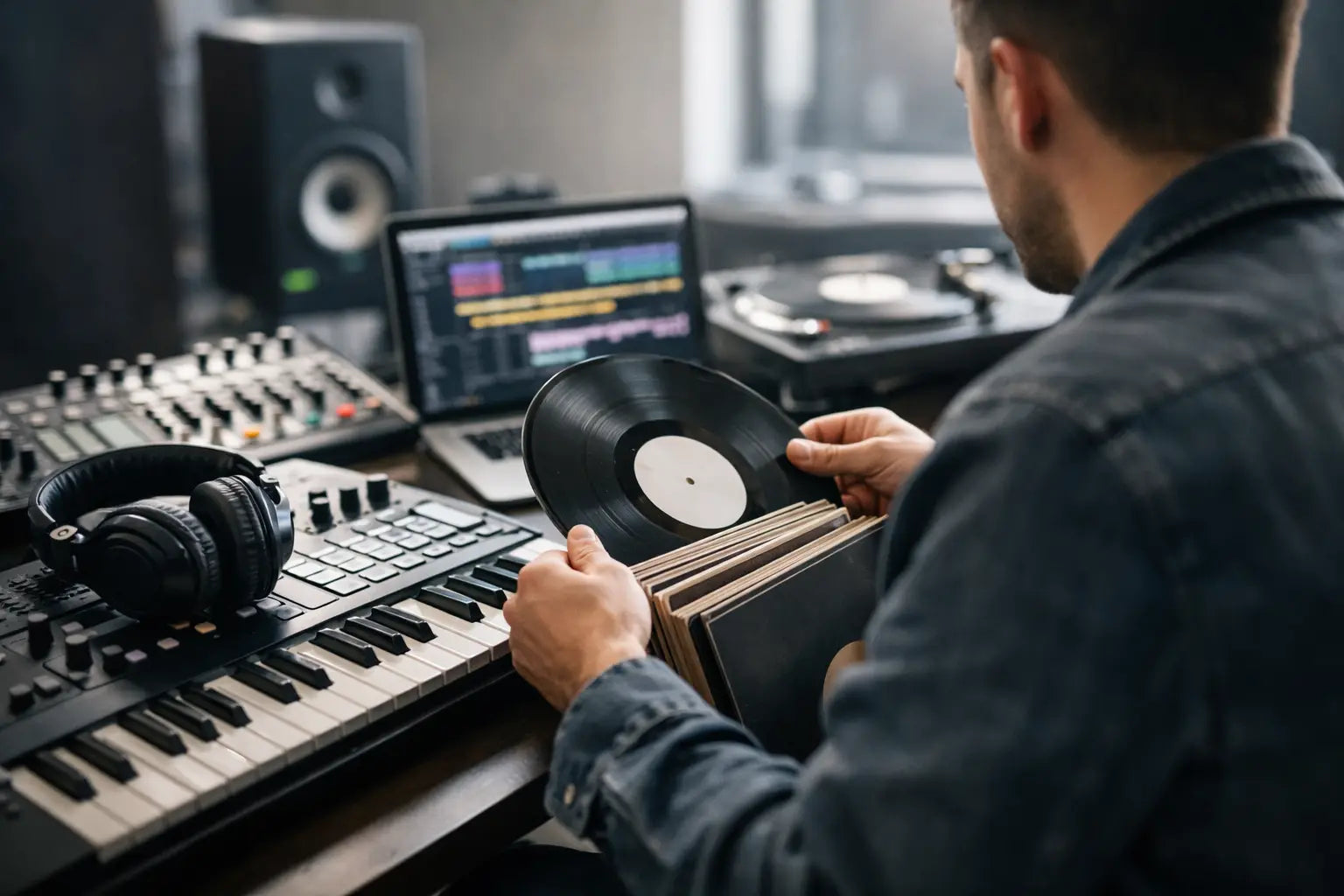
A great samples loop can save a track in the first 10 minutes. You load it up, hit play, and suddenly the groove has direction, the energy feels real, and the blank-session problem is gone. That matters when you make club music, because the right loop does more than fill space - it sets the pace, the swing, and the tone of the entire record.
For electronic producers, loops are not a shortcut in the lazy sense. They are a workflow tool. The real skill is knowing which loop to use, what to change, and how to make it sit like it belongs in your track instead of sounding pasted on top.
What a samples loop actually does
At its best, a loop gives you immediate context. A kick loop tells you where the weight sits. A percussion loop reveals movement between the downbeats. A melodic loop can define mood fast enough that your bassline choices become obvious. That speed matters when you are trying to finish music instead of endlessly auditioning sounds.
In house, techno, bass house, and EDM, groove is rarely just one element. It comes from interaction. The clap placement affects how the hats feel. The hats affect how the bass swings. The bass changes how the synth rhythm lands. A well-made loop already contains some of that relationship, which is why it can get you to a stronger draft much faster than building everything from zero.
That said, not every loop deserves a place in your project. Some sound polished in isolation but collapse once the full arrangement starts. Others are over-processed, too harmonically busy, or locked into a feel that fights your track. The difference between useful and useless usually comes down to fit.
How to choose the right samples loop
The first question is not whether the loop sounds impressive. It is whether it solves a production problem. If your drums feel static, a top loop with the right shuffle might do more than another plugin chain ever will. If your drop feels empty, a focused synth or vocal loop may add width and identity faster than writing a new lead.
Genre matters here. Afro House needs movement and percussion detail that feels human and hypnotic. Tech House usually wants cleaner transients, tighter repetition, and enough attitude to carry the groove without overcrowding it. Melodic Techno often leans on loops that bring emotion and width while leaving room for evolving arrangement work. If the loop misses the genre language, you will end up fighting it.
Tempo compatibility is the next filter. Most DAWs can stretch audio cleanly, but there is still a limit. Push too far and groove starts to feel unnatural. A loop that was built near your target BPM will usually preserve transients, swing, and low-end shape better than one stretched across a wide range.
Key is just as important for melodic content. A tonal loop in the wrong key can force ugly compromises later. Even when pitch shifting works technically, it can change character. Vocals may lose presence. Synth loops may become thinner or harsh. The best choice is often the loop that already speaks the same harmonic language as your track.
Why high-quality loops speed up production
There is a major difference between having more sounds and having better source material. Producers waste hours trying to fix loops that were never strong enough to begin with. Weak transients, muddy mids, harsh highs, and inconsistent timing create extra work in every stage of the session.
A professional loop should arrive ready for real use. That does not mean it is fully finished for every track. It means the recording, sound design, timing, and tonal balance are solid enough that you can build with confidence. When the source sounds right, mixing becomes easier, arrangement decisions happen faster, and the track starts feeling release-ready earlier in the process.
This is one reason genre-focused sample libraries matter. General-purpose packs often cover too much territory and miss the specifics that make a club record hit. Producer-built collections tend to understand where the pocket needs to sit, how bright the percussion should be, how much stereo width works before the mix gets unstable, and what kind of tonal movement feels current in the market.
How to make a samples loop sound original
Using loops well is less about hiding them and more about integrating them. If a loop is carrying the groove, keep the strongest part and remove what clashes with your arrangement. Slice the audio and rearrange accents. Filter certain hits out in the verse, then bring back the full loop in the drop. Layer one clean one-shot over the snare transient if the original hit needs more bite.
With melodic loops, think in terms of role. If the loop has a strong rhythm but too much harmonic information, sample it, chop it, and use only a fragment. If the texture is great but the top end feels busy, low-pass it and turn it into a background layer. If the chord movement works but the sound does not, extract the MIDI by ear and rebuild it with your own synth.
The fastest way to make a loop sound generic is to leave it untouched while everything else in the track tries to compete with it. The fastest way to make it sound intentional is to give it a defined job.
Layering loops without destroying the groove
A common mistake is stacking too many loops that all fight for the same rhythmic space. More percussion does not always mean more energy. Often it means weaker impact because no single element gets to speak clearly.
Start with one main loop that carries the feel. Then add a second layer only if it fills a real gap, such as extra high-end motion, offbeat tension, or low-mid texture. If two loops are both trying to drive the swing, one of them usually needs to be simplified, sliced, or muted in parts.
Phase and frequency overlap matter too. Two loops with similar hats can smear the top end. Two low percussion layers can crowd the kick and bass relationship. Tight EQ moves, transient shaping, and selective muting usually do more than broad processing across the bus.
When to use loops and when to build from scratch
It depends on the track. If you need immediate momentum, loops are often the smartest starting point. They get your ideas moving before second-guessing takes over. That is especially useful for drums, percussion beds, FX textures, and vocal chops.
But some parts should often be custom. Basslines usually need to respond directly to the kick pattern and groove. Signature leads need enough personality that they do not feel interchangeable. Core hooks should support your artist identity, not just the pack they came from.
The strongest productions usually combine both approaches. Use loops for speed, feel, and inspiration. Build custom elements for identity, control, and arrangement depth. That balance gives you efficiency without sacrificing originality.
The best places to use a samples loop in club music
Drum tops are one of the safest and most effective uses. They add motion fast, help glue static drum programming together, and can make a basic beat feel more expensive. Percussion loops are another strong option, especially in Afro House, Tech House, and rolling techno where groove detail is the record.
Vocal loops can also be powerful when used with discipline. A short phrase, texture, or chant can define the character of a section instantly. The trade-off is recognizability. If the loop is too exposed and too common, your track can lose uniqueness fast. Chopping, pitching, resampling, and call-and-response placement help avoid that.
Melodic loops are the highest-risk, highest-reward category. They can spark a track in seconds, but they can also dominate it. If you use one, make sure the rest of the record supports it instead of orbiting around it without purpose.
What to look for before you download any loop pack
Look past marketing terms and focus on usability. Are the loops actually current for your genre? Do they sound mix-ready without being overcooked? Is the organization clear enough that you can find the right BPM, key, and format quickly? Those details matter more than a bloated file count.
You also want packs built by people who understand club translation. A loop that sounds flashy on laptop speakers but falls apart on a system is not helping your production. Tight low-end decisions, controlled top end, and practical headroom are signs that the material was made for real sessions, not just for previews.
That is where specialist brands like Hot Grooves stand out. When the catalog is built around electronic subgenres and producer workflow, you spend less time digging through filler and more time shaping tracks that are ready for DJs, playlists, and release schedules.
The smart move is not asking whether loops are cheating. It is asking whether the loop helps the track move with more confidence, more groove, and less wasted time. If it does, use it well and keep building.
How to Choose a DnB Drum Kit
How to Choose the Right Drums Pack