
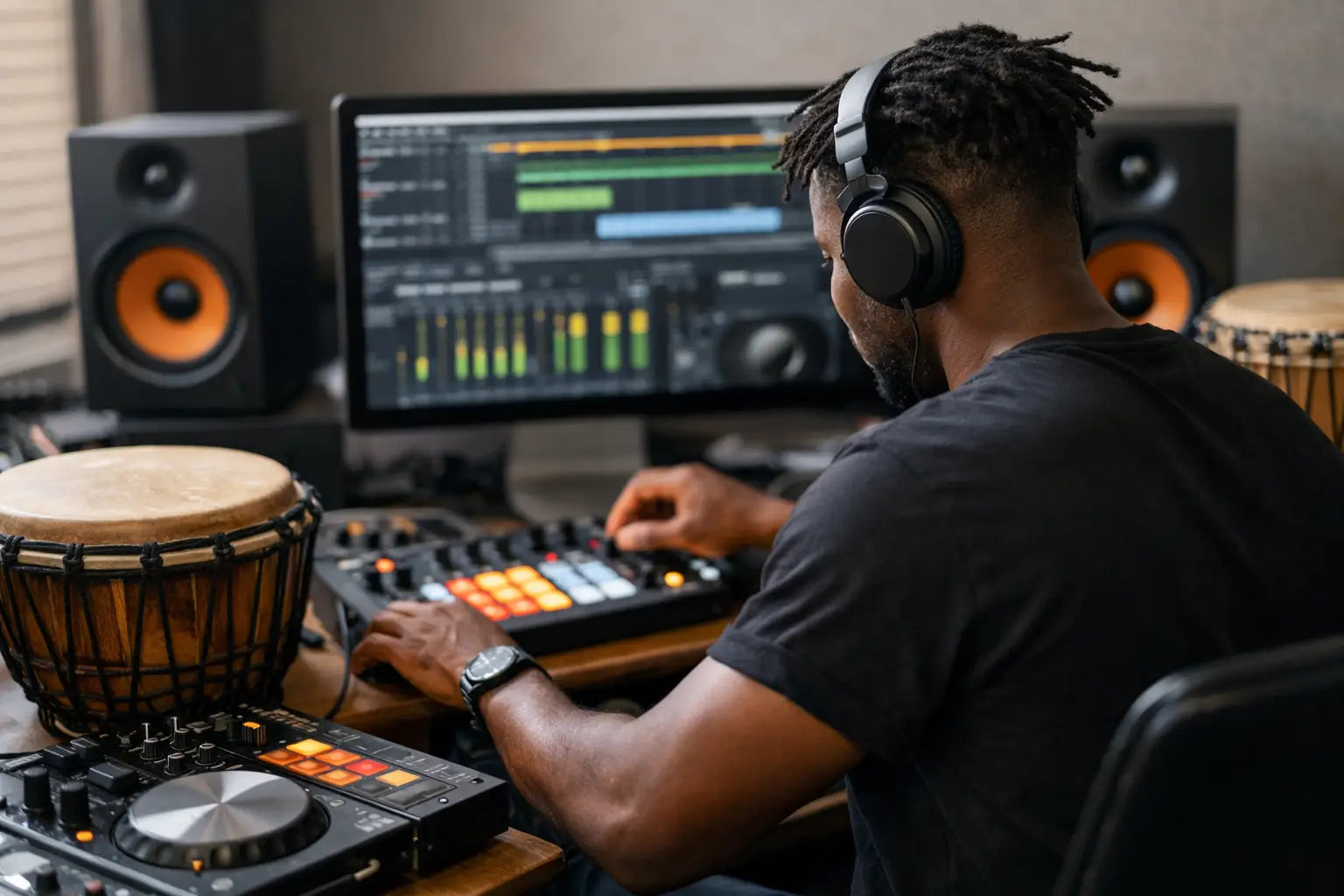
If your Afro House track feels clean but not alive, the problem usually is not your plugin chain. It is the groove. Producers searching for how to make afro house often overfocus on big melodic ideas and underbuild the rhythmic conversation between kick, percussion, bass, and space. In this genre, that conversation is the record.
Afro House lives or dies on movement. Not just energy - movement. The best tracks feel physical before they feel musical. You hear the low end, but you also feel the swing in the percussion, the tension in the offbeats, and the way small vocal or melodic details keep the loop evolving. If you want a result that sounds current and playable, start there.
How to make afro house from the groove up
A strong Afro House production usually starts with drums, not chords. That matters because the groove tells you what kind of bassline, stab, vocal, and arrangement the track can support. If you write a lush harmonic idea first, you can end up forcing the rhythm to fit around it. That is backward for this style.
Begin with a solid four-on-the-floor kick that has weight without eating the whole low end. Afro House kicks are often deep and rounded, but still controlled enough to leave room for a sub or low bass layer. Then build a percussion loop around it with contrast. You want a few elements doing different jobs: a driving shaker or top loop, one or two mid percussion parts adding syncopation, and a standout rhythmic hit that gives the groove identity.
The mistake here is stacking too many busy parts. Afro House can sound dense, but the best productions are selective. Every percussion sound should either push the groove forward, answer another part, or add texture in a way that supports the pocket. If it is not doing one of those jobs, mute it.
Swing is not optional. Straight quantization can kill the feel fast. Shift hats, shakers, congas, and rim-style hits slightly off the grid until the groove starts breathing. This is one of the biggest differences between a loop that sounds like raw DAW programming and one that sounds built for a dancefloor.
Pick percussion that sounds finished
Source selection saves hours. If the drums already sound polished, balanced, and genre-correct, you spend less time forcing them into place. That is especially true with Afro House, where percussion carries so much of the emotional and physical energy. High-quality loops, one-shots, and tops can speed up the process without making the track feel generic, as long as you layer and edit with intention.
Look for percussion with natural tone, stereo movement, and enough transient detail to cut without becoming harsh. A lot of beginner tracks fail because the tops are thin, the mids are muddy, or the groove feels like random tribal percussion instead of a locked pattern.
Build a bassline that supports the rhythm
Once the drums are moving, bring in the bass. Afro House basslines are often simpler than producers expect. They do not need to perform acrobatics. They need to lock with the kick, reinforce the groove, and create hypnosis over time.
A short, warm bass can work well when the percussion is busy. A more sustained bass can work when the drums leave more gaps. It depends on the track. The key is making sure the bass rhythm complements the percussion rather than competing with it. If your congas, shaker loop, and bassline all fight for attention in the same rhythmic lane, the groove gets smaller instead of bigger.
Sound choice matters just as much as note choice. Go for a bass with body in the low mids and enough sub to feel powerful, but not so much width or distortion that it muddies the kick. In club-focused production, clean low-end decisions beat impressive soloed sounds every time.
Sidechain helps, but do not use it as a fix for bad arrangement. If your kick and bass need extreme ducking just to coexist, revisit the pattern or sound selection first.
Chords, stabs, and melodies should add tension, not clutter
Afro House has room for rich harmony, but that does not mean every track needs big chord stacks. In many cases, one strong stab, a repeating chord phrase, or a sparse melodic line will create more impact than a full progression.
Think in loops that evolve. A simple minor chord stab with motion from filtering, delay, reverb automation, or octave layering can carry a section if the rhythm underneath is strong. Plucks, mallets, keys, marimba-style sounds, and atmospheric synth textures all work, but they need to serve the groove.
This is where restraint separates stronger productions from crowded ones. If the drums and bass already have the floor moving, your melodic parts should create identity and emotion without stepping on that foundation. Try muting half your harmony layers. The track will often hit harder.
Use vocals as a rhythmic tool
Vocals are huge in Afro House, but they do not always need to be lead vocals in the pop sense. A chopped phrase, chant, call-and-response hook, or atmospheric topline can bring the whole track into focus. The right vocal gives the groove a human center.
Placement matters. Short vocal phrases often work best when they answer the percussion or land around transitions. Long phrases can add drama, but they need space around them. If your instrumental is already packed, the vocal will sound pasted on instead of integrated.
Processing should keep the vocal musical and rhythmic. Delay throws, filtering, reverb tails, and subtle pitch movement can make a simple phrase feel expensive. Just do not wash it out so much that it loses presence.
Arrangement is where the track becomes playable
A good eight-bar loop is not a finished Afro House record. Arrangement is what turns raw ideas into something DJs can use and listeners remember.
Start with a clear groove section that establishes the rhythm fast. You do not need to reveal every element at once. In fact, holding back key percussion, vocals, or melodic parts makes the first drop feel bigger. Let the track earn its momentum.
Afro House arrangement usually works best when changes are gradual but intentional. Instead of dramatic EDM-style switchups every few bars, think in layers. Bring in a new shaker texture, automate the chord stab width, strip the kick for a beat, introduce a vocal answer, then return with extra low-end pressure. That is how you keep repetition engaging without breaking the hypnosis.
Breakdowns should reset tension, not drain the track. Too much harmonic filler or cinematic padding can make the record lose its identity. Keep the core atmosphere intact, and make sure the return to groove feels like a payoff.
How to make afro house arrangements feel bigger
Energy comes from contrast. If everything is wide, loud, and busy from the start, nothing feels like a lift. Save your strongest combinations for moments that matter. That might mean holding back the main vocal until after the first break, or introducing an extra percussion layer only in the second drop.
Automation does a lot of heavy lifting here. Filter movement, delay feedback changes, reverb throws, percussion mutes, and subtle gain rides can make a repetitive groove feel alive over a long arrangement. Small moves matter more than giant effects.
Mix for clarity and movement
Afro House mixes need punch, but they also need air. If your track sounds crowded in the mids, the groove will feel smaller no matter how strong the pattern is.
Start with the low end. Make sure the kick owns its space and the bass supports it cleanly. Then shape percussion so the important transients cut through without building harshness at the top. The mids deserve special attention because that is where percussion, stabs, vocals, and textures often pile up.
Use EQ to separate roles, not just to chase a cleaner analyzer. A percussion loop may not need much low-mid information if the bass and kick are already filling that range. A chord stab may sound better slightly narrower if the tops and vocal are carrying width.
Reverb should add depth without blurring the groove. Shorter reverbs and tempo-aware delays usually work better than huge washed-out spaces, unless the arrangement is intentionally opening up for a breakdown.
The fastest way to improve your Afro House tracks
Reference current records while you produce. Not to copy, but to stay honest about density, low-end balance, percussion brightness, and arrangement pacing. Afro House has a specific sense of space and motion. If your track sounds flat next to a professional release, the issue is usually not mystery mastering magic. It is often source quality, groove balance, or over-arrangement.
This is also why premium genre-focused sounds matter. If your drums, vocals, loops, and presets are built for this lane, you can move faster and make sharper creative decisions. For producers who want polished results without wasting sessions on raw sound creation, that workflow advantage is real. Hot Grooves approaches it exactly that way - quality first, genre-specific, and built for tracks that need to compete.
If you are serious about learning how to make afro house, stop asking whether the track has enough elements and start asking whether every element improves the groove. That one shift will get you closer to a record people actually play.
How to Make Tech House That Hits Hard
How to Make Techno That Hits Hard