
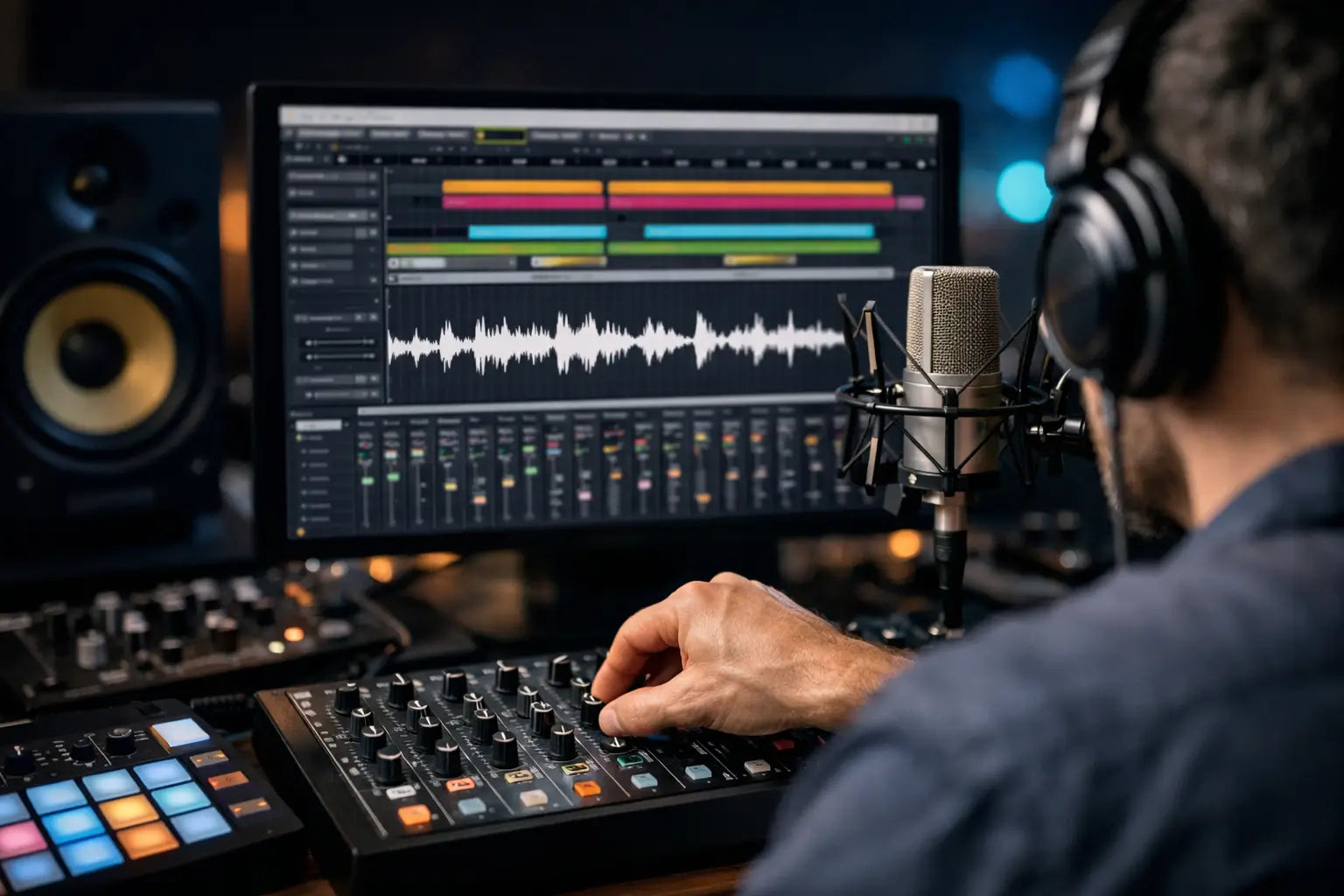
A vocal loop can make a track feel finished in seconds - or make the whole mix collapse just as fast. If you're figuring out how to mix vocal loops, the difference usually comes down to context. A loop that sounds great solo can fight your kick, smear your groove, and crowd the lead synth the moment the drop hits.
In club-focused music, vocals are rarely just vocals. They're rhythm, texture, hook, and energy control. That means the job is not simply to make the loop sound "good." The job is to make it feel locked to the record, whether you're building Afro House, Tech House, Melodic Techno, Bass House, or straight EDM.
Start with the right loop
The fastest way to get a polished result is choosing a loop that already fits the production. If the tone, rhythm, and attitude are wrong, no amount of processing will make it feel natural.
A breathy topline with long tails might be perfect for Melodic Techno, but in a tighter Tech House arrangement it can drag the groove. A choppy spoken phrase may cut through a club mix beautifully, but it can feel too dry or aggressive in a deeper Afro House record. Before reaching for plugins, ask a simple question: does this loop support the track's movement, or is it forcing the track to adapt to it?
This is where quality source material matters. Well-recorded loops with controlled room tone, solid timing, and a clear tonal center will always mix faster than overprocessed or muddy vocals.
How to mix vocal loops without overprocessing
A common mistake is treating every loop like a full lead vocal. Most loops do not need a full chain with surgical cleanup, heavy compression, layered saturation, stereo tricks, and multiple time-based effects. In a lot of dance tracks, that approach makes the vocal sound expensive on its own but weaker in the arrangement.
Start with the minimum effective moves. Get the level right first. Then shape only what's getting in the way. If the loop already has character, preserve it.
Set the level in context
Pull the fader down lower than you think, then bring it up until the vocal adds energy without taking over the record. In electronic music, a loop often works best when it feels integrated into the groove rather than sitting on top like a pop vocal.
Check the level against the kick, clap or snare, bass, and main musical hook. If the loop is masking the groove, it is too loud, even if it sounds exciting solo. If it disappears the moment the drums come in, it may need tonal shaping more than volume.
Clean up the low end
Most vocal loops carry rumble, handling noise, plosives, or low-mid buildup that adds nothing useful. A high-pass filter is usually the first move. The exact cutoff depends on the loop, but many club vocals can be filtered somewhere between 100 and 180 Hz without losing anything important.
Be careful not to thin out a loop that needs body. Lower male phrases, soulful hooks, and spoken loops often need some chest tone to feel expensive. The goal is to remove conflict with the kick and bass, not strip the vocal into a brittle top-end layer.
Fix the boxy zone before boosting highs
If a vocal loop feels dull, many producers jump straight to a high shelf. Sometimes that works. Often the real issue is too much buildup around the low mids or midrange, usually somewhere between 250 Hz and 1.5 kHz.
A small cut in the right area can open the loop faster than adding top end. Once the mud is gone, you may only need a slight presence boost for clarity. That keeps the vocal forward without turning it harsh.
Compression for groove, not just control
Compression on vocal loops should support rhythm. In dance music, a loop with uneven syllables can distract from the pocket, especially if it repeats every few bars. Light compression can help glue the phrase together and keep it stable against a driving instrumental.
For many loops, moderate ratio compression with a medium attack and release does the job. If you clamp down too hard, the vocal loses movement and starts sounding flat. If the transients are too jumpy, shorten the attack slightly. If the compressor pumps awkwardly against the rhythm, adjust the release so it breathes with the track tempo.
Sometimes one compressor is enough. Sometimes two gentler stages work better than one aggressive one. It depends on the source. A heavily dynamic sung loop may need more control than a processed spoken phrase from a sample pack.
How to make vocal loops sit in a busy mix
The biggest challenge when learning how to mix vocal loops is carving space without making the production feel smaller. Club tracks rely on dense low end, bright percussion, and repeating synth patterns. The vocal needs a place inside that system.
Use subtraction on competing elements
If the loop is fighting a lead synth or stab, try cutting a little presence from the instrument instead of endlessly boosting the vocal. Small moves add up. A narrow or moderate cut in a competing part can create room while keeping the vocal natural.
This matters a lot in genres where the topline is more of a motif than a lead. You want the vocal to read clearly, but not dominate every bar.
Control sibilance before effects
If the loop has sharp S sounds or bright consonants, deal with them early. Reverb and delay exaggerate sibilance fast, especially with modern bright electronic production. A de-esser can keep the top end smooth without forcing you to darken the whole vocal.
This is one of those small decisions that has a huge payoff. A loop with controlled sibilance can take more air, more reverb, and more delay before it gets annoying.
Sidechain when needed
Not every vocal loop needs sidechain compression, but in club music it can help the phrase breathe around the kick or around a dominant synth stack. Keep it subtle unless you're intentionally going for a pumping effect.
If the loop loses clarity every time the drop gets busy, a gentle sidechain triggered by the kick or a bus can keep the groove clean. The trick is to hear movement, not obvious ducking.
Reverb and delay should match the genre
Time-based effects shape whether a vocal feels intimate, wide, underground, or festival-sized. The wrong effect choice can place the loop in a different world than the instrumental.
Tech House and Bass House usually benefit from tighter, more controlled spaces. Short plates, compact rooms, and tempo-locked delays often sit better than huge washes. Afro House may allow more organic space if the percussion and groove leave room. Melodic Techno can take longer tails and atmospheric delays, but those effects still need filtering so they don't smear the low mids.
Filter your reverb returns. Roll off low end and often some top end too. That keeps the vocal space polished instead of cloudy. Delays usually work better when they are shaped to sit behind the dry vocal, not compete with it.
A useful move is automating effects by section. Keep verses or groove-building sections tighter, then open up the last word or phrase before transitions. That gives you scale without washing out the whole arrangement.
Arrangement matters as much as processing
A lot of vocal mixing problems are really arrangement problems. If the loop runs constantly, across every section, over every lead, no amount of EQ will stop it from feeling repetitive or crowded.
Cut phrases. Mute the last word. Reverse a tail into a drop. Use only the strongest slice of the loop in the busiest section. A vocal often becomes more powerful when it appears with intent instead of filling every gap.
This is especially true with royalty-free vocals. Great source material gives you speed, but the best results come from editing it into your track's identity. Even simple chops and timing adjustments can move a loop from generic to release-ready.
Add character carefully
Saturation, distortion, pitch processing, formant shifting, and modulation can all help a vocal loop feel more current. But this is where producers often lose the original hook.
If the track needs edge, add a little harmonic texture. If it needs width, use controlled stereo treatment and check mono compatibility. If it needs attitude, try subtle pitch or formant moves. The best character processing usually sounds intentional but not distracting.
When a vocal is already well designed, less is often more. That's one reason producer-focused sources are valuable - they are built to land quickly in a real mix, not just impress in preview mode. Hot Grooves approaches vocal content with that same workflow-first logic, which is exactly what saves time when you're finishing records on a deadline.
Check the loop where it counts
Always test the vocal in the drop, the breakdown, and the busiest 8 bars of the arrangement. Those sections reveal different problems. The breakdown tells you if the loop sounds too dry, too harsh, or too exposed. The drop tells you if it survives the drums and bass. The busiest section tells you whether the vocal still earns its space.
Also check at low volume. If the vocal vanishes completely, it may need better midrange placement. If it pokes out too much even quietly, it's probably overtaking the track.
A strong vocal loop mix feels obvious after the fact. It adds identity, drives energy, and makes the record easier to remember. That usually comes from smart choices, not a giant chain. Pick the right source, shape only what matters, and make every move serve the groove.
Are Vocal Loops Royalty Free? The Real Answer
9 Best Melodic Techno Sample Libraries