
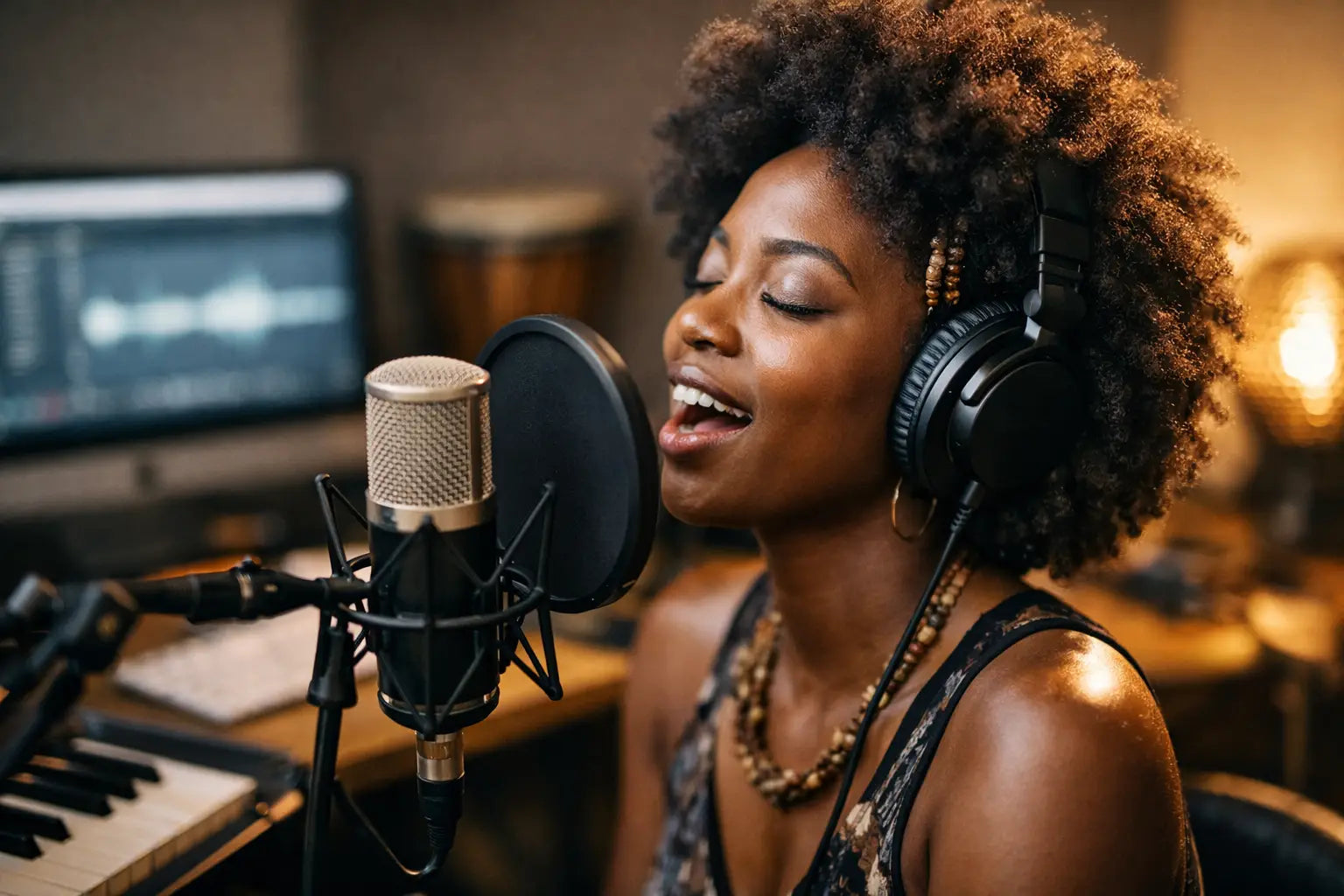
A great Afro House track can survive a simple drum groove and a restrained bassline. Weak vocals cannot. If you are chasing the best afro house vocals, you are really chasing emotional weight, cultural fit, and mix-ready tone in one shot. That is why vocal choice often decides whether a record feels playlist-ready or stuck in the sketch folder.
Afro House is not a genre where vocals work as decoration. They usually carry ritual, atmosphere, identity, and tension. Even a short phrase can define the entire record. The wrong vocal will feel pasted on top of the groove. The right one locks into the percussion, reinforces the mood, and makes the track feel finished much faster.
What makes the best afro house vocals work
The best afro house vocals are not always the biggest, cleanest, or most technically impressive. They work because they feel connected to the rhythm. Afro House lives on movement, so a vocal has to respect space between drums, not fight for it.
That usually means phrasing with natural swing, expressive repetition, and enough tonal character to stand up against layered percussion. Breath, grit, call-and-response energy, chants, spoken textures, and melodic toplines can all work. It depends on the lane of Afro House you are producing.
If your track leans deep and organic, a rawer vocal with texture often beats a polished pop take. If you are building for bigger festival crossover, a cleaner topline with a strong hook may carry better. Neither option is automatically better. The goal is genre fit.
A lot of producers make the mistake of judging vocals soloed. That is not how records are consumed. A vocal that sounds plain by itself can become perfect once it is sitting over shakers, toms, atmospheric chords, and a rolling low end. On the other hand, a flashy vocal can fall apart when the groove gets dense.
Best afro house vocals by style
Not every Afro House record asks for the same type of voice. Picking the right lane early saves time and keeps your arrangement focused.
Chant-based vocals
These are often the fastest route to authentic groove energy. Chants add pulse, repetition, and collective feel without overloading the topline. They work especially well in tracks built around percussion-first drops, hypnotic loops, and stripped melodic content.
The trade-off is that chants can feel generic if they are overused or poorly arranged. A strong chant needs variation in placement, filtering, and layering. If it repeats unchanged for four minutes, the track will flatten out.
Soulful melodic vocals
This is where emotional lift happens. Soulful phrases and melodic hooks can turn a functional club tool into a memorable record. They tend to work best when the instrumental leaves enough room for the vocal to breathe.
The catch is balance. Too much melody and the track starts drifting toward Afro-pop or vocal house. That can be a good thing if that is the target, but if you want a darker club record, a full topline may feel too dominant.
Spoken and tribal textures
Spoken phrases, vocal textures, and atmospheric vocal layers are useful when you want mood without a classic song structure. These vocals can glue breakdowns together, add tension before a drop, and create identity in tracks that rely more on groove than hook.
This approach is especially strong for producers who want a current, underground-leaning sound. The downside is memorability. Texture creates vibe, but it does not always give you the instant recall of a strong sung phrase.
How to choose vocals that actually fit your track
Start with the drums, not the vocal. In Afro House, groove defines the emotional frame. Once your percussion and low-end relationship feel right, it becomes much easier to hear what kind of vocal the track wants.
If your drum pocket is busy, choose a vocal with simpler rhythm. If the instrumental is sparse, a more expressive vocal can carry the arrangement. Think in terms of contrast. Dense drums and busy vocals usually compete. Sparse drums and minimal vocals can feel empty unless the sound design is doing serious work.
Key and scale matter, but mood matters just as much. A perfectly tuned vocal can still feel wrong if the delivery is too aggressive, too glossy, or too dramatic for the instrumental. The best fit often comes from matching emotional tone before technical detail.
Producers also need to think about range. Afro House arrangements often rely on layered percussion in the high mids and movement in the low mids. If a vocal is packed with harsh presence or muddy lower harmonics, it can force unnecessary EQ compromises across the whole mix.
That is one reason well-designed vocal collections move faster in production. You are not just buying phrases. You are buying source material that already understands where club records need space.
How to process the best afro house vocals
A great source vocal should not need rescue processing. It should need placement. That distinction matters.
The first job is cleaning the low end and controlling harshness. Afro House percussion can get bright fast, so aggressive vocal presence around the upper mids can become tiring. A gentle top-end strategy often works better than trying to make the vocal sound huge.
Next comes groove integration. Short delays, tempo-aware reverbs, and automation are more useful than washing the vocal in effects from start to finish. You want movement that follows the rhythm section. Dry in the verse, wider in the breakdown, tighter on the drop - that kind of contrast keeps the vocal active without crowding the mix.
Pitch treatment depends on the track. Some records benefit from natural tuning that preserves expression. Others need a more controlled, modern finish. There is no rule here except one: if the tuning effect draws attention away from the groove, it is too much.
Layering is where many vocals become release-ready. A lead phrase with supporting doubles, texture tails, and selective chops can create a bigger statement without sounding overproduced. The trick is restraint. Every extra layer should either add width, rhythm, or emotion. If it is not doing one of those jobs, mute it.
Common mistakes producers make with Afro House vocals
The biggest mistake is forcing a vocal into the track after the arrangement is already overcrowded. Vocals need room. If your percussion stack, synth lead, pads, and fills are all fighting for the same range, the vocal will sound like an afterthought no matter how expensive the processing chain is.
Another mistake is choosing vocals based on trend instead of fit. Just because a certain chant style or emotional female topline is popular does not mean it belongs in your record. Afro House is broad enough to support multiple vocal directions, but each track still needs internal logic.
There is also the issue of over-looping. A strong phrase can become weak through repetition. Small edits matter - alternate endings, filtered duplicates, reversed pickups, or call-and-response placement can extend the life of a vocal without making the arrangement feel copy-pasted.
And then there is the authenticity question. Producers should be careful with cultural cues. A vocal is not just a sound effect. Language, delivery, and style carry meaning. Respecting the source matters. If a vocal feels gimmicky or disconnected from the music, listeners hear that fast.
Why royalty-free vocal quality matters more here
Afro House is exposed music. The drums are detailed. The space is intentional. The vocal often sits in a very visible position. That means low-quality source material gets exposed quickly.
Good royalty-free vocals save time in two ways. First, they remove legal friction. Second, and more important for working producers, they remove cleanup work. A well-recorded, genre-aware vocal drops into session faster, responds better to processing, and gets you closer to a finished result without endless fixing.
That is exactly why curated packs outperform random sample digging. When the source has the right phrasing, tone, and production standard from the start, you spend more time building records and less time troubleshooting. For producers who care about speed and polish, that difference is not minor. It is the workflow.
At Hot Grooves, that producer-first mindset is the point. Sounds need to feel current, usable, and built for real club records, not just impressive in a preview.
Finding your version of the best afro house vocals
The best afro house vocals are the ones that make the groove feel inevitable. Sometimes that is a haunting topline. Sometimes it is a chant that hits at exactly the right moment. Sometimes it is just one phrase with enough character to carry the whole record.
If a vocal gives your drums more meaning, supports the tension of the arrangement, and sits in the mix without a fight, you are close. Trust that more than hype. The producers who finish stronger tracks are usually the ones who stop searching for a magic vocal and start choosing vocals that actually serve the record.
How to Speed Up Music Production Fast
How to Use Royalty Free Dance Vocals