
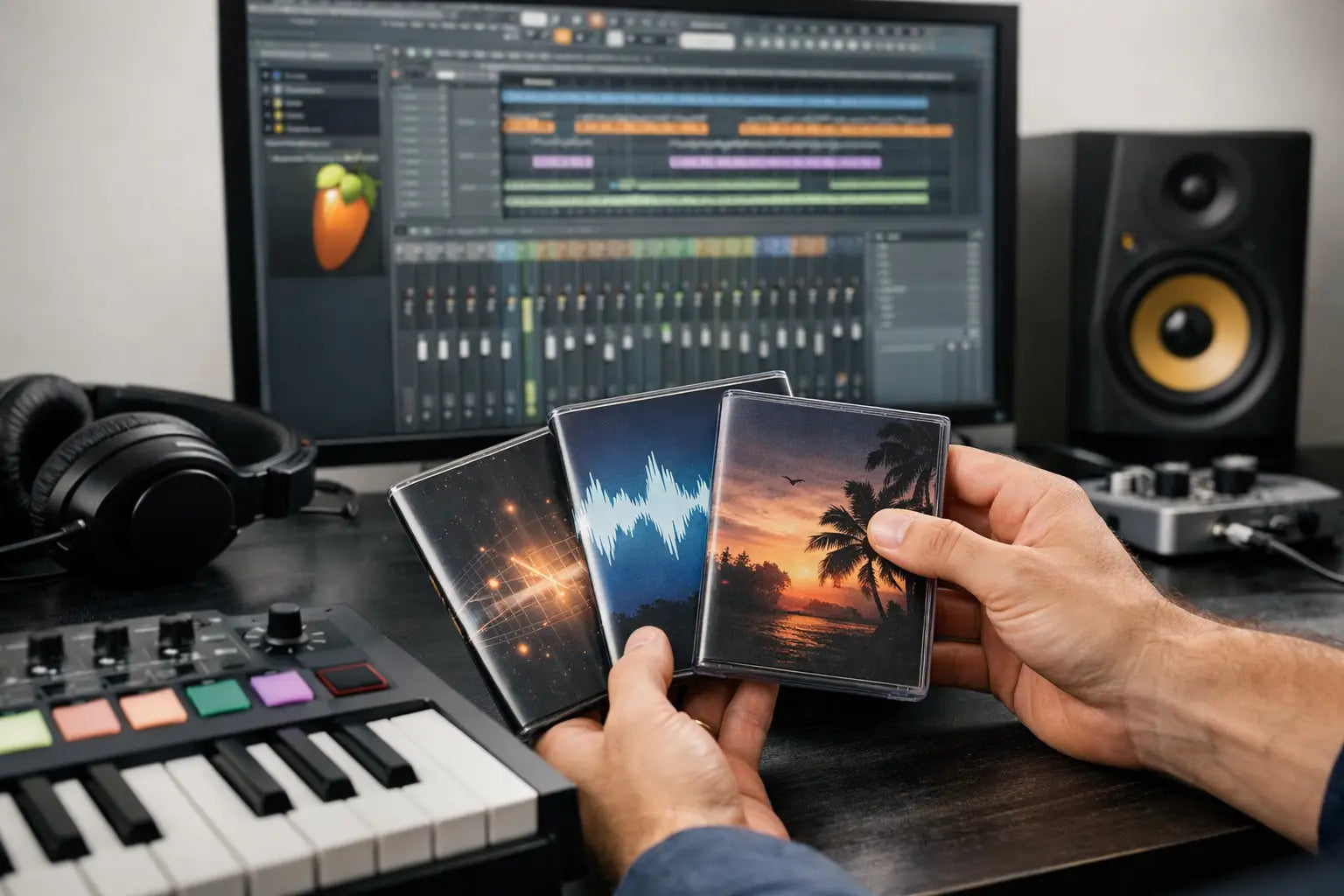
Open FL Studio, drag in a random loop pack, and you can usually tell within 30 seconds whether it was worth downloading. The drums either hit with intent or feel flat. The synths either sit in the track or fight everything else. A good fl studio pack does more than give you files - it gives you momentum.
For producers making Afro House, Tech House, Melodic Techno, Techno, Bass House, or EDM, that difference matters. The right pack speeds up decisions, keeps you in a creative state, and helps you build records that already sound close to release level before heavy processing starts. The wrong one costs hours, clutters your browser, and leaves you fixing source material that should have been mix-ready from the start.
What makes an FL Studio pack actually worth using
Not every pack built for FL Studio is useful in a real production workflow. Plenty of collections look big on paper but feel thin once you load them up. A massive file count does not help if the kicks are weak, the top loops are overprocessed, or the presets sound impressive solo but collapse in a full arrangement.
A strong FL Studio pack usually gets three things right. First, the sounds are genre-aware. That means the groove, tonal balance, and sound selection fit the lane you produce in. Afro House percussion should move differently than Tech House drums. Melodic Techno leads need emotion and width without getting cheesy. Bass House one-shots should carry weight without turning muddy below 100 Hz.
Second, the pack is built for speed. You should be able to drop in a drum loop, layer a one-shot, pull up a preset, and get something usable fast. If every file needs repair work, trimming, tuning, or major EQ just to fit a sketch, the pack is slowing you down.
Third, the sound quality has to hold up under pressure. Club-focused electronic music is unforgiving. Your low end, transient shape, stereo field, and vocal texture all get exposed once the track is loud, full, and moving. Source sounds need to feel polished enough to survive that environment.
The best fl studio pack depends on what you make
There is no universal best pack. There is only the best fit for your current genre, workflow, and production level.
If you produce Tech House, you probably need punchy drums, tight tops, playable bass content, and hooks that land quickly. A pack full of cinematic pads and long atmospheric textures may sound good, but it will not do much for a groove-driven club record.
If you make Afro House, rhythm and feel are everything. You need percussion loops that breathe, vocals with character, and melodic content that adds identity without overcrowding the drums. In that case, raw utility matters less than movement and authenticity.
For Melodic Techno and EDM, presets and tonal loops often matter more. You may still want strong drums, but the emotional core of the track usually comes from leads, plucks, pads, arps, and evolving synth textures. That means your ideal pack needs to offer more than just rhythm tools.
This is where focused catalogs tend to beat general-purpose sample libraries. Packs built by producers who actually work inside a specific lane are more likely to give you sounds that already feel current, relevant, and mix-aware.
Samples, presets, and vocals - what you really need
When producers search for an FL Studio pack, they often lump everything together. That can lead to buying based on file count instead of function. It helps to think in terms of what will solve the biggest bottleneck in your process.
If your tracks stall because drums never feel finished, prioritize packs with quality one-shots and percussion loops. Good drum source material fixes more than people admit. It sharpens groove choices, improves arrangement decisions, and reduces the urge to stack ten mediocre layers trying to fake impact.
If your issue is musical identity, presets and tonal loops may do more for you than another folder of kicks. A strong Serum bank or synth-focused collection can give you immediate chord movement, lead character, and top-line inspiration. That matters when your tracks are technically solid but forgettable.
If your records feel empty in the breakdown or generic in the drop, vocals can be the difference. Not every track needs a full vocal performance, but well-cut hooks, chants, phrases, and textures can create a focal point fast. The trade-off is that vocals need more arrangement discipline. They can elevate a track quickly, but they can also dominate it if the production around them is weak.
How to judge a pack before you commit
A lot of producers buy with their eyes first. The artwork looks clean, the genre tag sounds right, and the demo feels exciting. That is not enough.
Listen for how the demo is built. If the preview relies on heavy mastering, flashy transitions, and dense layering to sell average sounds, that is a warning sign. Better packs usually sound convincing because the source material itself is strong, not because the promo edit is hiding problems.
Check whether the content is clearly organized by type and use. You want obvious categories: drum loops, percussion, tops, bass hits, synth loops, vocals, MIDI, and presets where relevant. Clean organization sounds boring until you are halfway through a session and need one specific shaker loop in ten seconds.
Also pay attention to whether the sounds feel immediately usable. In club production, there is a sweet spot. Samples should be polished enough to drop in quickly, but not so overcooked that they leave no room for processing. If every loop is drenched in effects and impossible to shape, flexibility goes out the window.
Why workflow matters more than file count
A pack with 300 excellent sounds is more valuable than one with 3,000 average ones. FL Studio already gives you enough ways to lose an afternoon. You do not need a giant folder full of filler making decision fatigue worse.
The best producers usually work from a smaller set of reliable tools. They know which claps cut through, which percussion loops add swing without chaos, and which presets can carry a hook with minimal tweaking. A focused FL Studio pack supports that kind of workflow. It helps you get from idea to arrangement faster instead of turning every session into a search mission.
That is one reason producer-led brands tend to stand out. When packs are designed by people who understand modern dance records from the inside, the content usually reflects real session needs instead of generic sample-library logic. At Hot Grooves, that producer-first angle is exactly what makes specialized genre packs more useful than broad, catch-all bundles.
The mistake producers make with “all-in-one” packs
The all-in-one promise is appealing. One download, every sound covered, problem solved. Sometimes that works, especially for newer producers who need a starting library. But there is a catch.
Broad packs often trade depth for coverage. You get a little of everything, but not enough of the right things. Maybe there are vocals, but only a few that feel current. Maybe there are presets, but they are too generic for serious release work. Maybe the drums are serviceable, but not strong enough to anchor a club record.
If you already know your lane, narrower packs usually deliver more value. A dedicated Afro House or Tech House collection with stronger groove design, better drum programming, and more relevant tonal material will often beat a larger mixed-genre product. The only time a broader pack makes more sense is when you are still testing styles or need a general sketching toolkit.
Building your own winning setup inside FL Studio
A smart setup is rarely just one pack. It is a small ecosystem.
Start with a core drum pack that fits your genre. Add a tonal pack or preset bank that covers your melodic needs. Then bring in a vocal collection if your tracks need hooks, texture, or emotional lift. That combination usually gives you enough range to build records fast without drowning in options.
Inside FL Studio, organize those sounds in a way that matches how you work. Put your most-used drums in favorites. Keep your go-to presets easy to reach. Separate “sketch fast” material from more detailed sound-design content. The less friction you create between idea and execution, the more often you will finish music.
That matters because the real value of a pack is not the download itself. It is how often those sounds help you complete tracks that stand up next to current releases.
A great fl studio pack should make you faster, sharper, and more confident when the session starts moving. If it gives you better source sounds, stronger genre fit, and fewer dead-end decisions, it is doing its job. Choose packs that earn a permanent place in your workflow, and your next track will tell you if you chose well.
How to Use a Guitar Sample in EDM
How to Choose the Right Sample Pack