
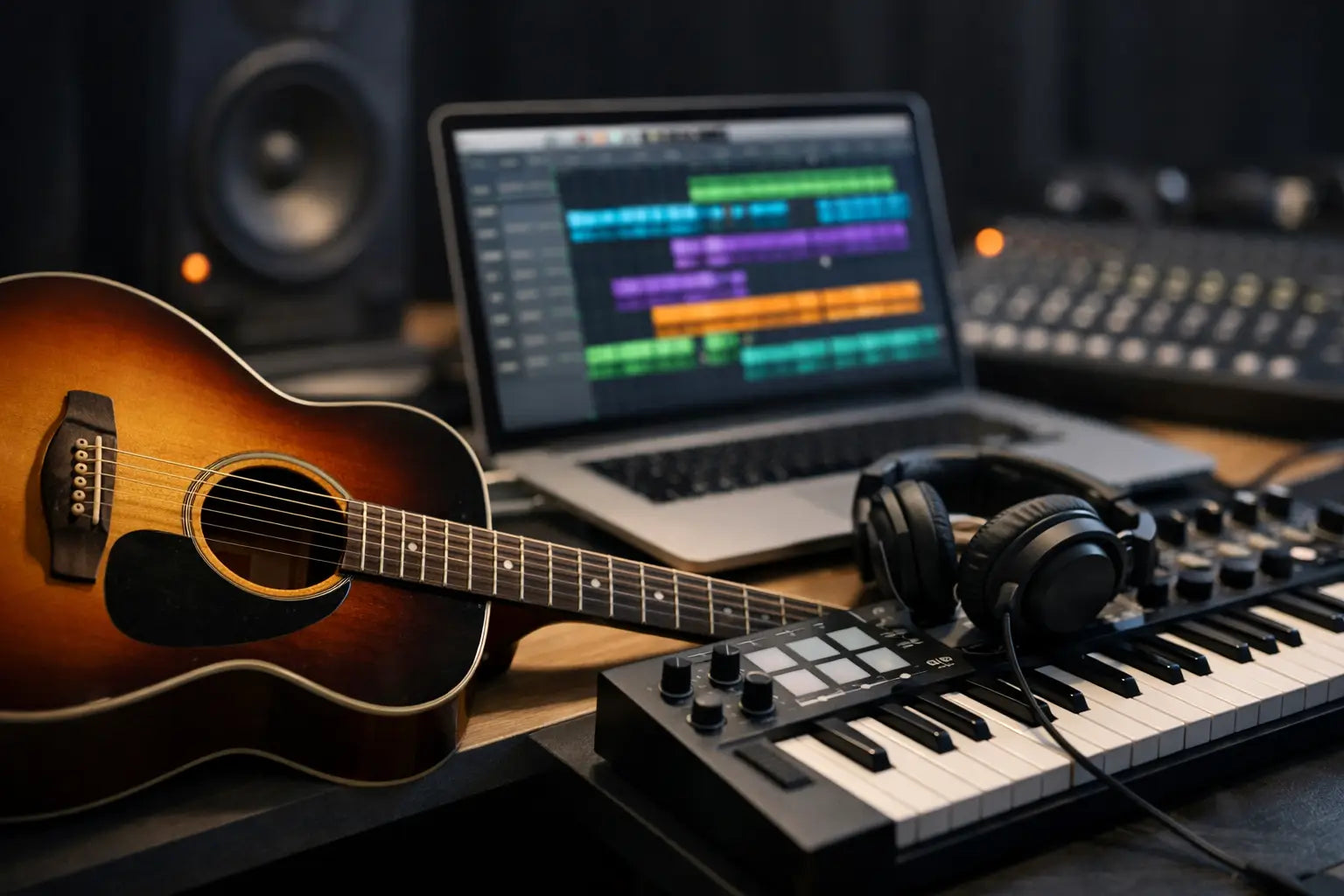
A weak guitar part can make an electronic track feel dated fast. A strong guitar sample does the opposite - it adds movement, tension, warmth, and a human edge that cuts through clean synth stacks and programmed drums. In club-focused production, that matters. The right guitar texture can turn a loop-driven idea into something that feels musical, current, and release-ready.
The catch is that guitar is easy to get wrong. Drop in a random loop, and it can sound disconnected from the groove, fight the vocal, or pull the track out of its genre lane. That is why producers who work fast still need to choose carefully. The goal is not just adding guitar. The goal is using guitar in a way that supports the rhythm, the mix, and the record you are trying to finish.
What Makes a Good Guitar Sample?
A usable guitar sample is not just well played. It is well designed for production. That means clean timing, controlled dynamics, a clear tonal role, and enough space to process without falling apart. If the source is overplayed, over-reverbed, or harmonically messy, you will spend more time fixing it than building your track.
For electronic genres, the best guitar samples usually do one job really well. They either carry rhythm, add atmosphere, create a hook, or provide transitional energy. A tight muted strum in Tech House has a very different role from a washed melodic phrase in Melodic Techno or an organic pluck in Afro House. Treating them the same is where a lot of arrangements start to blur.
The most effective samples also feel current. That does not always mean heavily processed. Sometimes it means the opposite. A dry, controlled recording with the right pocket gives you more freedom to shape it around modern drums and bass. You can always add space, movement, and character later. Removing too much baked-in processing is harder.
Choosing a Guitar Sample for Your Genre
Genre fit matters more than producers sometimes admit. A guitar loop that sounds great on its own can still be wrong for the record if the phrasing, swing, or tone pulls against the groove.
Afro House and organic club tracks
In Afro House, guitar often works best as part of the rhythm section rather than a big featured instrument. Short plucks, palm-muted riffs, and repetitive phrases can lock beautifully with percussion if they leave room for the groove to breathe. Look for parts with natural syncopation and enough tonal warmth to sit alongside organic drums, vocals, and deep bass.
Tech House and Bass House
Here, guitar usually needs attitude and precision. Funk-driven chops, tight top-line riffs, and percussive stabs can add immediate bounce, but loose playing gets exposed quickly. If the sample does not hit with the drums, it will feel lazy. Shorter phrases often work better than long performances because they are easier to edit into a punchy loop.
Melodic Techno and EDM
For more emotional or cinematic records, guitar can act as a lead texture, a harmonic layer, or a breakdown focal point. The sample should still feel controlled, but it can carry more sustain, width, and expression. What matters is avoiding the overly singer-songwriter feel unless that is the track's identity. In most electronic contexts, you want mood and motion, not campfire energy.
How to Make a Guitar Sample Fit the Groove
A guitar sample lives or dies by timing. Even a beautifully recorded phrase will sound amateur if it sits on top of the beat instead of inside it. Start by checking transients against your drums, especially the kick, clap, and main percussion accents. Small edits matter here. Nudging a few notes, trimming a sustain, or tightening the attack can make the part feel intentional instead of pasted in.
Then look at rhythm density. Guitar often fills more space than producers realize, especially in the upper mids. If your hats, percussion, chords, and vocal chops are already busy, a full strumming loop may overload the groove. In that case, slice it. Keep the best hits, remove the rest, and build a leaner pattern that supports the drums rather than competing with them.
It also helps to think like an arranger, not just a sampler. A guitar part does not need to run for 64 bars straight. Sometimes the strongest move is bringing it in during the drop, muting it under the vocal, then letting it return with extra processing in the final section. Variation keeps the part feeling premium.
Processing a Guitar Sample Without Killing It
This is where producers often overdo it. Guitar already has a lot of character built in, so heavy processing can flatten the details that made the sample useful in the first place. Start with corrective moves before creative ones.
EQ is usually first. Clean low-end rumble, tame any boxy low mids, and decide where the sample should sit. If it is a rhythmic support element, you may want less body and more bite. If it is carrying emotion in a breakdown, leave more of the midrange intact. There is no fixed setting because the right move depends on the bassline, vocal, and synth stack around it.
Compression can help, but only if the dynamics are distracting. Over-compress a guitar sample and it can lose the human movement that made it interesting. A lighter touch often works better, especially when the part already has consistent performance. Saturation is useful for helping guitar sit with electronic drums and synths, but again, balance matters. A little harmonic density adds presence. Too much turns it into mush.
Spatial processing is where genre identity really shows. In Afro House or Melodic Techno, a guitar can benefit from width, delay tails, and atmospheric reverb if the groove still stays clear. In Tech House, drier and tighter is often stronger. If the sample starts washing over the drums, pull it back.
When to Chop, Re-pitch, or Resample
A raw loop is rarely the final answer. Producers get better results when they treat a guitar sample as source material, not a finished arrangement. Chopping is the fastest way to make a common loop feel more original. Reorder phrases, cut dead space, reverse a tail, or isolate one note and turn it into a rhythmic motif. Those small edits can completely change how familiar material hits.
Re-pitching is useful too, but it needs judgment. A semitone or two can create a better key match or a darker tone. Push it too far and the guitar starts sounding cheap, especially if the source includes detailed articulation. Time-stretching has the same trade-off. Modern tools are strong, but not magical. If preserving groove is the priority, it is often smarter to rebuild the rhythm with slices than stretch the entire phrase too aggressively.
Resampling is where things get fun. Print your processed guitar, then treat it like any other audio texture. Layer it with pads, run it through filtering, automate reverbs into transitions, or bounce a single chord hit and turn it into a stab. This is how a simple guitar loop becomes part of your signature instead of just another sample pack moment.
Mixing a Guitar Sample in a Busy Production
The biggest mistake here is trying to make the guitar sound huge on its own. In a club mix, huge in solo often means crowded in context. What you want is clarity and role definition.
If the guitar supports the groove, prioritize transient shape and upper-mid placement so it reads on smaller speakers without eating the vocal range. If it is a featured melodic element, carve space around it intentionally. That may mean softening competing synth layers or automating the guitar down when the topline enters. Good mixes are not built by making every part loud. They are built by deciding what leads at each moment.
Sidechain can help, but use it musically. A subtle pump can tuck the guitar around the kick and keep the low mids cleaner. Too much pumping, though, makes the part feel like an effect instead of an instrument. It depends on genre and arrangement. Tech House can handle more obvious movement. Melodic records often need a smoother touch.
Why Producers Keep Coming Back to Guitar Sample Packs
Speed is the obvious reason, but not the only one. A strong guitar sample pack gives you access to tones, phrases, and performances that would take hours to record well from scratch, assuming you have the instrument, the room, the player, and the engineering chain to do it right. Most producers would rather spend that time arranging, building tension, and finishing tracks.
There is also the consistency factor. Professionally made sample packs are designed to drop into real productions, which means cleaner recordings, stronger timing, and genre-aware phrasing. For producers making club music on deadlines, that is not a luxury. It is workflow.
That is exactly why curated, genre-specific collections matter more than giant random libraries. If you produce house, techno, or EDM, you need guitar content that already understands the pocket, the energy, and the mix demands of those styles. Hot Grooves leans into that producer-first approach because usable sounds beat endless browsing every time.
The best guitar parts in electronic music do not feel forced. They feel like they belonged in the track from the first bar. Choose with intent, edit with discipline, and let the sample work for the record instead of asking the record to work around it.
How to Choose the Right Sound Pack
How to Pick the Right FL Studio Pack