
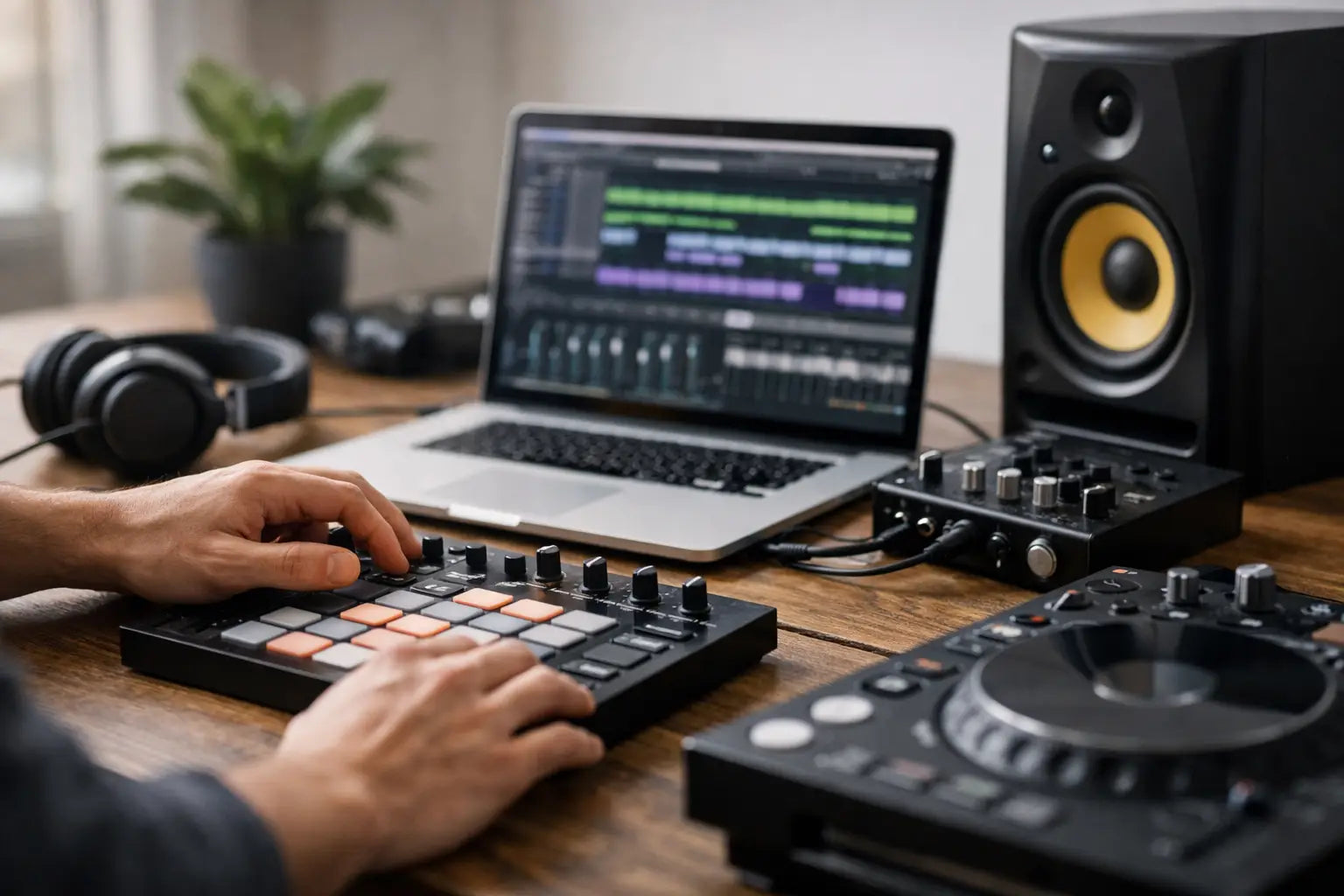
A blank project can eat an hour before the groove even lands. That is exactly why royalty free house music loops matter for modern producers. When the source material is tight, genre-correct, and already built for club translation, you spend less time fixing sounds and more time arranging, layering, and pushing a track toward release.
Why royalty free house music loops matter
In house music, small details do a lot of heavy lifting. The swing of the hats, the weight of the kick top, the tone of the percussion bus, the length of a stab tail - all of it changes whether a loop feels demo-level or playlist-ready. Good loops do not just save time. They give you momentum at the exact point where most sessions stall.
That matters whether you are sketching a Tech House roller, building an Afro House groove bed, or tightening a late-night Bass House idea. If the loop already carries the right movement and mix balance, you can build around it fast. The trade-off is obvious though: speed only helps if the loop sounds current. Generic or overused material can flatten a track just as quickly as weak sound design.
What makes a house loop worth using
A usable loop should feel finished without feeling locked. That balance is what separates professional sample material from filler.
Groove first, not just sound
House producers buy loops for motion as much as tone. A percussion loop with clean transients and a nice top end is not enough if the rhythm fights the pocket of your drums. The best loops support the groove immediately, even before you process them.
This is especially important across subgenres. Afro House needs movement and organic rhythmic interplay. Tech House often leans on punch, repetition, and space. Melodic House and related crossover styles may need loops that leave room for harmonic development. One loop can sound amazing on its own and still be wrong for your record.
Mix-ready without being overcooked
There is a sweet spot here. Loops should hit with confidence, but they should not be crushed to the point where you cannot shape them. If every transient has been flattened and every frequency filled, layering becomes harder. Producers working fast need sounds that already sit well, but still leave room for EQ, saturation, compression, and automation.
Clear genre identity
House is a wide lane. If you are shopping for loops, broad labeling is not enough. You want packs that tell you exactly what world they live in - Afro House drums, Tech House bass loops, melodic synth phrases, club vocals, percussion tops, and so on. Precise categorization makes better decisions faster.
How to choose royalty free house music loops for your track
A lot of producers start by asking whether a loop sounds good. Better question: does it solve the next problem in the track?
If your drums feel static, a percussion loop with natural swing may be the answer. If the drop lacks weight, a bass loop can help define the low-end rhythm before you commit to sound design. If the break feels empty, a chord or vocal loop might create instant identity. Choosing by function keeps your session moving.
It also helps to think in layers instead of full replacements. A house loop does not need to carry the whole record. Often the strongest move is to use one top loop for motion, one percussion layer for texture, and keep your own kick, clap, and bass doing the heavy lifting. That gives you the speed advantage without losing authorship.
Match BPM and feel before key details
Producers often obsess over key and forget feel. In groove-driven music, timing issues are usually more obvious than pitch issues. Start with loops that already sit near your target BPM and rhythmic pocket. Stretching a loop a couple BPM is easy. Forcing a straight loop into a swung groove usually sounds like work.
Once the movement is right, check key if the loop is tonal. For drums and percussion, feel comes first. For bass, chords, vocals, and melodic phrases, both matter.
Leave space for the lead idea
A strong loop can inspire the whole track, but if it is too complete, it can also box you in. This happens a lot with full musical loops that already feel like a finished record. If your goal is originality, choose loops with a clear role but enough negative space to build your own topline, bass variation, or arrangement around them.
How to make loops sound original
The old complaint about loops is that they make everyone sound the same. That only happens when producers drag, drop, and stop.
The fastest way to personalize a loop is to treat it like source material, not a final. Chop the timing. Re-order slices. Automate filters and reverb throws. Split low and high bands to process them separately. Use transient shaping on one section and tape saturation on another. Even a simple one-bar percussion loop can feel custom once you create variation across an eight-bar phrase.
For melodic and vocal loops, pitch and rhythm changes go a long way. Shift the formant, resample to audio, reverse tails, or print effects and cut around them. If a loop gives you the right emotional tone but feels too recognizable, these moves usually fix that fast.
This is where quality source material matters most. The cleaner and better designed the original loop is, the more aggressively you can process it without it falling apart.
Where producers get the most value
Not every loop category gives the same return in every session. If you are producing club-focused house, drums and percussion usually offer the fastest win. They establish movement quickly and can transform a basic idea into something that feels finished enough to keep writing.
Bass loops are useful when you want instant low-end direction, but they can also limit harmonic flexibility if you commit too early. Chord loops are great for speed, especially when you are building references or writing under deadline, though they work best when you add your own arrangement decisions. Vocal loops can create instant identity, but they need careful selection. A vocal that feels generic or overused can drag down the whole record.
That is why specialized packs tend to outperform broad ones. Producers do better with focused collections built for actual subgenres than giant mixed libraries with no clear lane. A curated catalog saves time twice - once when you browse, and again when you produce.
What to check before downloading
Royalty free does not always mean the same thing in practice, so read the usage terms. In most cases, royalty free house music loops let you use the sounds in your own commercial music without paying ongoing royalties. That is the key benefit. But it does not usually mean you can resell the raw loops, upload them as-is, or redistribute them inside your own sample pack.
You should also check formatting and pack structure. WAV loops with clear key and BPM labeling are standard for a reason. If you are moving fast between sessions, clean organization matters. So does consistency. A pack with ten great loops and fifty throwaways slows you down more than a smaller pack with a high hit rate.
For producers working across Afro House, Tech House, Melodic Techno, and adjacent club styles, genre-specific sound design is not a luxury. It is workflow. That is where a focused store like Hot Grooves makes sense - you can get straight to the sounds that fit your lane instead of digging through unrelated material.
Build faster, but stay selective
Using loops is not cheating. Bad selection is the real problem. If the loop adds energy, fits the subgenre, leaves room for your ideas, and gets you to a stronger result faster, it is doing its job.
The producers who get the best results from loops are not the ones using the most. They are the ones choosing the right material early, shaping it with intent, and knowing when to replace or strip back parts that are doing too much. Speed is valuable, but only when it leads to a track that still feels like yours.
The smart move is simple: start with better source sounds, make fewer compromises, and let the groove do what it is supposed to do - move the record forward.
Club Ready Sample Packs That Actually Hit
What Are One Shots in Music Production?