
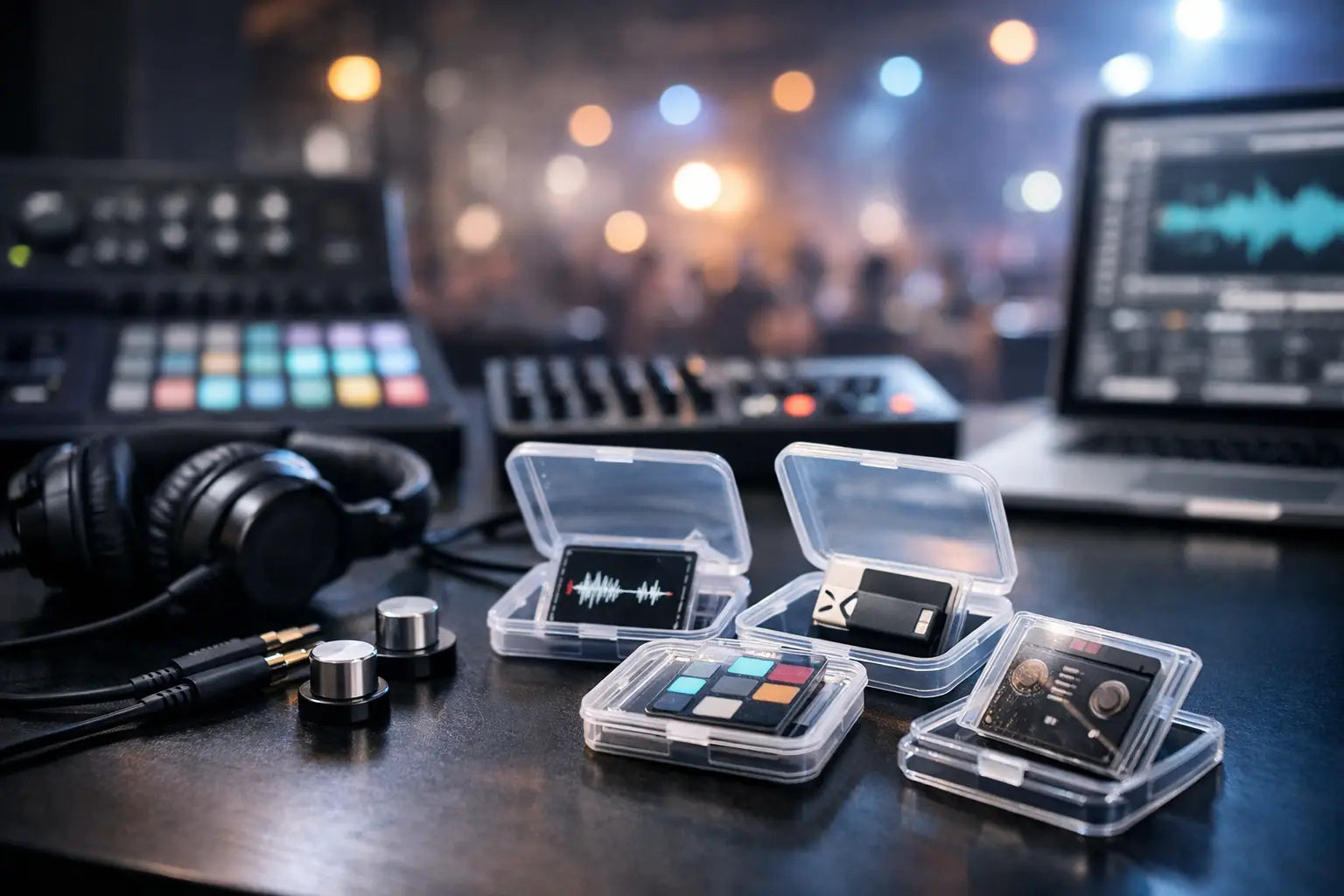
The fastest way to kill a strong idea is building it on weak source sounds. If your drums feel flat, your bass lacks weight, or your topline sounds like a placeholder, the track never reaches that final 10 percent. That is exactly why club ready sample packs matter - they give you polished, mix-conscious material that already speaks the language of the dance floor.
For producers making Afro House, Tech House, Melodic Techno, Techno, Bass House, or EDM, the difference between a decent pack and a genuinely usable one shows up fast. You hear it in the transient shape of the kicks, the movement in the percussion loops, the tone of the vocals, and the way the synth presets sit inside a modern arrangement. Good sounds save time. Great sounds change how quickly a track becomes playable.
What makes sample packs truly club ready
A sample pack is not club ready just because the branding says so. The real test is whether the sounds hold up in a mix that needs to translate on headphones, studio monitors, car speakers, and a club system.
The first marker is balance. Drums need impact without eating the whole mix. Bass has to feel solid without turning muddy once the kick comes in. Tops and percussion should create motion without adding harshness. If a loop sounds exciting solo but collapses once you layer your own elements, it is not helping your workflow.
The second marker is genre accuracy. A Tech House groove needs different swing, texture, and low-end behavior than an Afro House groove. Melodic Techno requires atmosphere and emotional tension, while Bass House leans harder on aggressive movement and sharp rhythmic identity. Club ready sample packs should not just sound good in general. They should sound right for the lane you produce in.
The third marker is immediate usability. That means one-shots that do not need heavy repair, vocals that already feel intentional, and presets that get you close to a finished record without an hour of cleanup. You still need to produce. You still need taste. But you should not be wasting your session rebuilding every sound from scratch.
Why workflow matters as much as sound quality
A lot of producers talk about quality as if it exists in isolation. It does not. The best pack is the one that lets you move from idea to arrangement before the spark dies.
When your folders are organized by genre, mood, and function, you make decisions faster. When the kicks are actually sorted by weight and style, you stop second-guessing. When the vocals are cut cleanly and the loops are production-ready, you spend more time writing and less time fixing. That speed matters, especially in club-focused genres where energy and momentum shape the entire track.
This is where producer-built packs usually separate themselves from generic libraries. The creator knows what needs to happen in a real session. They know which percussion layers actually complement each other. They know how much character a clap can have before it becomes hard to place. They know a synth preset is only useful if it inspires a hook and survives the mix.
Workflow is not a soft benefit. It is a competitive advantage.
Club ready sample packs by genre
Not all club records ask for the same source material, so choosing the right pack starts with being honest about the records you want to make.
Afro House and organic groove
Afro House producers usually need percussion with movement, detail, and space. The best packs in this lane have live-feeling tops, rolling rhythm sections, warm bass content, and melodic elements that feel musical rather than overprocessed. Vocals can be a huge asset here, but only if they feel authentic and sit naturally above the groove.
Tech House and Bass House punch
Tech House needs direct impact. Kicks, claps, bass loops, and vocal chops need to land quickly and leave room for repetition. Bass House pushes harder, with more aggression in the low mids and more sound design personality overall. In both cases, a club ready pack should give you drums and bass that feel current without sounding disposable.
Melodic Techno and Techno tension
These styles demand control. Melodic Techno needs emotion, width, and atmosphere, but it still has to hit on a system. Techno leans more on pressure, hypnosis, and disciplined sound selection. Packs for these genres should offer clean, focused drum tools, dark textures, FX that build tension, and presets that are dramatic without becoming messy.
That genre fit matters more than a huge file count. A smaller, sharper pack usually beats a bloated library full of sounds you will never touch.
How to judge quality before you buy
There is a practical way to evaluate sample packs without overthinking it. Start with the drums. If the kick and clap sound weak, overprocessed, or dated, the rest of the pack probably will too. Drums tell you a lot about the producer behind the library.
Next, listen for cohesion. The sounds should feel like they belong in the same world. Random quality can be worse than average quality because it slows you down. If one loop sounds polished and the next sounds unfinished, you will spend your session compensating for the inconsistency.
Then check whether the pack solves a real production problem. Maybe you need stronger Afro percussion, cleaner Tech House vocals, heavier Bass House drops, or Serum presets that actually inspire arrangements. Buy for the gap in your process, not for the dopamine hit of owning more files.
Finally, think about how much repair work the samples will need. A pack can sound flashy in a demo and still create extra work. Overly processed loops may clash with your mix. Presets with too much baked-in FX may sound big but leave little room for customization. There is always a trade-off between instant polish and flexibility. The right balance depends on how you produce.
The formats that deliver the most value
One-shots are still the backbone of most electronic workflows because they let you build custom drum patterns and control the groove. If you are particular about transient shape, headroom, and layering, these matter more than flashy construction kits.
Loops are where speed wins. A strong percussion loop can establish movement in seconds. A good bass loop can trigger a whole arrangement. But loops only help when they are tight, clean, and rhythmically useful. If they are too busy or too tied to a single context, they become hard to repurpose.
Vocals and vocal chops carry outsized value in club music because they create identity fast. The catch is quality control. Weak vocal content is instantly obvious. Good vocal packs save hours and can make a record feel more finished much earlier in the process.
Presets sit somewhere in the middle. They are not finished records, but they can get you to the right zone quickly. For producers working in Serum, a strong preset bank with modern leads, basses, plucks, and atmospheres can remove a huge amount of friction.
Where producers get it wrong
A common mistake is buying broad packs when the actual need is specific. If your issue is low-end power, you do not need 4,000 random samples. You need a better kick and bass source. If your grooves feel static, you probably need stronger percussion and top loops, not another folder of risers.
Another mistake is stacking too many premium sounds on top of each other. Club ready samples are often designed to sound finished. That is the point. But if every layer is oversized, the track gets crowded. Sometimes the smartest move is using fewer, better sounds and arranging them with intention.
There is also the trap of treating samples like a shortcut for taste. They are not. A great pack gives you a better starting point, but your choices still determine whether the final record feels fresh or formulaic.
Choosing club ready sample packs that fit your process
The right pack should match how you actually work. If you build tracks from drums up, prioritize one-shots and groove tools. If you sketch ideas quickly, loops and construction elements may get you there faster. If your tracks always stall at the hook, vocals or standout synth presets may be the better investment.
This is why focused catalogs tend to serve producers better than giant catch-all libraries. When a brand understands club genres deeply, the products feel sharper, more intentional, and easier to shop. At Hot Grooves, that producer-first focus shows up in packs built for real-world electronic workflows rather than generic sample browsing.
You do not need more files. You need sounds that reduce friction, hit hard, and feel at home in the records you are trying to make. That is the real value of club ready sample packs - not just sounding good on preview, but helping you finish tracks that DJs can actually play.
The best test is simple: if a pack makes you open your DAW, build faster, and trust what is coming out of the speakers, it is doing its job.
Electronic Music Sample Bundles That Deliver
How to Use Royalty Free House Music Loops