
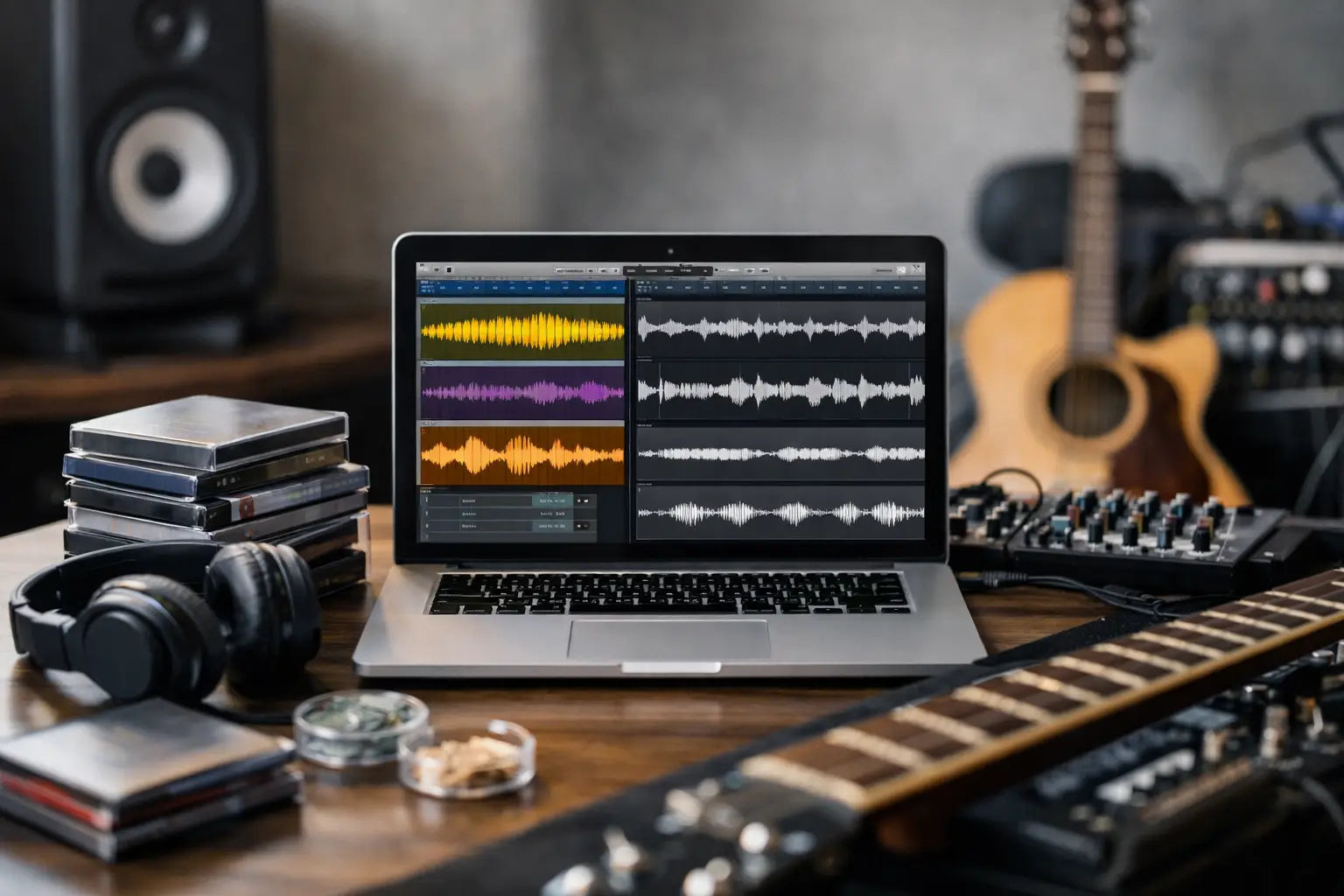
Blank projects expose every weak habit fast. You load a kick, add a loop, scroll for ten minutes, and suddenly the idea that felt heavy in your head starts losing energy. That is exactly why producers keep asking how to use sample packs more effectively. The goal is not to drag and drop random sounds until something sticks. The goal is to move faster, keep the groove intact, and turn high-quality source material into a finished track that sounds current.
Sample packs work best when you treat them as production tools, not shortcuts. A strong pack gives you drums, loops, one-shots, vocals, FX, and presets that already speak the language of a genre. That matters in Afro House, Tech House, Melodic Techno, Techno, Bass House, and EDM, where groove detail and sound choice do a lot of the heavy lifting. If your sources are right, mixing gets easier and arranging gets more natural.
How to use sample packs without sounding generic
The biggest mistake is using a full loop as-is and building nothing around it. That can work for a quick sketch, but if every core element comes from one folder untouched, the track usually feels flat or familiar in the wrong way. Knowing how to use sample packs well starts with separating inspiration from dependence.
If you load a top loop, ask what it is really giving you. Is it the swing, the texture, the transient pattern, or the frequency shape? Once you know that, you can keep the useful part and replace the rest. Maybe the hi-hat rhythm is strong, but the clap is weak for your mix. Maybe the percussion loop has movement, but the low mids fight your bassline. Chop, layer, EQ, resample, and rebuild.
That is the difference between using samples and producing with samples. One is passive. The other is intentional.
Start with genre-fit, not quantity
A huge library is not always an advantage. If you are making club records, 5,000 random sounds across unrelated genres will usually slow you down more than a focused pack built for the lane you are in. Tech House drums hit differently than Melodic Techno drums. Afro House percussion has different pocket and tonal balance than Bass House. Genre-fit saves time because the decisions are narrower and better.
When choosing a pack, listen for three things. First, the drums should already feel mix-aware. That means clean transients, controlled low end, and no weird resonance that needs surgery. Second, the musical content should match the emotional temperature of your genre. Dark, hypnotic, euphoric, tribal, aggressive - these are not interchangeable. Third, the sounds should feel current without leaning on one trend so hard that they date your track.
That is one reason specialized packs outperform generic collections. You are not just buying sounds. You are buying better starting decisions.
Build the foundation with one-shots first
If you want more control, start your drums with one-shots before you reach for full loops. A kick, clap, hat, shaker, and percussion hit selected with intention will usually give you a stronger groove foundation than dropping in a pre-made stack and forcing the track around it.
Start with the kick and bass relationship. In most electronic genres, that relationship defines whether the track feels expensive or amateur in the first eight bars. Pick a kick that already works with your bass concept. A long, sub-heavy kick may sound great solo but eat up too much room in a rolling low end. A shorter kick can leave more space and still hit harder in context.
Then add your clap or snare. After that, bring in hats and percussion gradually. Every sound should add either pulse, width, or motion. If it does none of those, it is probably clutter. Good sample packs make this easier because the sounds are designed to sit together, but you still need to be selective.
Use loops for speed, then customize them
Loops are where producers either save serious time or lose their identity. Used well, they speed up the part of production that kills momentum: building detail. Used badly, they make every arrangement feel borrowed.
Drop in a percussion loop and listen to what it adds beyond your programmed drums. If it brings swing and top-end movement, keep it. Then slice it into sections, mute repeated hits, automate filters, or split it into separate frequency bands. Sometimes a loop becomes much more useful after you remove the lows and keep only the air and groove.
The same goes for melodic loops and vocal phrases. Pitch them, reverse parts, stretch them, print them to audio, and process them into something specific to your track. A good loop is not the finished idea. It is the raw material for one.
How to use sample packs in arrangement
A lot of producers think sample packs are only for sound selection. They are also powerful arrangement references. A folder of fills, risers, impacts, drum variations, and vocal chops can help you structure a track faster because the transitions are already designed to signal energy changes.
When your drop feels static, it is often not because the main idea is weak. It is because the section is not evolving. Add a percussion variation every eight bars. Swap hats in the second half of the drop. Use a short vocal throw before a fill. Bring in an impact at the start of a new phrase. These moves are small, but in club music they create momentum.
This is where pack quality matters again. Cheap FX and filler transitions can make a track sound dated fast. Well-designed transition elements feel polished without announcing themselves too loudly.
Layering is useful, but only when the roles are clear
Layering sounds professional on paper, but too much layering is one of the fastest ways to wreck clarity. If you stack three claps, two rides, and a noisy top loop without clear roles, the groove gets blurry and the mix gets harsh.
The better move is role-based layering. One clap provides body. Another adds snap. A foley layer adds texture. That is enough. The same logic applies to kicks, synth stabs, and vocals. Each layer should cover a specific job in the frequency spectrum or in the groove.
If one sample already does the job, leave it alone. Not every sound needs enhancement. Strong source material often wins because it needs less fixing.
Processing samples without overcooking them
High-quality samples usually need less processing than producers expect. That is part of the value. If a kick is already punchy and balanced, adding more saturation, transient shaping, clipping, and EQ just because those tools are there can make it worse.
Process with a reason. Use EQ to create space, not because every channel must have an EQ on it. Use compression when the dynamics need control or extra shape. Use saturation when you want density, warmth, or edge. With loops, think corrective first and creative second. Remove what conflicts, then exaggerate what helps.
There is a trade-off here. Minimal processing preserves the quality of the original sample and keeps workflow fast. Heavier processing can create originality and attitude, but it also increases the risk of phase issues, distortion, and a crowded mix. It depends on the track. If the source already sounds release-ready, do less.
Organize your library like a producer, not a collector
A messy library makes good packs feel average. If you want to know how to use sample packs efficiently every session, organize them by real production needs. Sort drums by role, not just by pack name. Tag loops by genre, BPM range, and mood. Create go-to folders for kicks, percussion, vocals, and FX you trust.
This matters because creative momentum is fragile. If you know where your best Tech House claps are, or which Afro House percussion folders always deliver usable swing, you make decisions faster. That speed compounds over months.
It also helps to separate audition folders from proven favorites. New sounds keep things fresh, but your best work usually comes from a small group of reliable sources you know how to use well.
Don’t let the sample pack write the whole record
There is nothing wrong with building a track around a vocal hook, a drum loop, or a standout synth preset. Plenty of strong records start from a single piece of source material. The problem starts when every major section depends on the pack doing the creative work for you.
Your arrangement, low-end movement, automation, tension, and contrast still need your decisions. That is where personality shows up. Two producers can use the same royalty-free sample pack and end up with completely different records if their edits, layering, groove choices, and structure are strong enough.
That is the real benchmark. Not whether you used samples, but whether the final track sounds intentional.
For electronic producers chasing better results in less time, the smartest approach is simple: choose packs that fit your genre, start with the strongest source sounds, edit aggressively, and keep every sample working toward the same club-focused outcome. The more clearly you hear what each sound is supposed to do, the faster your tracks start sounding finished.
Electronic Music Sample Pack Guide
How to Use One Shots in Electronic Music