
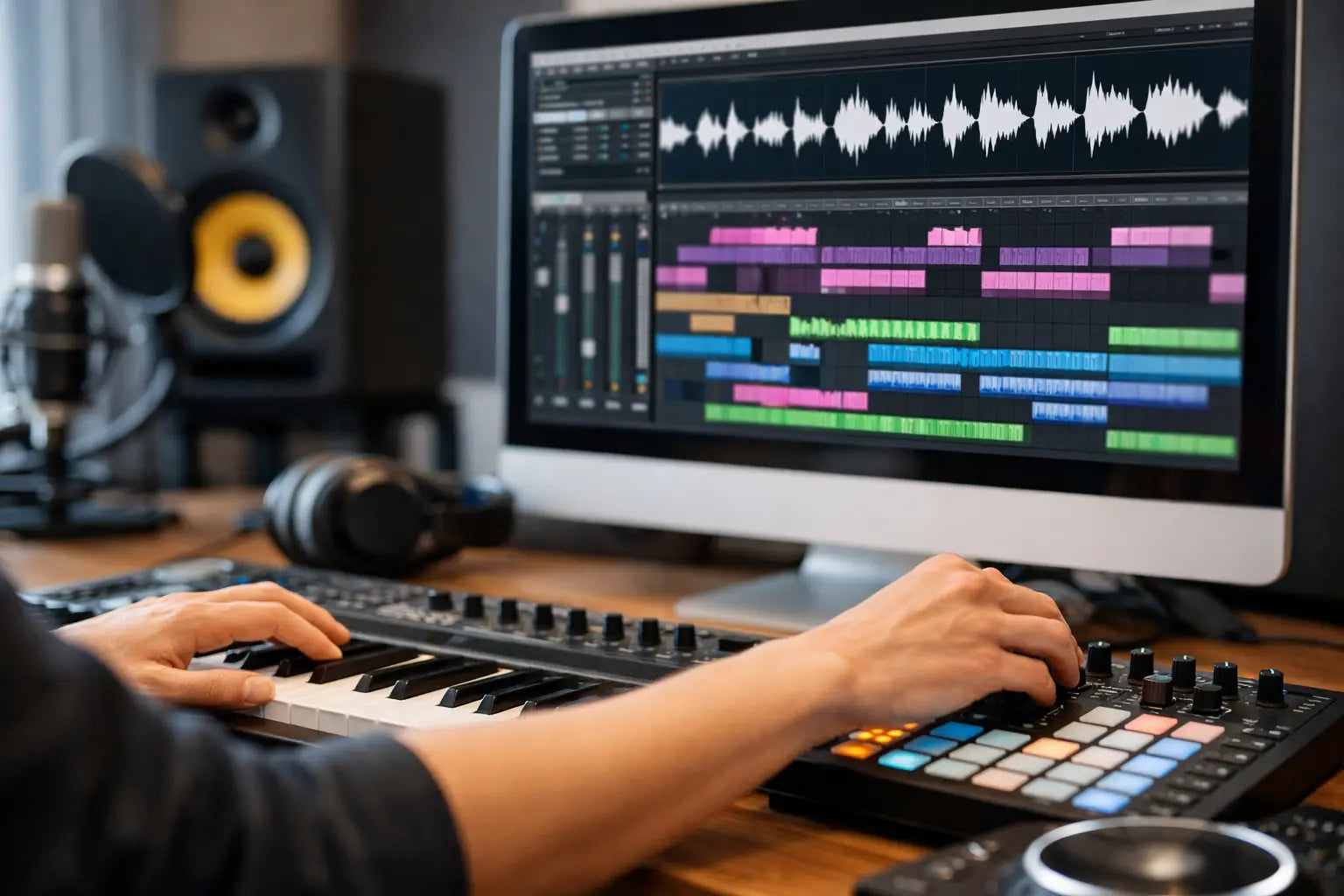
That flat eight-bar loop usually is not missing another synth. It is missing a human element with rhythm, attitude, and just enough unpredictability to make the drop feel alive. If you are figuring out how to use vocal chops, the goal is not to throw random slices over a beat. The goal is to turn a voice into a hook, a groove layer, or a tension-building texture that feels built for the track.
In club-focused production, vocal chops work because they sit in a sweet spot between melody and percussion. They can carry emotion without the commitment of a full topline, and they can add movement without crowding your arrangement. That is why they show up everywhere from Afro House and Melodic Techno to Bass House and EDM.
How to use vocal chops without making them sound generic
The fastest way to make vocal chops sound cheap is to over-process a weak source or force them into the wrong role. Start by deciding what the chop is supposed to do. Is it your main hook, a call-and-response element, a transition layer, or a background texture? That one choice changes everything from sample selection to processing.
If the chop is the hook, keep the phrase simple and memorable. Short syllables usually work better than long words because they are easier to pitch, retrigger, and rhythmically place. If the chop is supporting the groove, think more like a percussion programmer. Consonants, breaths, and clipped vowels can add bounce in a way that feels more musical than another hi-hat layer.
Source quality matters more than fancy effects. A clean, well-recorded vocal with clear tone and minimal room sound gives you more control. If the recording already has too much reverb, harshness, or background noise, every edit and pitch move will exaggerate the problem.
Start with the right vocal material
Not every vocal line wants to be chopped. Strong candidates usually have clear pitch, distinct syllables, and a tone that already fits the track. In dance music, female vocals often cut through dense arrangements easily, but male vocals can work just as well when you want something darker, more intimate, or more aggressive.
Listen for phrases with natural pockets. A line with obvious rhythmic accents is easier to slice into something playable. A phrase that is too legato can still work, but you may need tighter editing and more envelope shaping to create definition.
This is also where genre matters. In Afro House, warmer, more organic vocal fragments often feel right, especially when they lock with percussion and groove. In Tech House or Bass House, tighter chops with sharper transients and more obvious rhythmic repetition can hit harder. In Melodic Techno, stretched or ethereal chops often work best as emotional layers rather than front-and-center hooks.
Slice with intent, not just on every transient
Once you have your vocal, resist the urge to auto-slice everything and hope for magic. Good vocal chopping is selective. Pull out the syllables that carry character. Vowels usually provide tone and sustain. Consonants provide attack. The sweet spot often comes from combining both so the chop speaks clearly without becoming too wordy.
Keep your edits tight. Add short fades to avoid clicks, then shape each slice with amplitude envelopes if your sampler allows it. Shorter release times make chops feel punchier and more rhythmic. Slightly longer releases can make them sing.
Then map your best slices across the keyboard or sampler pads. This gives you a performance instrument instead of a pile of audio fragments. Even if you are going for a programmed result, playing chops in by hand often creates more musical phrasing than drawing every note on a grid.
Pitching is where the hook happens
A vocal chop becomes memorable when it follows the harmony of the track in a controlled way. Start by finding the key of your project, then tune your slices so they sit correctly against the chords or bassline. If your DAW has warp or formant tools, use them carefully. Aggressive pitch shifting can be a vibe, but it can also make the source sound thin or artificial fast.
For brighter house and EDM records, pitching a chop up can create energy and lift. For darker techno or deeper club tracks, pitching down can add weight and mood. Neither is better. It depends on what the arrangement needs.
Formant shifting is where a lot of producers either find character or ruin the sample. Small formant changes can help a chop sit better or sound more modern. Push it too far, and the vocal starts sounding like a novelty effect. If the track already has a lot of synthetic elements, a more natural vocal texture can actually create better contrast.
Build a rhythm that supports the groove
The best vocal chop patterns feel locked to the drums without copying them. Try writing a one-bar or two-bar phrase that leaves space around the kick and snare or clap. If every slice lands on the obvious beat, the chop can feel stiff. Syncopation is usually where the groove shows up.
Think in terms of repetition with variation. A strong pattern often repeats one central motif, then changes the last hit or two to lead into the next bar. That gives the listener something to latch onto while keeping momentum moving.
Also pay attention to note length. A short stab can act like percussion. A longer held syllable can bridge chord changes and soften the pattern. Alternating between the two often creates a more polished result than using one length across the whole phrase.
Effects that actually help
This is where producers often do too much. Reverb, delay, filtering, saturation, chorus, and stutter effects can all work, but only if they support the function of the chop.
If the chop is the lead hook, keep it focused. Use enough reverb and delay to give it space, but not so much that it loses impact in the drop. If the chop is a background texture, you can push effects harder and let it blur into the atmosphere.
Filtering is especially useful for arrangement. A low-pass vocal chop in the build can create anticipation, then opening the filter in the drop brings clarity and energy. Delay throws on the final slice of a phrase can also fill space without forcing extra notes into the pattern.
Saturation helps vocal chops sit forward, especially in dense club mixes. A little harmonic content can make a vocal feel more expensive and audible without simply turning it up. Be careful with harsh upper mids, though. What sounds exciting soloed can become fatiguing once the hats, synths, and clap are in.
How to use vocal chops in the mix
A vocal chop should feel intentional, not pasted on top. Start with EQ. Remove low-end rumble, control muddy low mids, and tame any piercing frequencies around the presence range. Then decide where the chop lives relative to the lead synth, bass, and drums.
If the chop is the main hook, it needs a clear lane. That might mean pulling a little energy out of a competing synth around the same frequency range. If it is a support layer, it can be narrower, wetter, and slightly more tucked in.
Sidechain can help, but it is not always necessary. In pump-driven house styles, sidechaining vocal chops to the kick can reinforce movement. In more melodic or atmospheric tracks, gentler volume shaping may sound more natural.
Stereo width is another trade-off. Wide chops feel impressive, especially with layered doubles or effects returns. But too much width can weaken center focus and create mix issues on smaller systems. A common approach is to keep the main chop fairly centered and let delays, reverbs, or duplicated layers create the width around it.
Arrangement is what makes chops feel professional
A vocal chop that loops for four minutes gets old fast. The fix is not always replacing the idea. Usually it is arranging it better.
Introduce the chop in stages. Maybe a filtered teaser appears in the intro. Then a cleaner version enters before the drop. In the main section, automate pitch, formants, reverb send, or rhythm density to keep the part evolving. Small changes go a long way because the human ear notices vocal variation quickly.
You can also use different chop roles across the arrangement. A single vocal source might become an airy pad in the breakdown, a rhythmic hook in the drop, and a reverse transition effect before the next section. That kind of reuse creates cohesion without sounding repetitive.
If you want faster results, starting with high-quality vocal material designed for dance production helps a lot. Producer-ready vocal collections and chop-friendly phrases save time because the tone, timing, and recording quality are already built to take processing well. That is one reason many producers lean on focused tools from brands like Hot Grooves instead of trying to salvage weak acapellas.
Common mistakes that kill the idea
The biggest mistake is forcing vocal chops into a track that does not need them. If your lead synth already carries the hook and the arrangement is full, a chop may just add clutter. Another common issue is over-editing. When every slice is hyper-quantized and drenched in effects, the vocal loses the little human imperfections that made it interesting.
There is also the harmony problem. A lot of chops fail because they are pitched to the key but not to the chord movement. A note can be technically in key and still feel wrong against the progression. If a chop sounds off, check it against the actual chord underneath, not just the scale.
Finally, do not ignore context. A chop that sounds massive in solo can disappear once the full drop hits. Build and mix it inside the arrangement, not in isolation.
The producers who get the most from vocal chops are not treating them like decoration. They are treating them like a core musical element with a job to do. Pick the right source, write with groove, keep the processing deliberate, and let the arrangement do some of the heavy lifting. That is when a chopped vocal stops sounding like a sample and starts sounding like your record.
9 Best Melodic Techno Sample Libraries
Free EDM Sounds Download That Actually Hits