
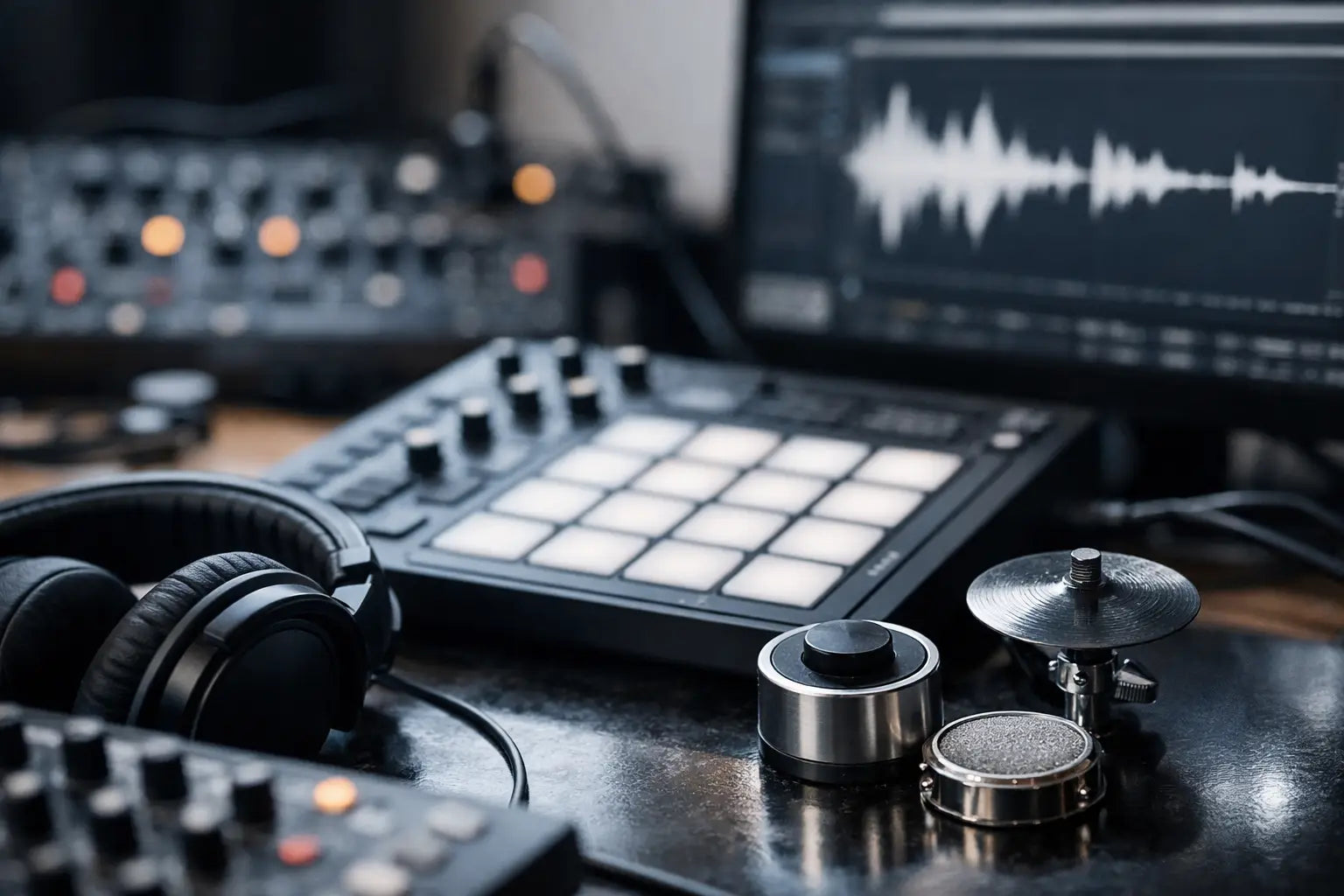
A techno groove can fall apart before the synths even arrive. If the kick lacks weight, the hats feel flat, or the percussion has no forward motion, no amount of atmospheric texture will make the drop work. High-quality techno drum one shots solve that problem at the source: they give you focused, mix-ready hits you can shape into a rhythm that holds up on a loud club system.
For producers working fast, one shots offer more control than a pre-built loop. You decide the pattern, the swing, the tuning, the processing, and exactly where tension enters the arrangement. The result is a groove that sounds intentional rather than copied and pasted.
What Makes Techno Drum One Shots Different?
Techno drums are built for repetition, pressure, and physical impact. A great kick needs to carry a steady four-on-the-floor pattern without becoming tiring or swallowing the bassline. Hats need enough high-frequency character to drive the rhythm, but not so much harshness that they exhaust the listener after 32 bars.
That balance is why genre-focused samples matter. A drum sound that works in a festival EDM track may have too much tail, too much transient snap, or too much bright top end for deep, hypnotic techno. On the other hand, an untreated acoustic-style hit often lacks the density and controlled aggression needed for modern club production.
The best techno drum one shots tend to have a clear function. Kicks offer a solid fundamental and a usable tail. Claps and snares add width or grit without fighting the lead percussion. Closed hats create a consistent pulse, while open hats and rides lift key moments. Percussion adds movement, friction, and human detail around the grid.
A sample does not need to sound huge in solo. It needs to work when the bass, synths, effects, and other drums arrive. That is the difference between a flashy sound and a reliable production tool.
Start With a Kick That Fits the Track
Your kick is the center of a techno rhythm section, so choose it before building the rest of the kit. Audition kicks in the context of a simple bass note or low drone, not in isolation. A kick with an impressive low end may still clash with the key of the track or leave no room for the bassline.
For darker, driving techno, look for a kick with a defined low-mid body and a controlled tail. For faster or more percussive tracks, a shorter kick can create more space for rumble, bass stabs, and offbeat elements. There is no universal best length. It depends on tempo, arrangement density, and whether the low end is being carried by the kick, bass, or both.
Tuning is worth the extra minute. Try pitching the kick subtly to sit near the root note of the track, especially when it has a pronounced tonal tail. Extreme tuning can introduce artifacts or weaken the punch, so make small moves and compare at matched volume.
If the kick needs more character, layer with restraint. One layer can add click or midrange knock, but stacking three or four full-range kicks usually creates phase issues and a blurry low end. High-pass the character layer, align the transients, and make sure every sample earns its place.
Build Weight Without Overprocessing
A clean source sample often needs less work than producers expect. Start with level, tuning, and arrangement before reaching for heavy processing. If you need more impact, use gentle saturation to add harmonics that remain audible on smaller speakers. If you need more consistency, use light compression or clipping rather than crushing the life out of the transient.
Keep an eye on the kick's tail. A long tail can create powerful pressure at 128 BPM, but it may smear the low end at higher tempos or against a busy bassline. Tighten the envelope or use a short fade when the groove starts losing definition.
Create Movement With Hats and Percussion
Once the kick is stable, hats provide the engine. Closed hats are often the most useful place to introduce motion because tiny velocity changes, timing shifts, and filter adjustments can make a repeated pattern feel alive.
Start with a simple sixteenth-note or offbeat pattern, then remove notes rather than adding more. The spaces between hits matter as much as the hits themselves. A sparse pattern with confident placement usually feels more expensive than a crowded top loop fighting for attention.
Use one main closed hat as the anchor. Add a second hat only when it brings a distinct texture, such as a dusty metallic tick, a short shuffled noise layer, or a crisp digital edge. Pan supporting hats slightly, but leave the core pulse close to center so the groove stays firm in mono.
Open hats and rides should signal energy changes. Bringing in an open hat before a transition can lift the room without needing another synth line. A ride can push a peak-time section forward, but it also occupies a large amount of high-frequency space. Filter it, shorten it, or automate its level if the mix becomes brittle.
Percussion is where the groove becomes yours. Use rimshots, metallic hits, toms, noise bursts, and industrial textures to create a conversation around the kick. Place some hits slightly ahead or behind the grid, but make those shifts deliberate. Random timing does not create swing. Consistent microtiming does.
Process for Impact, Not Just Volume
A loud drum bus is not automatically a powerful drum bus. Techno benefits from controlled density, where each element remains recognizable while the full kit feels glued together.
Group your drums and use bus processing lightly. A touch of saturation can add cohesion. A compressor with a slower attack can let transients through while controlling peaks. A clipper can create assertive loudness when used carefully. If the drum bus starts sounding smaller after processing, back off. You are likely removing the contrast that makes the hits feel physical.
EQ should solve a specific conflict. Cut unnecessary sub energy from hats and percussion. Reduce boxiness in claps or toms when they cloud the low mids. If the kick loses presence after the synths enter, consider a small boost in the upper attack range before boosting the sub again.
Reverb is best treated as an arrangement tool. Short, dark rooms can give percussion depth without pushing it to the back of the mix. Longer metallic reverbs work well on occasional hits, fills, and transition effects. Keep the kick mostly dry unless the genre direction calls for a deliberate warehouse-style rumble.
Turn One Shots Into a Release-Ready Arrangement
The advantage of one shots is that your drums can evolve with the track. Do not program one eight-bar pattern and leave it untouched for six minutes. Make subtle changes every few bars: remove a hat, introduce a ghost percussion hit, shift a clap, open a filter, or swap a single accent.
These changes do not need to be dramatic. Techno thrives on repetition with purpose. The listener should feel the track developing even when the core pattern stays recognizable.
Save your strongest drum variations for structural moments. A stripped-back kick and hat pattern can make a breakdown feel tense. A new ride, snare layer, or tom sequence can make the return feel larger without adding another melodic element. This is efficient arrangement: more impact from the elements already in your session.
When selecting sounds, avoid collecting samples just because they are available. Build a compact folder of kicks, hats, claps, percussion, and textures you trust. At Hot Grooves, genre-focused drum collections are designed to shorten that decision process, giving you usable starting points rather than hours of cleanup work.
A Better Way to Choose Your Drum Palette
Before committing to a kit, test every sound against the kick and bass. If a hat only works when it is extremely loud, it is probably the wrong hat. If a clap needs radical EQ to avoid masking the lead percussion, choose a cleaner source. Fast decisions come from strong source material, not endless repair work.
Aim for contrast across the kit. Pair a rounded kick with sharper top percussion. Balance clean digital hats with rougher metallic textures. Combine a dry clap with a spacious occasional snare. Contrast gives your drums identity and makes the groove readable on both headphones and large systems.
The best techno drum programming starts with sounds that already feel at home in the genre, then gives each hit a clear job. Choose fewer samples, place them with intent, and let every change serve the energy of the room. When the drums feel right, the rest of the track has somewhere powerful to land.
Electronic Vocal Sample Packs That Fit Your Mix
Using Vocal Loops in EDM for Tracks That Hit Harder