
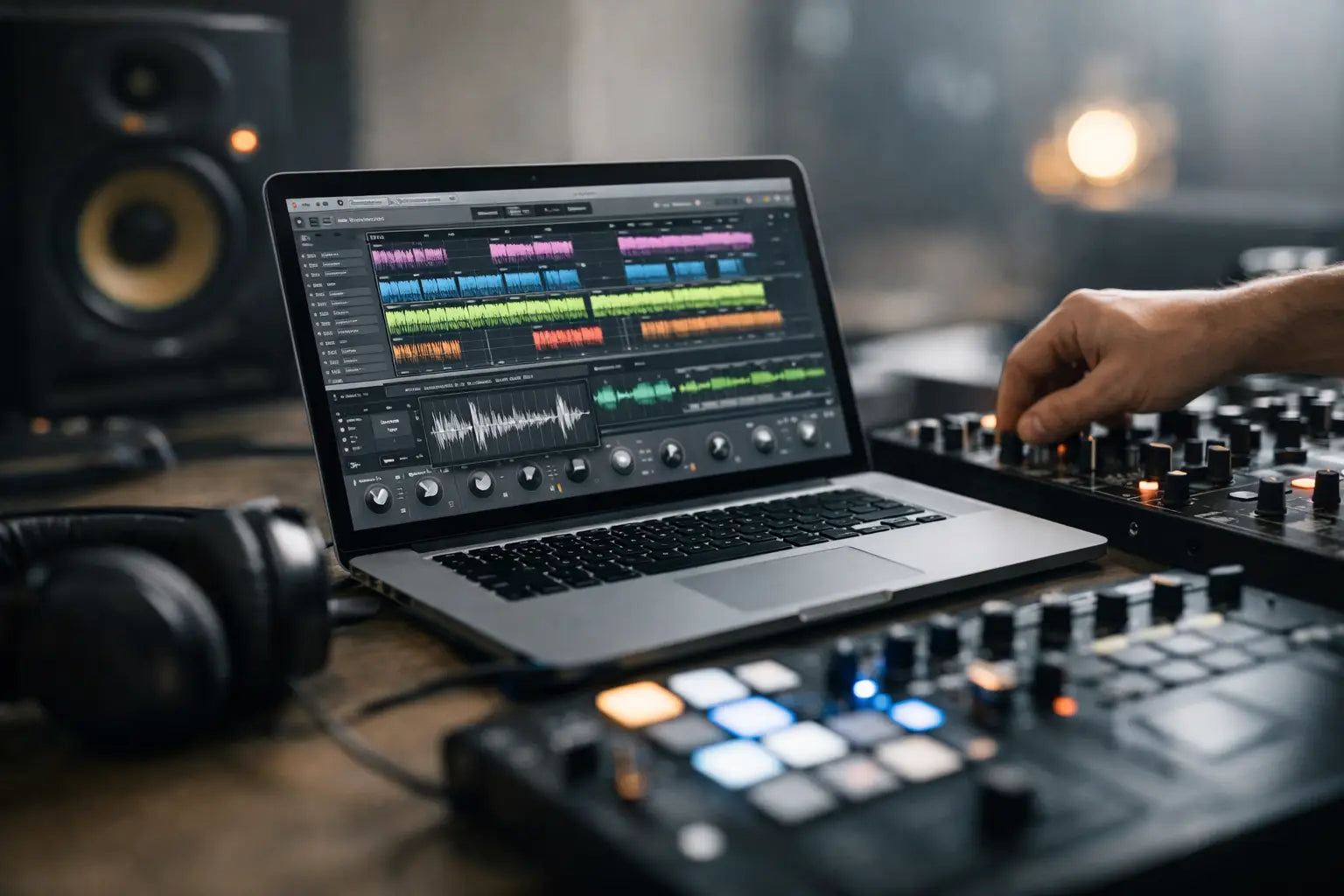
A weak groove usually gives itself away in the first eight bars. The kick may hit hard, the synth may sound expensive, but if the techno loop underneath it feels flat, the whole record loses tension fast. In techno, loop quality is not a small detail. It is the engine that carries movement, hypnosis, and repeat value.
For producers working on deadlines, building every rhythmic layer from scratch is not always the smart move. A strong loop can get you to the right energy in minutes, but only if it is genre-accurate, mix-ready, and flexible enough to shape into your own track. That is where a lot of producers get stuck. They either choose loops that sound polished but generic, or loops with character that fight the rest of the arrangement.
The better approach is simple. Treat loops as production material, not finished music. When you do that, they stop sounding like shortcuts and start acting like workflow multipliers.
What makes a good techno loop
Not every loop labeled techno actually works in a modern techno record. Plenty of them are too busy, too washed in effects, or built around trends that age out fast. A usable techno loop has a few core traits: a clear rhythmic identity, enough space for layering, and mix decisions that do not lock you into one direction.
The best loops create momentum without stealing the spotlight. That usually means percussion that feels deliberate, low-end information that does not cloud the kick and bass relationship, and transients that still cut after a limiter hits the master. If a loop sounds huge on its own but collapses once your kick, rumble, hats, and lead are in, it was never that strong to begin with.
Genre fit matters too. Raw warehouse techno, peak-time festival techno, melodic techno, and industrial techno all use repetition differently. A loop that feels right in one lane can sound completely out of place in another. Producers often miss this and blame the mix, when the real issue is groove language. Swing, hat spacing, clap texture, and saturation style all tell the listener what kind of record they are hearing.
How to choose the right techno loop for your track
The fastest way to waste time is to audition loops in isolation. A loop can sound impressive solo and still be wrong for the record. You want to test it against your kick, bass movement, and main tonal idea as early as possible.
Start with role, not sound. Ask what the loop needs to do. Is it there to add top-end drive, midrange motion, tribal detail, industrial grit, or a full rhythmic bed while you sketch the arrangement? Once you know its job, selection gets easier.
A top percussion loop should leave room for your clap and hats. A full drum loop should have enough character to carry the section, but not so much low-end that it competes with the core groove. A synth loop should provide movement or tension, not dictate the whole harmonic direction unless that is the point of the track.
This is also where file quality matters more than marketing labels. Clean editing, tight timing, and consistent loudness make loops far easier to drop into a session and judge honestly. If the source is sloppy, you will spend your time fixing instead of creating.
Full loops vs layered loops
Full loops are great for speed. They help you build a working groove fast, especially in the early sketch phase when momentum matters more than perfection. The trade-off is control. If the clap is too bright, the shaker too loud, or the reverb too wide, you may end up carving around problems.
Layered loops, on the other hand, give you more room to shape the groove piece by piece. A hat loop, a percussion loop, and a texture loop can be combined into something more custom. This usually takes longer, but the result often feels more original and easier to mix.
Most serious producers use both. Full loops for quick direction, layered loops for refinement.
How to make a techno loop sound original
Using loops does not make your track unoriginal. Using them lazily does. The difference is in what happens after drag-and-drop.
Start by changing context. Pitch a percussion loop down a semitone or two. Slice out every second hit. Move one transient ahead of the grid for tension. Filter automation can turn a static part into an evolving one, and subtle distortion often brings out groove in sounds that initially feel too clean.
Resampling is another strong move. Print the loop with your processing, then chop and rearrange it. Reverse selected hits, automate reverb tails into transitions, or bounce a loop through saturation and parallel compression to create a second layer with more aggression. Even small edits can separate your track from everyone else using the same source material.
Arrangement matters just as much as processing. A loop played unchanged for five minutes will usually feel cheap, even if the sound design is good. Mute sections, thin it out before drops, automate width, and bring back only certain frequency ranges to control energy. Repetition is the point in techno, but managed repetition is what keeps a record club-ready.
Mixing a techno loop without killing the groove
A common mistake is over-processing loops until the movement disappears. Techno lives on feel. If you crush every transient, over-EQ every layer, and force everything into perfect visual alignment, you can lose the human push-pull that makes a groove work.
Start with conflict points. Most often, that is low mids, upper mids, and stereo width. If your loop is fighting the bass or rumble, high-pass it higher than you think. If the hats feel harsh once the lead comes in, tame a narrow area instead of dulling the whole top end. If the loop spreads too wide and weakens mono impact, reduce side information rather than collapsing it completely.
Compression should serve movement, not flatten it. Sometimes the loop needs none at all. Sometimes it needs parallel compression so the body gets thicker while the original transients stay alive. It depends on the loop and on how dense the rest of the track is.
Sidechain can help, but heavy pumping is not always the answer in techno. A subtle duck from the kick often gives you the space you need without making the groove sound obvious or trendy.
When to leave the loop alone
If a loop already fits the track, forcing extra processing can make it worse. This sounds obvious, but producers do it all the time because they feel they should be doing more. Good source material saves decisions. That is one reason curated, genre-specific packs outperform random loop folders built over years of downloads.
If the tone is right, the timing is right, and it supports the section, leave it alone and move on. Your track needs progress more than another plugin chain.
Why source quality matters more than quantity
Huge libraries sound appealing until you are twenty minutes deep into auditioning mediocre loops that almost work. For club-focused production, smaller and better usually wins. You want sounds that are current, organized, and built by people who understand the target genre from the inside.
That is why producer-led sample packs have become such a practical tool. They cut down search time and reduce the amount of repair work once the loop is in the session. For producers making techno, tech house, melodic techno, or adjacent club genres, focused collections are usually more useful than giant all-genre bundles packed with filler.
At Hot Grooves, the value is not just the sound itself. It is the speed of getting to a polished idea with material that already speaks the language of modern electronic records. That matters when you want to finish more music instead of endlessly rebuilding the same groove from zero.
Building a workflow around the techno loop
The smartest producers do not rely on loops for inspiration alone. They build systems around them. One loop starts the groove, another defines section energy, another becomes a transition element after processing. Used this way, loops become structure tools as much as sound sources.
Try keeping one folder for sketch loops, one for arrangement lifters, and one for signature layers. That separation makes decisions faster. You stop asking what sounds cool and start asking what the track needs right now.
It also helps to commit earlier. If a loop works, print your edits and arrange the track. Endless auditioning feels productive, but it usually kills momentum. Techno rewards forward motion in workflow just as much as in rhythm.
The real goal is not to find a magic loop that writes the record for you. It is to find strong source material that gets you to the right groove quickly, then shape it with enough intent that the final track feels like yours. When that process clicks, finishing records gets easier, and the music hits harder where it counts - on a system, in a mix, and in a DJ set.
What Makes a Hard Techno Sample Hit Hard?
How to Choose the Right Vocal Pack