
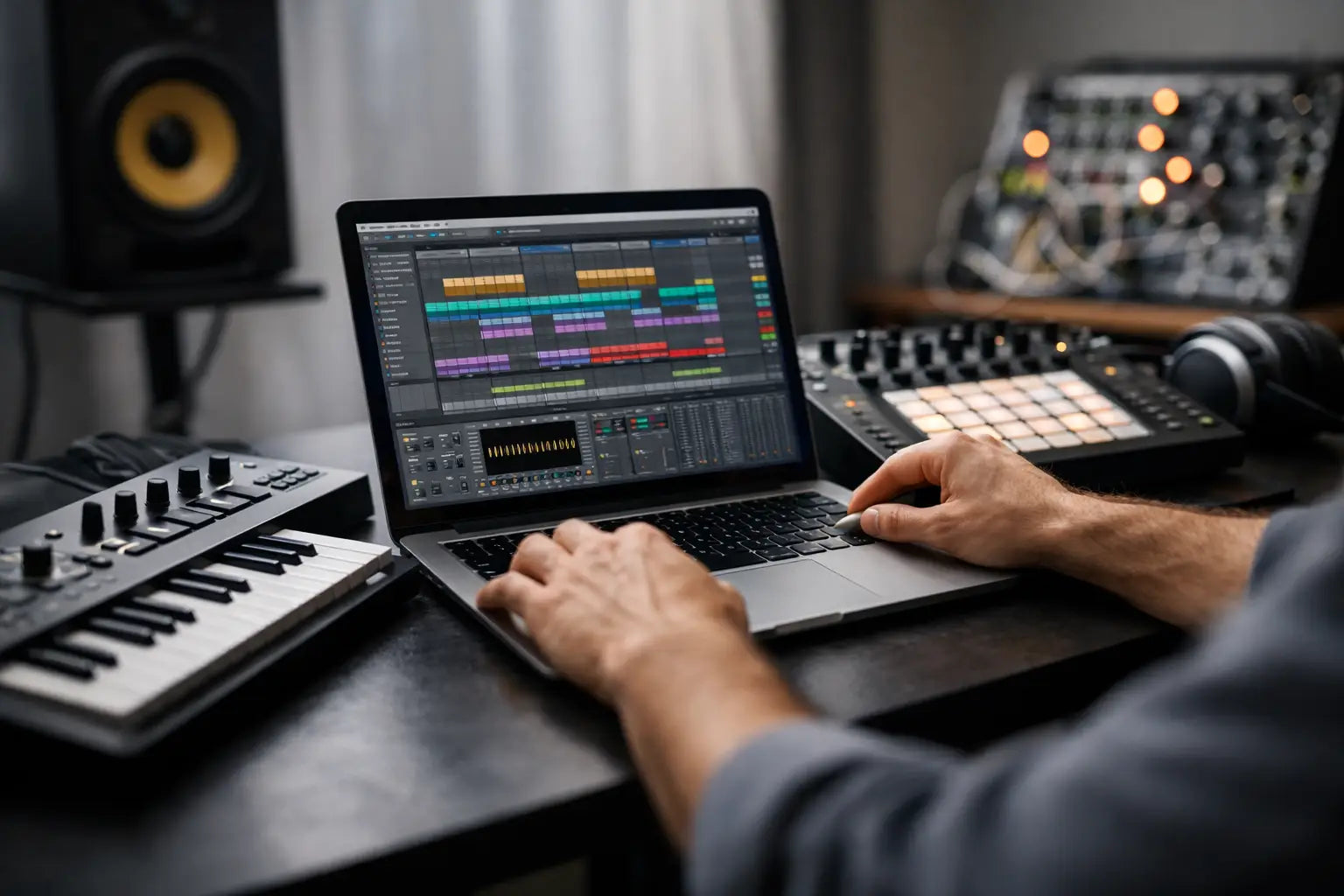
The difference between finishing a club track and leaving it stuck at an 8-bar loop often comes down to workflow. That is exactly why ableton has become a go-to DAW for electronic producers. It is fast when you need ideas on the fly, flexible when you want to arrange properly, and deep enough to handle everything from rough sketches to release-ready mixes.
For producers making Afro House, Tech House, Melodic Techno, Techno, Bass House, and EDM, that speed matters. When your drums need to hit immediately, your bass has to lock to the groove, and your topline needs to sit right without hours of cleanup, your DAW is not just software. It is part of the production process. Ableton works because it is built around momentum.
Why ableton works so well for club music
A lot of DAWs can make professional records. That part is not really up for debate. The reason ableton keeps showing up in electronic studios is more specific - it matches the way dance music is actually built.
Session View is a big reason. If you start with groove, texture, drums, and bass before thinking about full song structure, this setup feels natural. You can test loops, swap out percussion, trigger vocal chops, and hear combinations quickly without committing too early. That matters when you are shaping a Tech House groove or trying different drum relationships in Afro House.
Then there is Arrangement View, where those ideas turn into a finished track. Ableton makes it easy to move from experimentation into structure without breaking your pace. You are not rebuilding the track from scratch. You are developing what already works.
The stock tools help too. Drum Rack, Simpler, Sampler, Audio Effects Rack, and automation are all production staples for a reason. They let you move from sound selection into track-building fast. For genres where energy, movement, and transitions matter, that speed is not a luxury. It is part of getting a better result.
The real strength of ableton is decision speed
Electronic production is full of small choices. Which kick sits better with the bassline. Whether the clap needs more transient bite. If the lead should be layered or left clean. How much movement the hi-hats need before they feel busy instead of driving.
Ableton shortens the distance between hearing a problem and fixing it. You can drag in a new one-shot, warp a loop, automate a filter, group layers, build effect chains, and keep going. That makes a major difference when you are producing against a reference in a competitive genre.
This is also where high-quality source material matters. A DAW can speed up workflow, but it cannot rescue weak sounds. If your drums are thin, your percussion lacks character, or your presets are generic, you end up spending too much time compensating. Strong sample packs and usable presets reduce friction. That is why producers working in modern club styles often combine ableton with genre-focused sounds that already fit the lane.
Building stronger drums in Ableton
If your track does not move physically, nothing else saves it. In club music, drums are not background detail. They are the engine.
Ableton is especially strong here because it lets you layer and test drum combinations quickly. Drum Rack keeps everything organized, but more importantly, it keeps you flexible. You can build a kit around a kick and clap, then keep swapping hats, shakers, rims, toms, and percussion loops until the groove feels expensive.
The workflow is simple, but the result depends on taste. A clean Tech House groove may need fewer layers and tighter transient control. Afro House usually wants more percussive conversation and movement. Melodic Techno often benefits from subtle texture sitting behind the main drums. Ableton makes all of those approaches easy to audition in real time.
Warping is another advantage. Loops can be matched to your project quickly, then sliced, edited, or layered with one-shots. That opens up a faster way to get custom grooves without programming every hit by hand. The trade-off is that easy editing can lead to overbuilding. Just because you can stack six percussion parts does not mean the groove needs them.
Basslines, synths, and arrangement without friction
Club tracks usually live or die on the relationship between drums and low end. Ableton gives you a clean environment for testing that relationship early.
You can sketch bass ideas with stock instruments, load Serum for more detailed sound design, or start with presets that already fit the genre. The key benefit is not just sound creation. It is how fast you can hear the bass in context. Sidechain, saturation, EQ moves, and automation are all easy to dial in while the groove is running.
That matters because bass is rarely just about tone. It is about movement, spacing, and control. A Bass House line may need aggression and stereo personality in the mids. A Techno bass may need restraint and weight. A Melodic Techno bass often has to support emotion without fighting the lead. Ableton helps because it keeps those adjustments immediate.
Arrangement also feels less painful here than in many other DAWs. You can duplicate sections, strip out elements for tension, automate macro controls, and shape transitions fast. Risers, fills, vocal cuts, downlifters, and FX can all be placed and adjusted without slowing the session down. For producers trying to finish more tracks, that is a real edge.
Using samples in ableton without sounding generic
There is still a weird stigma around samples in some corners of production. In actual electronic music, the better question is whether the track sounds good and feels current.
Ableton is one of the best environments for using samples creatively rather than lazily. You can chop loops, re-pitch vocals, resample synths, reverse percussion, build layered fills, and create custom transitions quickly. Good source material saves time, but the DAW gives you room to make it yours.
This is where curated packs matter more than giant folders of random content. If you are producing club-focused music, you want loops, one-shots, vocals, and presets that already speak the genre fluently. That means less time filtering junk and more time arranging useful ideas. Hot Grooves is built around that exact need, especially for producers who want polished electronic sounds that drop into a session and work fast.
The balance is simple. Use premium source sounds, then edit with intent. Change the rhythm, stack layers, process the top end, automate texture, and make sure the final part serves the record rather than the pack demo.
Where ableton can slow you down
Ableton is fast, but it is not magic. Newer producers can get lost in experimentation and mistake motion for progress. Session View is great for ideas, yet it can also keep you looping forever if you never commit to an arrangement.
Stock devices are powerful, but they can become a rabbit hole too. You can build detailed racks and complex chains for almost anything. Sometimes that helps. Sometimes it burns an hour that could have been solved by picking a better sample in the first place.
There is also the issue of taste versus tools. Ableton makes it easy to automate everything, layer heavily, and process aggressively. That does not always improve the record. In many club genres, cleaner choices hit harder. Better arrangement often beats more plugins.
If you want better output, set limits. Commit to sounds earlier. Build around strong drums. Use references. Finish rough arrangements before getting obsessed with micro-edits.
A practical ableton workflow for faster results
Start with the groove. Pick a kick that already feels right for the genre, then build the drum relationship around it. Add clap or snare, hats, and percussion before reaching for leads. In dance music, the track usually tells you what melodic space is available after the rhythm section is working.
From there, lock in the low end. Whether you are using a custom patch, a preset, or a resampled idea, make sure the bass supports the drums instead of fighting them. Then move to the core musical hook - chords, stab, lead, vocal, or texture depending on the style.
Once the loop has real identity, arrange early. Do not wait for a perfect drop. Build intro, tension, release, and breakdown structure while the idea still feels fresh. After that, spend your detailed time on transitions, automation, and mix decisions that actually improve playback on speakers and in DJ sets.
That is the bigger reason ableton stays at the center of so many electronic workflows. It supports quick ideas, but it also rewards producers who know when to commit. If your goal is sharper grooves, cleaner arrangements, and more finished tracks, ableton is not just a popular choice. It is a practical one.
The best setup is not the one with the most options. It is the one that gets your next track over the line while it still feels exciting.
Serum Presets That Speed Up Better Tracks
Best FL Studio Techno Pack for Fast Results