
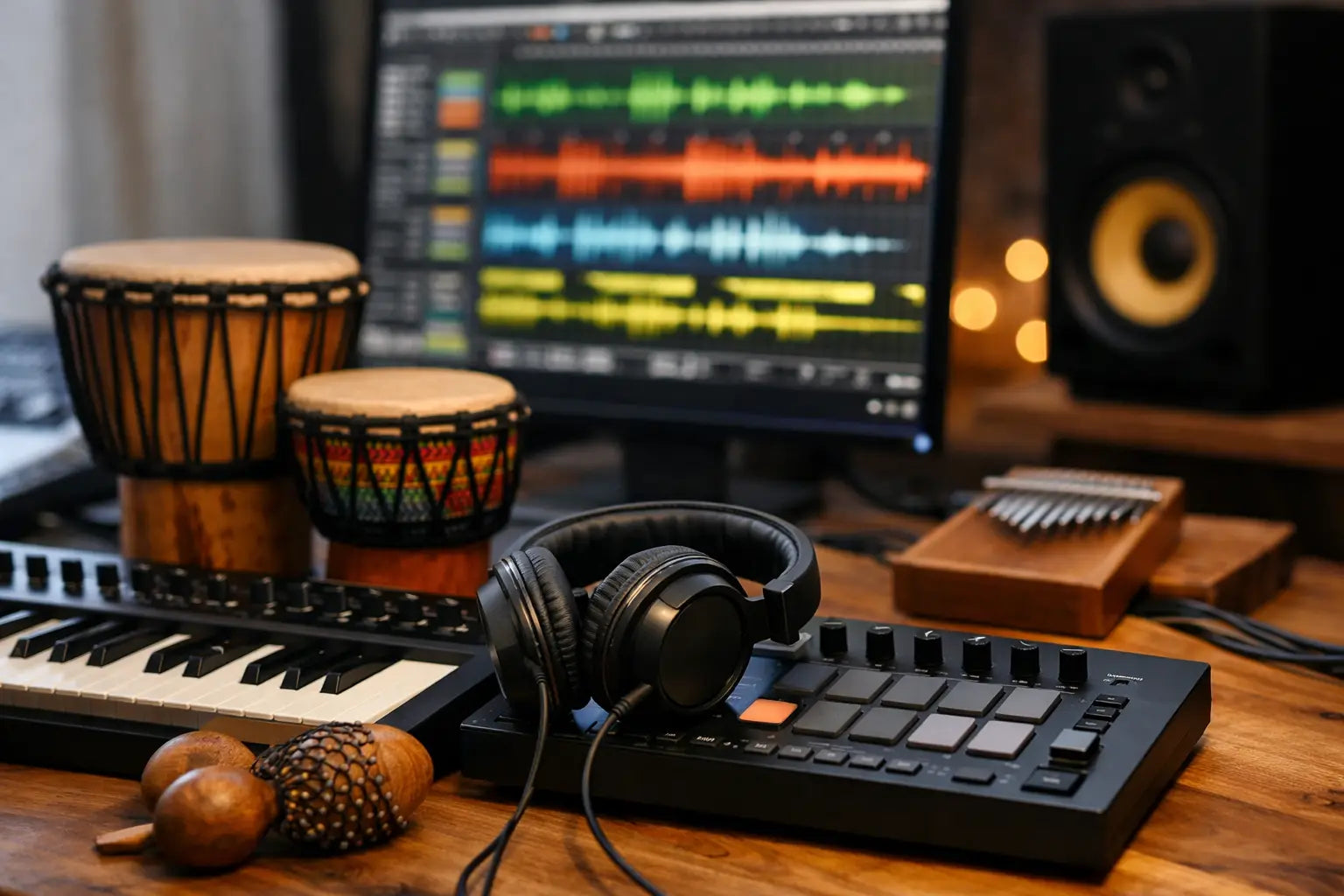
If your drums hit hard but the groove still feels flat, the issue usually is not your mix. It is the source material. The best afro house sample packs do more than give you kicks, shakers, and loops. They give you movement, space, and the kind of rhythmic detail that makes a track feel built for real dance floors instead of a playlist test.
Afro House is one of those genres where average sounds get exposed fast. A weak top loop, a stiff conga pattern, or a vocal that feels copied from another style can pull the whole record out of focus. That is why choosing the right pack matters. You are not just buying sounds. You are buying speed, direction, and a better chance of landing on something that feels current.
What makes the best afro house sample packs worth buying
The first thing to look for is groove authenticity. Not every pack labeled Afro House actually understands the genre. Some lean too tribal in a generic way. Others drift into organic house or melodic techno with a few hand drums layered on top. A strong pack has percussion that feels intentionally programmed, not randomly busy. The bounce should come from interaction between elements, not from stacking every loop available.
Sound quality is the second filter. You want samples that already feel mix-ready. That does not mean overprocessed. It means clean transients, controlled low end, and enough tonal balance that you can drag parts in and start building without spending an hour fixing harshness or mud. For most producers, the real value is not the number of files. It is how quickly those files turn into a usable idea.
Then there is pack structure. The best packs are organized around how people actually produce. That means clear folders, labeled key and BPM info, useful stem separation, and a balance between loops and one-shots. A pack with amazing sounds but messy organization can still slow your session down.
10 best afro house sample packs to look for
1. Groove-first percussion packs
If a pack gets the percussion right, everything else gets easier. Look for collections with layered congas, shakers, toms, rim textures, and tops that feel alive across a full 16 or 32 bars. The best versions include both full loops and stripped components, so you can keep the groove while reshaping the arrangement.
These packs work best for producers who already have strong synth ideas and just need the rhythm section to sound convincing fast.
2. Vocal-led Afro House packs
A good vocal can give an Afro House record its identity in seconds. But this is also where lower-quality packs fall apart. A lot of vocal packs feel too pop, too cinematic, or too generic. The stronger ones offer phrases, chants, hooks, and atmospheric textures that sit naturally over club drums.
If you produce for DJs, flexibility matters. Dry and wet versions, ad-libs, and chopped phrases are more useful than one fully processed topline you cannot really reshape.
3. Drum one-shot focused packs
Some producers would rather program from scratch than rely on loops. In that case, a one-shot heavy pack is usually the smarter buy. You get kicks, claps, hats, percussion hits, and tonal drums that let you build more original grooves while still staying inside the genre.
The trade-off is speed. You gain control, but you need stronger programming instincts to make the groove feel natural.
4. Full construction-kit packs
Construction kits can be extremely efficient when they are done well. You get drum loops, bass loops, synth phrases, vocals, and supporting musical parts that already work together. For sketching ideas quickly, they are hard to beat.
The downside is obvious. If you use too much of a kit unchanged, your track can sound preset. The better approach is to treat construction kits as launch material, then rebuild key elements around them.
5. Bass-driven Afro House packs
A lot of producers focus on percussion first, but low-end character is what often separates a decent groove from a strong one. Packs with deep, rolling bass loops and one-shots can save serious time, especially if they are tuned well and leave room for the kick.
For this style, less is usually more. You do not need complicated bass movement if the rhythm section is carrying enough detail.
6. Melody and atmosphere packs
Not every Afro House track leans heavily melodic, but the style often benefits from textured plucks, emotional chord phrases, mallets, pads, and subtle organic layers. Packs that cover this side well can help a track feel more complete, especially in breakdowns and intros.
This type of pack is most useful when it avoids sounding too cinematic or too close to melodic techno. The best material supports the groove instead of overpowering it.
7. Serum preset and synth-focused packs
If you use Serum regularly, preset-driven Afro House packs can speed up production without locking you into loops. Strong packs include bass presets, leads, plucks, atmospheres, and FX that already feel genre-aware.
This is a smart middle ground between total sound design from scratch and drag-and-drop loop production. You keep melodic control while skipping a lot of setup time.
8. Hybrid Afro House and Melodic House packs
Some packs sit between Afro House and adjacent styles. That can be useful if your tracks lean more crossover, emotional, or festival-ready. You may get cleaner melodic content and more polished synth work than from strictly percussive packs.
The trade-off is authenticity. If you want a rawer, groove-dominant record, a hybrid pack might feel too polished or too safe.
9. DJ-friendly tool packs
These are less about full song ideas and more about usable parts - drum fills, vocal shots, percussion layers, transitions, FX, and groove enhancers. They are ideal if you already have your own sound but want sharper arrangement tools.
For working producers, these packs can end up being more valuable over time than giant all-in-one libraries because they solve repeat workflow problems.
10. Curated label-style packs
The strongest packs in this category feel like they came from people who actually produce and release within club genres. The sounds are tighter, the naming makes sense, and there is less filler. If a pack feels curated instead of bloated, that is usually a good sign.
This is where specialist brands often outperform broad sample companies. Genre focus tends to produce better results than trying to cover everything at once.
How to choose the best afro house sample packs for your workflow
The right pack depends on how you make records. If you finish ideas quickly but struggle to make them sound competitive, go for mix-ready drums, bass, and polished tops. If you get stuck at the blank-project stage, construction kits and vocal content will usually give you faster momentum.
If your main goal is originality, choose packs with one-shots, stems, and presets over packs built mostly around full loops. You will do more work up front, but your final track will feel less borrowed. On the other hand, if deadlines matter and speed is the priority, there is nothing wrong with starting from a great loop and building outward.
A lot of producers also overlook file count versus hit rate. One pack with 200 genuinely usable files is often more valuable than a huge library full of average content. Quality reduces decision fatigue. That matters when you are trying to finish tracks, not just collect sounds.
Red flags to avoid before you buy
If the demos sound overstuffed, the pack probably is too. Afro House needs space. Too many layers can make a groove feel busy instead of powerful. Be careful with packs that rely on flashy previews but do not seem to offer flexible source material underneath.
Also watch for vague labeling. If loops are missing key or BPM info, if vocals are hard-processed beyond reuse, or if every percussion file sounds like a variation of the same loop, the pack may not hold up across multiple projects.
Genre confusion is another issue. Some packs market themselves as Afro House but really sound like tech house with bongos. Others drift so far into deep house that the rhythmic identity disappears. The best packs understand the balance between percussion, musicality, and club functionality.
Why specialist packs usually win
Producers working in club music rarely need more sounds. They need better choices. That is why specialist collections often beat general sample libraries. A focused Afro House pack is more likely to give you drums that sit together, vocals that fit the mood, and melodic material that does not fight the groove.
That producer-first approach is also why brands like Hot Grooves stand out in this space. When packs are built for current electronic genres by people who understand arrangement pressure, mix translation, and what actually gets used in sessions, you spend less time sorting and more time finishing records.
The best buy is not the pack with the biggest folder count. It is the one that gives you two or three great ideas in the first hour, then still earns a place in your projects a month later. Pick sounds that move your workflow forward, trust your ears over marketing, and build from material that already feels ready for the club.
How to Use Melodic Techno Chord Loops
Afro House Track Workflow Example That Works