
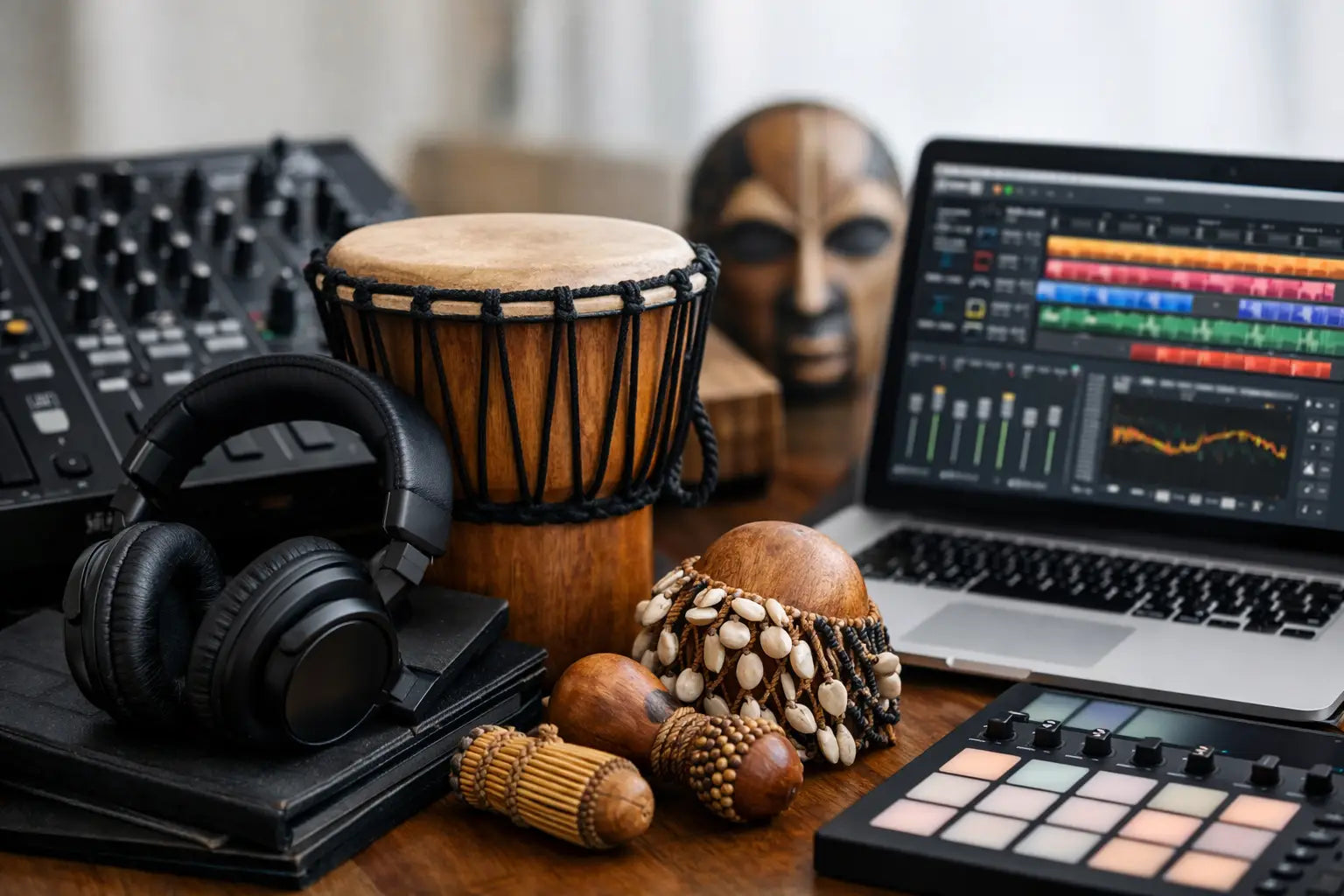
A weak Afro House pack usually gives itself away in the first 30 seconds. The kick is oversized but flat, the percussion loops sound generic, the vocals feel pasted on from another genre, and the melodic content has no real identity. If you are searching for the best afro house sample pack, that first impression matters because this genre depends on feel as much as sound quality.
Afro House is not just deep kicks and tribal percussion. The best records balance movement, space, texture, and emotion in a way that feels natural in the club. That means the right sample pack should do more than hand you a folder of loops. It should give you source material that helps you build tracks faster without draining the life out of the groove.
What makes the best Afro House sample pack?
The short answer is usability. A great pack sounds current, but it also has to be easy to drop into a session and shape into a finished record. Producers are not buying folders for entertainment. They are buying speed, better decisions, and sounds that hold up once the arrangement gets serious.
That starts with drums. Afro House percussion should have character, but it should not fight itself. You want shakers, congas, toms, tops, and rhythmic textures that already feel connected. If every loop sounds like it came from a different session, you will waste time forcing them together with EQ and transient shaping. A strong pack feels curated, not piled together.
Low end is the next checkpoint. Some packs overhype the kick to sound impressive in isolation, then collapse when you add a bassline. The best afro house sample pack gives you kicks with weight and definition, plus bass loops or one-shots that leave room for movement. In this genre, groove is usually more important than brute force.
Then there is the melodic side. Chords, plucks, synths, marimbas, keys, and atmospheric elements need to feel musical without becoming too busy. Afro House often lives in repetition, but repetition only works when the source sounds have depth. If the melodic loops are bland, the track gets boring fast. If they are overproduced, your record starts sounding like a demo built from someone else’s arrangement.
Why genre accuracy matters more than pack size
Bigger is not better if half the content is filler. A 3 GB pack can still be a bad buy if the loops are loosely tagged, the groove feels more like generic house, or the vocals lean into pop clichés instead of club functionality.
A focused Afro House pack should understand the difference between surface-level styling and actual genre language. That means rhythm sections that swing the right way, percussive layers with human feel, and melodic elements that support tension rather than overcrowd it. If a pack sounds like it was built by someone chasing a trend instead of someone who actually produces the genre, you can hear it immediately.
This is where smaller, better-curated packs often win. They remove the dead weight and keep the useful material upfront. For working producers, that usually beats scrolling through endless folders of average content.
The core folders worth checking first
Drums and percussion
This is where most producers decide if a pack is worth keeping. The percussion should feel alive before you touch it. Look for layered tops, groove loops, individual hits, fills, and transitional elements that can work across multiple tempos. The best packs give you enough variation to build evolving drum sections, not just eight bars that loop forever.
One-shots matter here too. A loop can spark an idea, but one-shots give you control. If the pack only includes premade drum loops, you may get quick inspiration but less flexibility when it is time to personalize the groove.
Vocals
Vocals can elevate Afro House fast, but they are also where weaker packs tend to fall apart. You want phrases, chants, hooks, and textures that feel organic and mix-ready. Overprocessed vocal loops can sound exciting at first, then become impossible to fit once your track develops.
Good vocal content gives you options. Dry and wet versions are useful. Short phrases are often more versatile than full toplines. And if the recordings carry personality without forcing the entire identity of the track, that is usually a good sign.
Melodic loops and musical ideas
This category should inspire, not trap you. A strong loop folder gives you harmonic ideas, tonal percussion, plucks, pads, and synth motifs that feel club-focused and emotionally usable. The goal is not to copy and paste full song sections. It is to get a fast starting point with enough room to make the track your own.
Key labeling is essential. If loops are not clearly tagged by key, workflow slows down immediately. That sounds small, but for producers moving quickly between ideas, proper organization is part of the product quality.
Presets and MIDI
Presets are underrated in Afro House packs. A well-made Serum bank or synth preset folder can save a session, especially when you need a lead, bass, chord stab, or atmospheric layer that already sits in the genre. The benefit is speed, but only if the presets are musically relevant and not just random sound design flexes.
MIDI is useful for the same reason. It lets you keep the rhythmic and harmonic intent while changing the sound source. If you like the movement of a loop but want full control over the instrument, MIDI gives you that middle ground.
How to tell if a pack is actually mix-ready
Mix-ready does not mean over-limited. It means the sounds already have shape, clarity, and a usable tonal balance. You should be able to drag key elements into a session and get momentum fast, without spending an hour cleaning mud and harshness.
Drums should hit with purpose but still leave space for your own processing. Melodic loops should sound polished without being so saturated or compressed that they cannot adapt. Vocals should be clean enough to sit in a mix, not full of distracting resonances or heavy effects you cannot remove.
There is a trade-off here. Some producers want rawer sounds because they prefer to do all the shaping themselves. Others want near-finished material they can place into a track quickly. The best choice depends on your workflow. If speed is the priority, a more polished pack usually wins. If customization is everything, slightly drier source material may be better.
The best Afro House sample pack for your workflow might not be the most expensive
Price can signal quality, but it is not a guarantee. Some premium packs justify the cost with better curation, stronger recordings, cleaner processing, and more usable content per folder. Others charge more for bigger marketing, not better sounds.
A smart way to judge value is to ask one question: how many finished tracks can this realistically help me make? If a pack has 500 files but only 30 are genuinely useful, the value is weaker than a smaller collection where nearly every folder sparks an idea.
This is where producer-led brands tend to stand out. When a pack is built by people who understand release-ready dance music, the choices are more practical. The sounds are less likely to be filler, and the structure tends to support real sessions instead of casual browsing. That producer-first approach is a big reason many club-focused creators look for specialized stores like Hot Grooves rather than broad, genre-mixed catalogs.
Common mistakes when choosing a pack
A lot of producers buy based on the demo alone, and that is where things can go sideways. A polished demo can be built around a few standout sounds while the rest of the pack is average. It helps to think beyond the promo and focus on the categories you actually use most.
Another mistake is choosing a pack that is too rigid stylistically. If every loop is extremely specific, you may struggle to build multiple tracks from it. You want enough identity to feel authentic, but enough flexibility to keep producing without repeating yourself.
The last mistake is ignoring arrangement utility. Fills, risers, impacts, FX, and variation loops are not glamorous, but they save time when turning an eight-bar idea into a club record. A pack with strong core sounds but no transition tools can still slow you down.
What serious producers should expect
If you are aiming for professional output, the best afro house sample pack should do three things well. It should give you immediate inspiration, reduce technical cleanup, and hold up in a competitive mix. Anything less is just extra hard drive clutter.
That does not mean every file needs to be spectacular. It means the pack should consistently support real production decisions. The groove should feel intentional. The sonics should feel current. The organization should help you move fast. And the content should sound like it belongs in modern Afro House, not in a generic world-percussion folder with a new label slapped on top.
The right pack does not write the track for you. It puts you in a better position to finish one. That is the difference that matters when deadlines are tight, ideas need to land quickly, and you want the result to hit hard enough for DJs, playlists, and real club systems.
Choose the pack that makes you work faster without sounding like everyone else. That is usually the one worth keeping in your template, not just your download folder.
How to Pick the Best Tech House Sample Pack
How to Pick the Best Vocal Sample Pack