
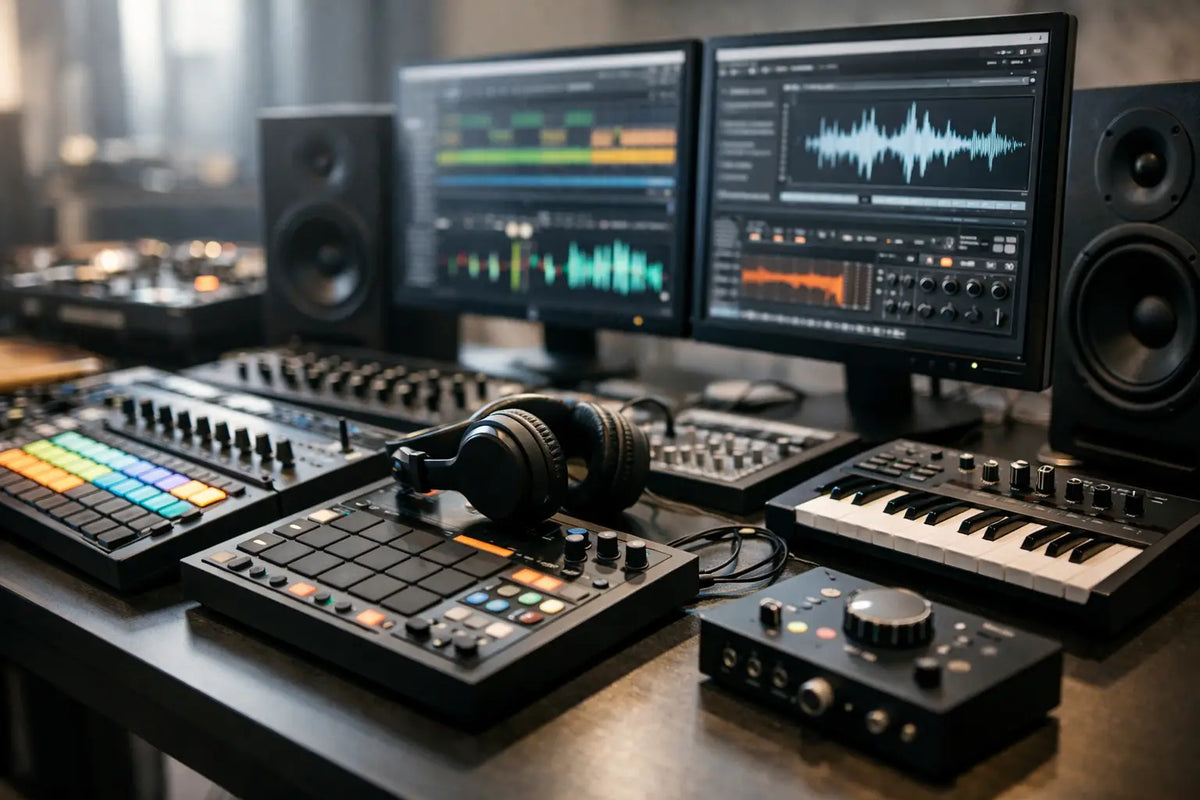
A weak kick, generic loop, or vocal that fights the mix can drain the energy from a track before the arrangement even gets moving. The best production samples do more than fill empty channels in your DAW. They give you a dependable sonic starting point: drums that hit with purpose, musical loops with genre-specific character, and textures that already feel at home in a serious club record.
For electronic producers, the goal is not to collect the biggest possible sample library. It is to build a focused toolkit that helps you make better decisions faster. A tight selection of current, mix-ready sounds will take you further than 200 folders of samples you never open.
What Makes the Best Production Samples Worth Using?
A great sample earns its place in a track quickly. It should sound polished on its own, but it also needs enough space to work alongside the rest of your production. That balance matters. An over-processed loop may sound impressive in isolation yet leave no room for your own bass, synths, or drums once the arrangement fills out.
The best production samples are designed with a clear musical purpose. A Tech House top loop should deliver movement without crowding the kick. An Afro House percussion loop should bring organic swing and forward momentum. A Melodic Techno arp or atmosphere should create tension, depth, and emotion without turning the mix into a wash of reverb.
Quality also shows up in the details producers notice after the first eight bars. Hits should be cleanly edited. Loops should be accurately timed. Key and BPM labeling should be reliable. Stereo content should feel intentional, not artificially widened to the point that it collapses in mono. These are the practical details that keep a fast writing session moving.
Genre Accuracy Beats General-Purpose Sounds
Club music has rules, even when the best records bend them. The drums, groove, sound selection, and tonal balance of Afro House are not interchangeable with Bass House or peak-time Techno. Using genre-focused samples gives you a stronger foundation because the sound design already speaks the language of the style you are producing.
That does not mean every element must come from the same genre label. A driving Techno rumble can create useful contrast in a darker Melodic Techno track, while a crisp EDM clap may add impact to a Tech House drop. The key is to start with samples that establish the right identity, then use contrasting elements deliberately.
Mix-Ready Does Not Mean Finished for You
Mix-ready samples are built to help you work efficiently, not remove your creative control. A punchy kick, controlled sub bass one-shot, or well-balanced vocal chop can get you close to a professional sound immediately. You still need to choose the right combination, shape the arrangement, and make space with EQ, level, panning, and automation.
Think of premium samples as production-grade ingredients. They reduce the time spent fixing poor source material, so you can spend more time on the choices listeners actually remember: the drop, the groove, the tension before the chorus, and the hook that pulls the track back into their head.
How to Choose the Best Production Samples for Your Track
Start with the job the sound needs to do. Do not search for a "cool loop" and hope it works. Search for the missing function in your arrangement. If your drums feel static, you may need a shaker or percussion loop with a better rhythmic conversation. If the breakdown lacks identity, a vocal phrase, atmospheric texture, or melodic phrase may be more valuable than another synth preset.
BPM and key are useful filters, but they should not become creative limits. Audio can be pitched and warped, especially short one-shots, percussion, and textures. Still, starting close to your project tempo and key preserves the sample's intended character and saves time. For tonal loops and vocals, the right key can make the difference between a natural fit and an element that always feels slightly wrong.
Audition samples in context as early as possible. A clap that sounds thin in a browser may cut perfectly through a dense drop. A bass loop that sounds huge alone may clash with your kick once both are playing. Keep your core groove running, then test sounds against the actual track rather than judging them in isolation.
Choose Formats That Match Your Workflow
Loops are fast. They are ideal when you need immediate momentum, a polished rhythm bed, or a musical idea to build around. They can also become too recognizable if you use them unchanged from start to finish. Slice them, rearrange sections, layer your own hits, automate filtering, or use only their most effective moments.
One-shots give you more control. Kicks, claps, snares, percussion hits, bass stabs, synth shots, and FX can be programmed into grooves that feel completely your own. They are especially valuable when your reference track has a specific rhythmic feel that stock MIDI patterns cannot capture.
Vocals and vocal chops are often the fastest route to a memorable hook, but they deserve careful selection. Look for phrases with a confident tone, clean recording quality, and enough space to process creatively. A vocal that is too busy or too lyrically specific can box your track into a direction you did not intend.
Presets belong in the same conversation. A strong Serum preset can provide a usable bass, lead, pluck, or sequence in seconds, but it should support the record rather than dictate it. Adjust the MIDI, filter movement, effects, and macro controls until it reacts to your arrangement.
Build a Smaller Library You Actually Use
The smartest sample collection is organized around your real production habits. If you produce Tech House every week, build go-to folders for kick drums, claps, hats, percussion, bass tools, vocal hooks, and transition FX. If you also make Afro House, keep its organic drums, shakers, melodic instruments, and vocal textures clearly separated. This makes decisions faster when inspiration is moving.
Tag your favorites after every session. A simple system works: mark the kicks that consistently translate, the percussion loops with the best swing, and the vocals that sit well after minimal processing. Over time, your personal shortlist becomes more useful than any oversized download folder.
It also helps to avoid using every sample exactly as delivered. Layer a short top kick over a deeper main kick. Turn a percussion loop into a filtered background element. Resample a vocal chop through delay and reverb, then print it as an atmospheric transition. These moves preserve the speed of working with high-quality source material while giving your production a signature.
At Hot Grooves, genre-focused packs are built for this kind of workflow: finding the right sound quickly, shaping it into your own production, and getting back to the arrangement before the original idea loses momentum.
A Better Test Than “Does This Sound Good?”
Ask whether the sample improves the track within 30 seconds. Does it strengthen the groove, clarify the energy, add a hook, or create a transition that makes the next section hit harder? If not, move on. You do not need to force a sound into a record simply because it is technically well made.
The right sample should create momentum, not a new problem to solve. Keep the sounds that make you want to continue producing, then let your arrangement and taste turn them into something listeners will recognize on the dance floor.
Dance Music Trends Producers Can Use in 2026
10 Tech House Drop Examples That Hit Hard