
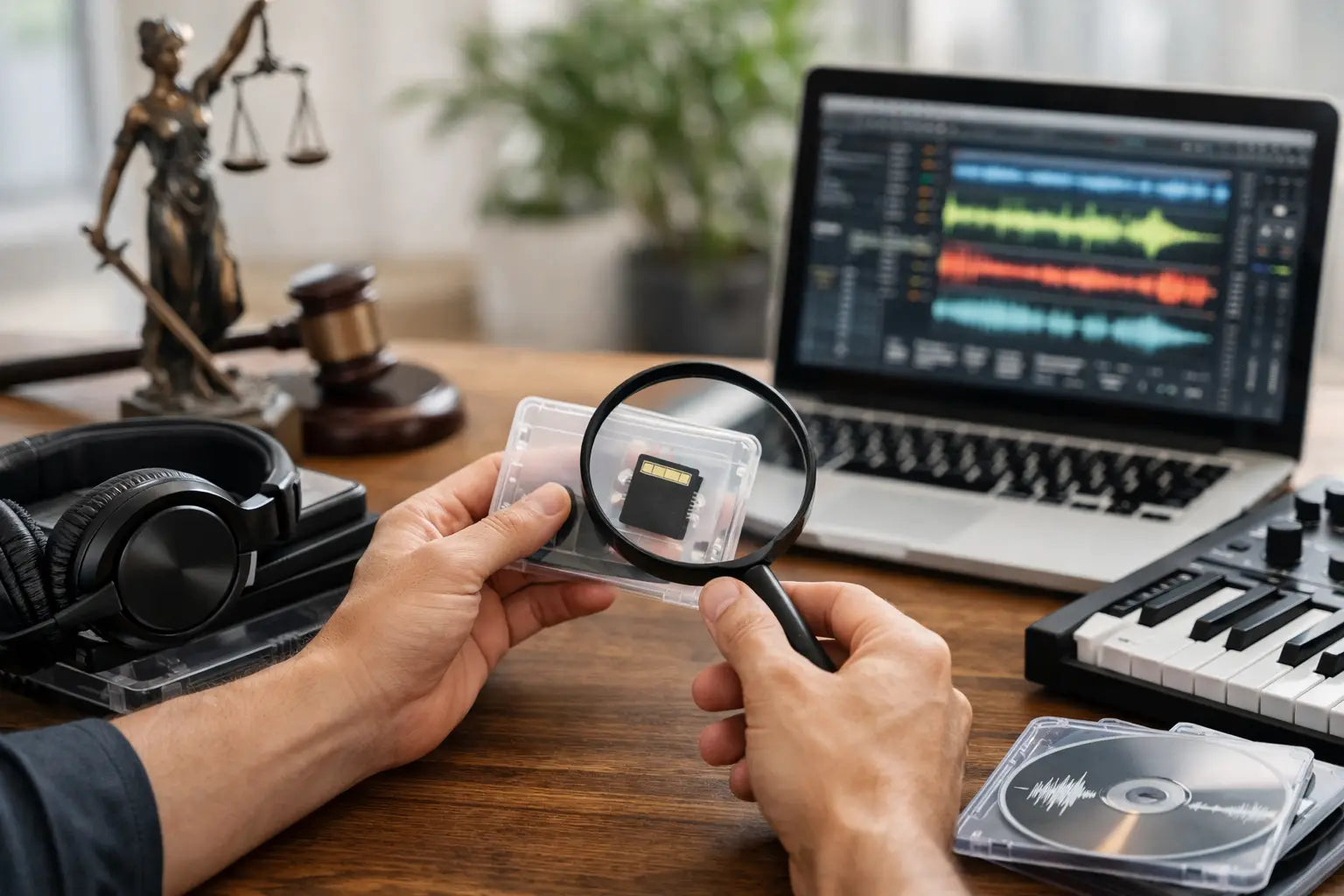
A finished Tech House track can live or die on a tight drum groove, a vocal hook that cuts through the drop, or a bass one-shot that already feels right in the mix. Commercial use sample packs are built for that moment: when you need professional source material now, not another six hours of sound design before the idea disappears.
For electronic producers, the appeal is simple. The right pack gets you closer to a release-ready arrangement faster. But “commercial use” and “royalty-free” are often misunderstood. Before you build a track around a loop, vocal, or preset, you need to know what the license actually allows and where the boundaries sit.
What Commercial Use Sample Packs Actually Mean
Commercial use sample packs generally give you permission to use included sounds in original music that earns money or supports your career. That can include streaming releases, DJ promos, label submissions, client work, social content, live sets, and paid downloads.
In most royalty-free arrangements, you pay once for the pack and do not owe the sound creator a royalty every time your finished track is streamed, sold, or played. That is a major advantage when you are moving from sketches to official releases. You can focus on getting the record signed, pitching playlists, or sending it to DJs without calculating a per-use fee.
The key phrase is original music. A sample pack is source material, not a license to republish the source material itself. You can use a kick, percussion loop, synth phrase, vocal chop, or riser as part of a finished production. You usually cannot upload that same sound, lightly edited, as your own sample pack or standalone download.
Licenses vary by supplier, so always read the terms attached to the specific product. “Royalty-free” is valuable, but it is not a replacement for checking the rules.
The License Checks That Protect Your Release
Most producers only look at licensing when a label asks for a sample declaration or a distributor flags a track. By then, rebuilding a hook can mean losing momentum. Check the license before the sample becomes the center of your record.
Confirm the permitted uses
Look for direct language confirming that the sounds can be used in commercial music releases. A useful license should make clear whether you can use the material in monetized tracks, client productions, videos, performances, and broadcast projects.
If you make music for artists, brands, or content creators, pay attention to client-work terms. Some licenses cover your work for a client but require each client to own a separate copy of the pack. Others allow broad use in commissioned productions. It depends on the supplier, product, and license tier.
Know what you cannot redistribute
This is the boundary producers need to respect. Individual loops, one-shots, MIDI files, presets, construction kits, and vocals cannot typically be resold, shared, uploaded, or given away in their original form.
That means no repackaging a percussion folder into a “free drum kit,” no uploading isolated vocals to a content library, and no sending an entire pack to collaborators who have not licensed it. Even if a folder is royalty-free for music production, it is still protected content as a standalone product.
Keep your proof of purchase
Save your receipt, order confirmation, and a copy of the license terms available at the time of purchase. Organize them in a folder alongside your project files. It takes two minutes and can save a serious headache if a label, distributor, or client asks where a sound came from.
For tracks with several third-party sounds, add a short note in your DAW project or release spreadsheet. List the pack name, the supplier, and any standout samples used. You do not need to document every hi-hat in a demo, but clear records are smart when a track starts gaining traction.
Why Genre-Focused Packs Work Faster
A random collection of technically clean samples is not always useful. If you are producing Afro House, Melodic Techno, Bass House, or peak-time Tech House, the sound selection needs to understand the genre’s pressure points.
In Tech House, that could mean punchy low-end, shuffled percussion, dry vocal phrases, and transitions designed for DJ-friendly arrangements. In Melodic Techno, it may be evolving atmospheres, emotional chord progressions, driving arps, and cinematic impacts. The samples do not need to write the track for you, but they should put you in the right sonic territory immediately.
Genre-specific commercial use sample packs cut down on corrective work. Instead of forcing an unrelated clap through processing or trying to make a weak bass loop feel physical on a club system, you start with material built for the job. You still need taste, arrangement, and mix decisions. You just stop spending your best creative hours fixing raw ingredients.
This is where curated packs outperform oversized folders. More files are not automatically more useful. A compact collection of current, mix-ready sounds can create better sessions than thousands of generic samples you never audition.
Choosing the Right Format for Your Workflow
The best pack format depends on where your production process slows down. If drums are holding you back, do not buy another synth-heavy collection. If your drops feel empty, a pack full of kick loops may not solve the problem.
Loops are fast inspiration. A strong drum or percussion loop can establish energy and movement in seconds. They are ideal for getting an arrangement off the ground, especially in groove-led club music. The trade-off is recognizability. Chop, layer, filter, re-sequence, and combine loops with your own programming so the final groove has your stamp.
One-shots offer more control. Kicks, claps, hats, percussion hits, bass stabs, and FX hits let you build custom patterns while benefiting from polished sound design. They take longer than dropping in a loop, but they are often the better choice when you want a distinct rhythm section.
Vocal packs can give a record identity, but they deserve extra care. A processed vocal hook, spoken phrase, or chop can turn a functional drop into a memorable one. Use it creatively and make it part of your production rather than assuming a single raw phrase will carry the whole track. Also check whether the vocal license has any special restrictions, particularly around use in sample libraries, AI training, or isolated vocal redistribution.
Presets are useful when your sound design is the bottleneck. A quality Serum preset can get you to a usable bass, lead, pluck, or texture quickly, then leave room to tailor the patch to your mix. Make sure you own the required synth version and any stated third-party plugins before committing to a preset-driven project.
Make Pack Sounds Feel Like Your Track
Buying quality sounds is not the same as releasing a generic track. The fastest producers use sample packs as a foundation, then make deliberate production choices around them.
Start by choosing one central element: a vocal hook, percussion groove, bass motif, or synth texture. Build the rest of the arrangement to support it. If every loop is competing for attention, the track will feel like a folder preview rather than a record.
Then create contrast. Slice a loop into a new rhythm. Pitch a vocal chop into a call-and-response phrase. Layer a clean clap with a short, gritty transient. Resample a preset after processing it through saturation, filtering, delay, or automation. Small changes create ownership without turning your session into a technical detour.
Pay close attention to key, tempo, and low-end overlap. Even premium loops need to sit in the same musical and frequency space. Time-stretching can change character, while aggressive pitching can introduce artifacts. Sometimes the faster move is choosing another sound from the pack that already fits rather than forcing an almost-right sample into place.
A Better Way to Shop for Commercial Use Sample Packs
Shop from the needs of your current project, not from fear of missing out. If you are finishing three Afro House ideas, prioritize percussion, organic textures, melodic tools, and vocals that fit that lane. If your DJ sets need harder energy, focus on the kick, bass, drum, and FX material that supports that sound.
Before buying, consider four practical questions:
- Does the pack match the genre and energy level you are producing right now?
- Does it include the formats you actually use, such as loops, one-shots, vocals, MIDI, or presets?
- Are the sounds polished enough to work in a serious mix without major repair?
- Are the commercial terms clear enough for the way you plan to release music?
Build Faster Without Cutting Corners
Commercial-ready production is a combination of speed and judgment. Royalty-free packs can remove the friction of creating every drum hit, vocal texture, and synth layer from zero. They cannot replace arrangement decisions, a strong mix, or the instinct to know when a track needs less.
Treat every pack as a creative asset with terms attached. Read the license, keep your records, and transform the sounds into a production that reflects your own direction. When the source material is current, genre-aware, and cleared for commercial music, you can spend less time second-guessing your samples and more time finishing records people want to play.
How to Use Afro House Vocals in Your Tracks
Serum Presets Buying Guide for Club Producers