
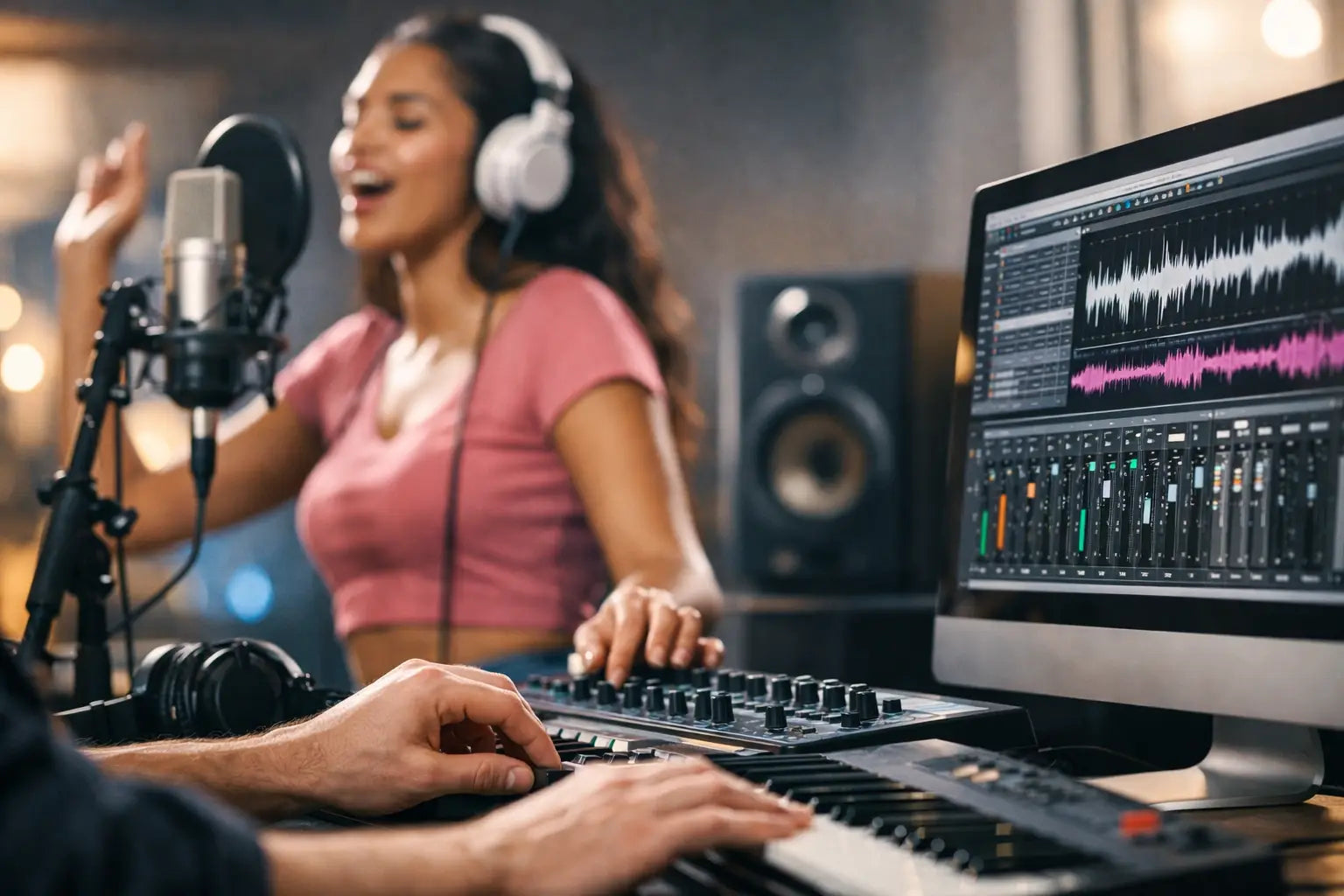
A great topline can carry a drop, tighten a groove, and give a club record its identity in seconds. That is why royalty free dance vocals matter so much for modern producers. When the vocal is right, the track feels more finished, more emotional, and a lot easier to place inside a current Afro House, Tech House, Melodic Techno, Bass House, or EDM arrangement.
The catch is that not every vocal pack helps your workflow. Some vocals sound generic, some are over-processed to the point where they fight your mix, and some come with license terms that create confusion later. If you are producing with release goals in mind, you need vocals that sound current, sit fast, and let you move without second-guessing every creative decision.
What royalty free dance vocals actually give you
At a practical level, royalty free dance vocals let you use pre-recorded vocal material in your productions without negotiating custom terms for every track. For producers, that changes the speed of the entire session. Instead of booking a singer, writing from scratch, recording multiple takes, comping, editing, and processing, you can audition hooks, phrases, ad-libs, chops, and full toplines immediately.
That speed matters more than people admit. In club-focused genres, momentum is part of the production process. If you lose two hours trying to force a weak vocal idea into the track, you usually hear it in the final result. A strong vocal sample can give the arrangement a center of gravity right away, which makes it easier to shape drums, bass movement, transitions, and tension.
There is also a mix advantage. Well-made dance vocal packs are usually recorded and edited with electronic production in mind. That means cleaner takes, tighter timing, and tonal shaping that already points toward modern release standards. You still need to fit the vocal into your own production, but you are not starting from a raw demo-quality source.
Why producers rely on royalty free dance vocals
Most producers are balancing ideas against deadlines. Maybe you are building tracks for streaming, DJ sets, sync, label pitching, or client work. Maybe you just want to finish more records instead of collecting 16-bar loops on your hard drive. In all of those cases, royalty free dance vocals can remove one of the biggest bottlenecks in electronic music production.
They help when your track has great drums and sound design but no human element. They help when the drop works, but the breakdown feels empty. They help when a groove needs a hook that listeners can remember after one pass. A vocal does not need to dominate the arrangement to do that job. Sometimes a single phrase, pitched chop, or call-and-response layer is enough.
There is a commercial angle too. Dance records often compete on immediacy. If the track needs too much patience before it reveals its identity, it is easier for listeners and DJs to move on. A smart vocal entry gives the record a recognizable point fast.
Not all dance vocals fit all genres
This is where a lot of producers waste time. They grab a vocal because it sounds good solo, then wonder why it never locks into the record. Genre fit matters.
In Afro House, vocals often work best when they support rhythm and atmosphere as much as melody. Breath, movement, chant-style phrases, and emotional texture can outperform a dense pop topline. In Tech House and Bass House, short hooks, attitude-driven phrases, and punchy repetition usually land better than long lyrical verses. In Melodic Techno, space matters more. A vocal with width, air, and emotional restraint can do more than a busy lead line that crowds the synths.
That does not mean rules are fixed. Sometimes contrast creates the hook. But if you are trying to finish strong records quickly, choosing vocals designed around the lane you produce in will usually beat trying to force a stylistic mismatch into place.
What to listen for before you commit
The first thing to check is clarity. If the vocal sounds muddy, harsh, or overdone before you even start mixing, it will probably slow you down. A useful dance vocal should give you enough character to feel inspiring, but enough flexibility to shape it your way.
The second factor is phrasing. Great vocal samples tend to have natural rhythmic pockets. They leave room for kick, bass, and groove instead of trampling over them. This is especially important in club music, where your low end and percussion are doing heavy lifting.
Then there is emotional range. A lot of average vocal packs feel locked into one mood. That can work if it matches your exact project, but it is limiting if you want material you can pitch, chop, stretch, and repurpose across multiple ideas. The best vocals hold up whether you use them clean, layered, reversed, or heavily processed.
It is also worth paying attention to how complete the material is. Some producers want full song-style vocal content. Others want phrases, hooks, doubles, harmonies, and ad-libs they can rearrange. Neither approach is better by default. It depends on whether you want speed, customization, or a balance of both.
How to make royalty free dance vocals sound original
Using vocals from a pack does not mean your track has to sound like everybody else’s. The difference usually comes from treatment and context.
Start with arrangement. A vocal phrase can feel completely different depending on where it enters, what gets muted around it, and how the drums react. Try building tension by stripping the instrumental before the vocal lands, or use the vocal as a rhythmic layer against the groove rather than a lead feature.
Then shape pitch and formant with intention. Small moves can create a unique identity without destroying the source. If the vocal already has strong character, restraint often works better than extreme effects. If the source is simple, heavier processing can help it become its own instrument.
Chopping is still one of the fastest ways to personalize a vocal, but timing is what separates clean results from random edits. Cut around the groove, not just the waveform. Good chops feel performed, not assembled. Add selective reverb tails, delays that answer the phrase, and automation that gives the vocal movement across sections.
Layering matters too. A dry lead phrase with a tucked harmony, octave, whisper, or processed texture underneath can sound far bigger than the original file suggests. If you are producing for modern club records, subtle support layers often beat a stack that sounds huge in solo and messy in the mix.
Common mistakes that make vocals harder to mix
One mistake is overprocessing too early. Producers hear a vocal and start stacking EQ, saturation, width, and three delays before the instrumental is even stable. That usually creates more problems than it solves. Get the groove and key relationship right first.
Another issue is choosing vocals with too much information. If your drop already has an aggressive lead, active bass pattern, and busy percussion, a dense vocal may just compete with everything. A simpler phrase can make the record feel bigger because it gives the rest of the arrangement room to hit.
There is also the temptation to use every file in the pack. You do not need the main, doubles, harmonies, ad-libs, and chops all at once. Often the more professional move is using less and placing it better.
Finally, producers sometimes ignore the emotional mismatch. A vocal can be technically good and still wrong for the track. If the lyric or performance is fighting the energy of the instrumental, no amount of processing will fully fix it.
Choosing the right source for your workflow
If you are shopping for royalty free dance vocals, think like a producer finishing records, not like a collector chasing files. Ask whether the vocals are current for your genre, whether they sound usable without rescue work, and whether the pack gives you enough variation to build more than one track.
Catalog quality matters. A focused brand that understands club genres will usually serve you better than a broad library trying to cover everything for everyone. The difference shows up in recording choices, styling, folder structure, and how quickly sounds drop into place. That is why producer-led collections tend to perform well. They are built around real session needs, not just content volume.
For many producers, the sweet spot is finding vocals that are polished enough to use fast but open enough to customize. That balance is where workflow improves. It is also where better releases happen. Brands like Hot Grooves build around that idea because modern producers do not need more random files - they need source material that gets them to a finished, competitive track faster.
A strong vocal should make your next production easier to finish, not harder to figure out. If it gives the groove identity, leaves room for your mix, and still sounds fresh after you put your own stamp on it, you picked the right one.
Best Afro House Vocals for Modern Producers
Best Free Sample Packs for Producers