
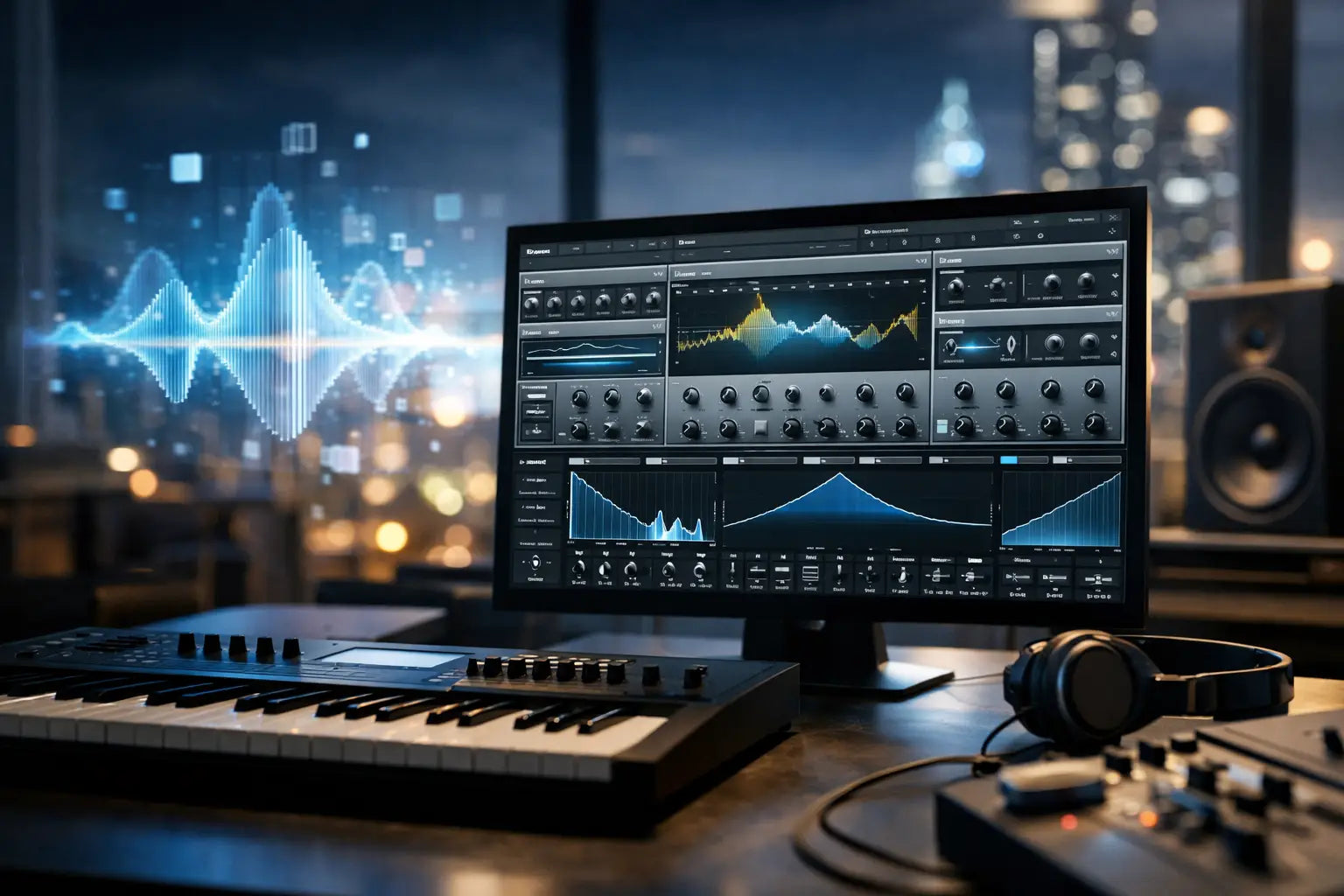
One bad preset can waste 20 minutes. One great preset can give you the hook, the drop lead, or the bass tone that makes the track feel finished fast. That is why the future of serum presets matters so much to electronic producers right now. It is not just about getting more sounds. It is about getting better decisions, faster workflow, and presets that already understand where modern club records are headed.
For producers working in Afro House, Tech House, Melodic Techno, Bass House, EDM, and peak-time Techno, the preset market is changing in a very specific way. Generic banks with 200 random patches are losing ground. What is growing instead is a more focused, more mix-aware, more genre-specific approach. The next wave of Serum presets will not win because it is bigger. It will win because it gets you to a release-ready result with less friction.
The future of serum presets is more genre-locked
A few years ago, broad preset packs made sense. Producers wanted variety, and sound designers often tried to cover everything at once - plucks, pads, basses, keys, FX, leads, and experiments all inside one bank. The problem is that variety does not always equal usefulness. If you produce club music, you are usually not looking for a cinematic ambient texture when you need a rolling bassline that sits under a tight kick.
The future of serum presets is more tightly connected to genre behavior. That means not just labeling a sound as Tech House or Melodic Techno, but designing it around the actual arrangement, groove, and mix decisions common in those styles. A Bass House preset needs weight, edge, and movement without fighting the vocal or overloading the low mids. An Afro House stab needs character and width, but it also needs to leave room for percussion and topline elements. Those details matter more than sheer preset count.
This is good news for serious producers because it means less time auditioning sounds that will never make it into the session. It also raises the standard. If a preset pack claims a genre, it now has to sound like it belongs in current records, not just in the broad neighborhood of that genre.
Smarter presets will beat more presets
The strongest shift ahead is not quantity. It is intelligence.
A smart preset is one that gives you options without forcing you to rebuild the patch from scratch. Macro assignments are a big part of that. In the future, more Serum presets will be designed with performance in mind, so one patch can move from verse to build to drop with meaningful control over brightness, distortion, width, movement, and texture.
That sounds obvious, but there is a real difference between macros that do something and macros that do something useful. Producers do not need random modulation labeled "magic." They need controls that help the sound fit the record. Open the top end. Tighten the decay. Add motion. Push harmonic content. Reduce stereo spread for mono compatibility. Those are the kinds of choices that save time in a working session.
This also means sound designers will be judged more by patch architecture than by flashy first impressions. A preset can sound huge in isolation and still be a weak production tool. The presets that last are the ones that hold up once drums, vocals, percussion, and mix bus processing enter the picture.
Mix-ready is becoming the real selling point
A lot of preset marketing still leans on words like huge, aggressive, lush, and powerful. Those words are not wrong, but they miss what producers actually need. In practice, the best preset is often the one that slips into the arrangement without a long repair process.
That is where the future of serum presets gets more practical. More producers are shopping for sounds the same way they shop for loops or drum hits - they want tools that already feel usable. Not overprocessed. Not flattened. Just tuned for real-world production.
A mix-ready preset usually has a few clear traits. The low end is controlled. The stereo image makes sense. The harmonic content is deliberate. The transient behavior is usable. There is enough personality to inspire an idea, but not so much chaos that you spend the next 30 minutes taming resonances.
For club producers, this matters even more because dense arrangements expose weak sound design fast. If a lead only sounds impressive when soloed, it is not really helping. The preset market is moving toward sounds that survive context, not just browser previews.
Producers want customization without complexity
There is always a trade-off with presets. If a patch is too simple, it can feel generic. If it is too complex, it slows you down and becomes its own project.
The next generation of Serum presets will land in the middle. Producers want enough depth to personalize a sound, but they do not want to reverse-engineer a maze of routing every time they load a patch. That is especially true for artists balancing creativity with deadlines, client work, content schedules, or frequent releases.
Expect more preset design built around controlled flexibility. You load a bass, and the macro set lets you move from cleaner groove support to a dirtier drop version. You load a melodic pluck, and one or two controls shift it from intimate and dry to wider and more emotional. You get range, but inside boundaries that still make musical sense.
That approach matches how modern producers actually work. They are not always looking to invent a synth from zero. Often they want a strong starting point that can become their own in seconds, not hours.
AI will influence the future of serum presets, but not replace taste
AI will almost certainly affect how presets are tagged, sorted, recommended, and maybe even generated. That part is easy to predict. A system can analyze timbre, energy, genre fit, and even suggest sounds based on a reference track or project context.
What AI will not solve by itself is taste. Club music is too dependent on tension, restraint, trend awareness, and cultural timing. A sound can be technically impressive and still feel wrong for the moment. Producers know the difference immediately.
So yes, AI may help streamline discovery. It may help producers find the right bass for a late-night Melodic Techno groove or the right stab for a peak-time Afro House record. But the value will still come from human curation and producer-led design. The presets that stand out will be the ones shaped by people who actually understand arrangement pressure, dancefloor translation, and what makes a sound feel current instead of dated.
That is why well-built, genre-specialized packs still matter. They are not just collections of patches. They are filtered creative decisions.
Why curated banks will outperform massive libraries
Most producers already have too many sounds. The issue is not access. It is selection.
Massive preset libraries can look like value, but they often create hesitation. You spend more time scrolling, second-guessing, and comparing than producing. Curated banks solve that by narrowing the lane. If every preset in a pack belongs in your style, the hit rate goes up fast.
This is where brands with a focused electronic catalog have an advantage. A producer-led collection made for real club genres can remove a lot of guesswork. Instead of browsing 300 patches to find 12 useful ones, you work from a bank built around actual outcomes - stronger drops, cleaner grooves, sharper toplines, more modern bass design. That is a better use of studio time.
For companies like Hot Grooves, this points to a clear direction. Presets are no longer just add-ons. They are workflow products. They need to help producers move from idea to polished track with less friction and more confidence.
The future is hybrid sound design
Serum presets are not becoming less important because producers use samples. They are becoming more valuable because producers increasingly combine both.
A modern club record often blends one-shot character, loop-based groove, vocal texture, and synth-based identity. In that workflow, presets do a specific job. They add movement, harmony, melodic signature, and automation potential in a way static audio cannot always match. At the same time, presets need to play nicely with the rest of the toolkit.
That means future-ready Serum banks will be designed with layering in mind. Basses that stack well with sub support. Leads that leave enough space for vocals. Chords that complement percussion-heavy arrangements. FX patches that add transition energy without swallowing the mix.
The preset is no longer the entire sound design story. It is one part of a faster, smarter production chain.
What producers should look for next
If you are buying Serum presets now, the best move is not chasing the biggest folder. Look for packs that feel current, focused, and usable inside your genre. Check whether the macros are practical, whether the sounds sit well without heavy cleanup, and whether the bank reflects how tracks are actually built today.
The future of serum presets is heading toward tighter curation, stronger mix awareness, and better performance control. That is a win for producers who care about speed, but it is also a win for quality. Fewer filler sounds. More patches that make records happen.
The best preset is still the one that sparks a track. The difference now is that the next generation is being built to carry that spark much further.
Can You Release Sample Pack Music Legally?
How to Speed Up Music Production Fast