
A weak kick rarely needs more volume. It usually needs a better job description. One sample should supply weight, another the click that survives a dense drop, and perhaps a third the character that makes the record feel like yours. That is how to layer drum one-shots without turning a clean club groove into a blurry, over-compressed mess.
For Tech House, Afro House, Melodic Techno, Techno, Bass House, and EDM, drum layering is less about stacking everything you like and more about assigning each sound one clear role. The payoff is immediate: drums that translate from studio monitors to headphones to a loud system, while still leaving room for the bass, lead, and vocal.
How to Layer Drum One-Shots With Intention
Start with a strong foundation sample. Layering cannot rescue a kick, clap, or snare that is fundamentally wrong for the track. If your source sound already has the right tonal balance, envelope, and genre attitude, you may only need one supporting layer rather than four.
Before adding anything, decide what is missing. Is the kick lacking sub weight? Does the clap disappear under the hats? Is the snare too polite for a peak-time drop? Answering that question stops you from choosing layers by habit.
A practical way to think about every stack is through three jobs: body, attack, and character. Body carries the low-end mass or main tone. Attack creates the initial transient that lets the hit cut through. Character adds texture, brightness, dirt, room, or a recognizable flavor. A layer can do more than one job, but it should not compete with another sample doing the same thing.
Match the source sounds before processing
Audition one-shots in context, not in solo. A clap that sounds thin on its own can be exactly what a wide, warm clap stack needs. Likewise, a massive kick may feel impressive in isolation but swallow the bassline once the arrangement fills up.
Tune tonal drums when necessary. Kicks, toms, tuned percussion, and some snares contain enough pitch information to clash with the track's key or the bass fundamental. You do not need to force every drum into the song key, but if a kick has a long, obvious sub tail, moving it a semitone or two can make the low end lock in faster.
Also pay attention to sample length. A long kick body beneath another long kick body creates low-frequency overlap. A roomy clap layered with a tight clap can work, but only if the room tail is intentional. Trim, fade, or shorten a sample before reaching for complex processing.
Build a Kick Stack That Hits Without Mud
For most club-focused tracks, two kick layers are enough. Use one as the low-end anchor and another as the top-end attack. The body layer should provide the fundamental, the low-mid punch, and the main decay. The attack layer might be a short beater click, a tight electronic knock, or a filtered percussion hit.
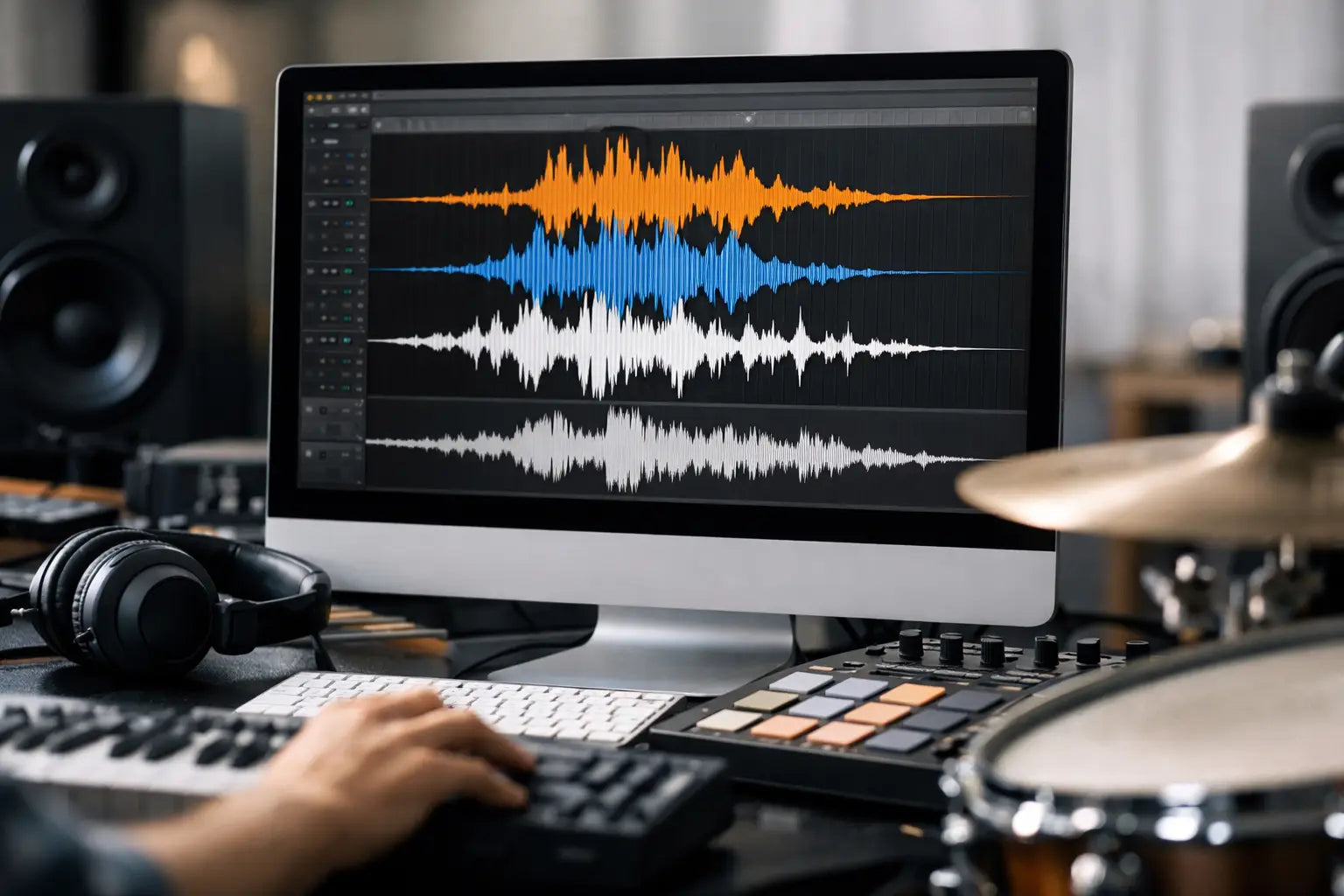
Line up the transients first. Zoom into the waveform and place the initial impact of both samples at the same point. Then listen closely. Perfect visual alignment is not always perfect sonic alignment, especially when samples have different phase relationships, but it is the right starting point.
Next, high-pass the attack layer aggressively until it stops contributing low-end energy. Often, everything below roughly 150 to 300 Hz can go, depending on the sample and genre. The goal is to prevent two kicks from arguing over the same fundamental. Keep the body layer clean and focused, then bring up the attack layer only until the kick speaks clearly on smaller speakers.
Phase is where many kick stacks fall apart. If adding a second layer makes the bottom end smaller instead of bigger, flip the polarity on one layer and compare. If neither polarity setting works, nudge the attack layer by a few samples, shorten it, or choose a different sound. Do not spend 30 minutes fixing a combination that never wanted to work.
In Bass House and EDM, a slightly more obvious click can help a kick stay present through aggressive synths. In Afro House or Melodic Techno, the better move may be a rounder transient and a more natural tail. The genre sets the target. Bigger is not automatically better.
Layer Snares and Claps for Width and Impact
A snare or clap stack often benefits from contrast. Pair a central, punchy transient with a wider clap or textured layer. The center layer gives the hit authority. The wide layer gives it scale across the stereo field.
Keep the lowest frequencies out of most clap layers. A high-pass filter can remove rumble and leave room for the kick, bass, and snare body. If the stack starts sounding papery or harsh, do not keep boosting highs. Try replacing the bright layer with one that has a shorter, smoother transient.
For a Tech House groove, a tight clap with a subtle wider layer can create the familiar forward motion without sounding oversized. For festival-ready EDM, a snare body, clap attack, and controlled noise layer may create the larger-than-life result the arrangement demands. The trade-off is density: the more layers you add, the more carefully you must manage their timing, EQ, and release tails.
If your snare lands on beats two and four, check it against the hats and percussion rather than treating it as an isolated event. A late clap can make the groove drag. A layer that starts too early can make the backbeat feel rushed. Small timing adjustments can create more impact than another compressor ever will.
Use Percussion Layers to Add Motion, Not Clutter
Percussion layering is where producers can quickly lose a groove. A shaker, top loop, rim, conga, and hat may all sound good, yet their combined transients can erase the pocket. Give each element a rhythmic purpose.
Try using one-shot percussion to reinforce selected moments instead of copying every hit. Add a short rim under a clap only on the second half of an eight-bar phrase. Layer a pitched tom beneath a transition fill. Place an organic percussion hit just before a drop to create tension. These choices feel produced because they create contrast, not constant activity.
Velocity and level variation matter as much as sample selection. If every layered hit lands at full volume, the pattern becomes mechanical and fatiguing. Let supporting layers sit lower than you think. Their job is often felt more than consciously heard.
For stereo layers, make a deliberate call. Wide shakers and claps can energize the sides, but keep the core impact centered. Check your drum bus in mono regularly. If the stack loses its identity, reduce stereo widening, choose a more mono-compatible sample, or move the wide layer lower in the mix.
Process the Stack as One Instrument
Once the layers work together, route them to a single drum bus. At this point, you are no longer mixing separate samples. You are shaping one kick, one clap, or one percussion voice.
Use bus processing with restraint. Gentle saturation can glue layers by adding shared harmonics. A transient shaper can emphasize the front edge if the stack feels soft. Light compression can control peaks and make the layers feel connected, but heavy compression often flattens the very punch you built through careful sample selection.
A useful test is to bypass every processor after you set it. If the unprocessed stack feels clearer, more energetic, or more solid, remove the plug-in. Layering already creates density. Processing should refine that density, not hide weak decisions.
Consider printing or bouncing a finished stack once it is working. This prevents endless tweaking and lets you treat the result like any other one-shot. Save the stack with a clear name such as “Tech House Kick - Deep Body + Click” so the next session starts faster.
Common Drum Layering Mistakes
The first mistake is stacking samples that all occupy the same frequency range. Three full-spectrum kicks will not sound three times as powerful. They will usually sound undefined. Separate duties with sound choice, editing, and EQ.
The second is chasing loudness too early. Turn the layers down, balance them against the bass and main musical hook, and judge impact at a sensible monitoring level. A kick that feels huge only when it is louder than everything else is not finished.
The third is forgetting the arrangement. Your biggest stack may belong only in the drop. A leaner kick or clap in the breakdown can make the return hit harder. Automation, alternate layers, and selective muting bring more excitement than leaving every element on for the entire track.
Quality source material speeds up every one of these decisions. Purpose-built one-shots from Hot Grooves give you genre-focused options that are easier to combine because the tone, punch, and production standard are already pointed toward modern dance records.
When a drum stack works, stop decorating it. Commit to the version that makes the groove move, leave space for the rest of the record, and spend the saved time finishing the track.
Tech House Trends Shaping Bigger Club Records
Paid Samples vs Free Downloads for Producers