
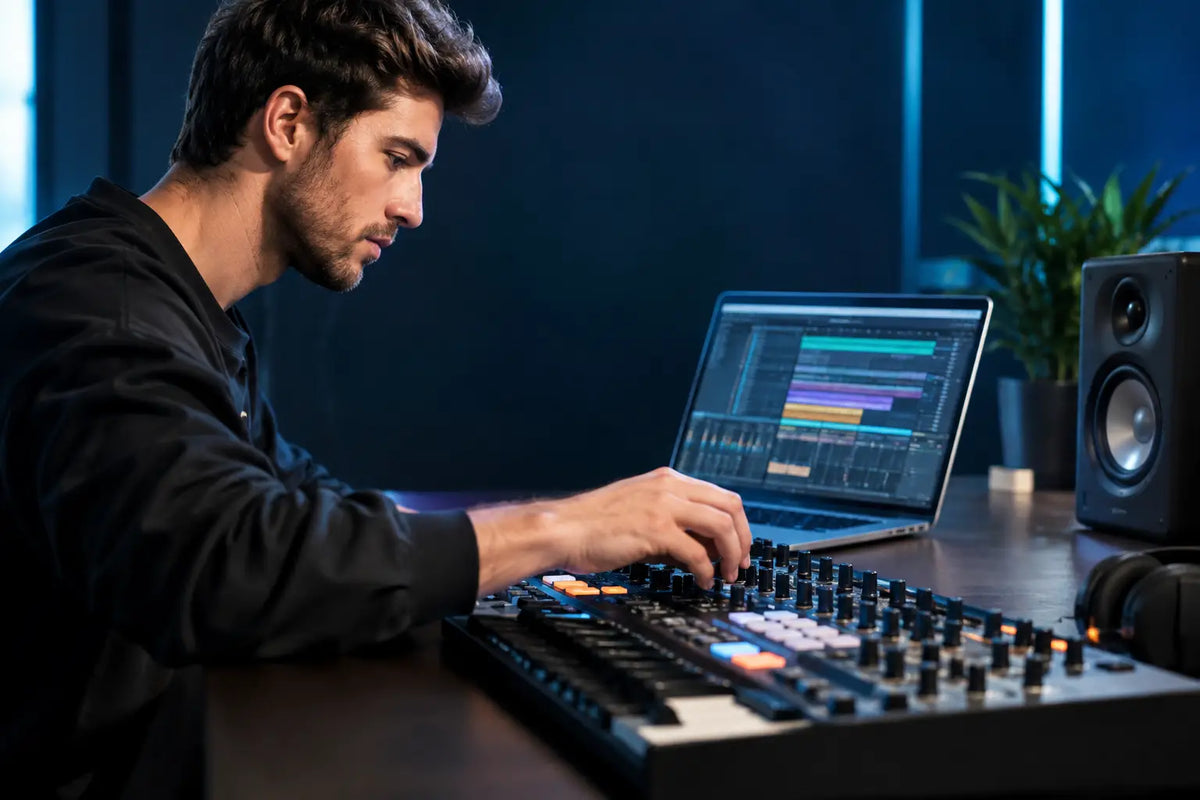
A modern techno track can have the right BPM, a solid kick, and a dark synth line, yet still miss the impact of a current club record. The difference is often in the details. Today’s techno sound design trends are less about piling on more layers and more about making every sound feel physical, purposeful, and alive on a big system.
For producers, that shift matters. A kick and rumble need to work as one low-end engine. A synth needs movement that survives a long arrangement. Texture needs character without eating the mix. The target is not simply a bigger sound. It is a controlled, release-ready record with enough tension and identity to hold a DJ set.
Techno Sound Design Trends That Matter Right Now
Rumble is becoming more sculpted
The classic reverb-based techno rumble is still a foundation, but the loose, washed-out version is fading from serious productions. Current low end is more deliberate: shorter tails, cleaner sidechain movement, controlled saturation, and a clearly defined relationship between the kick fundamental and the rumble’s weight.
Start by treating rumble as bass, not background atmosphere. Build it from a kick send or a dedicated low-frequency source, then filter it aggressively until it supports the groove without masking the punch. A touch of distortion can bring it forward on smaller speakers, while tight ducking lets the kick retain its authority.
The trade-off is obvious. A huge rumble can sound exciting in isolation but turn a club mix into mud. If the track is fast, peak-time, or designed for a powerful sound system, less tail and more transient clarity usually wins. For hypnotic, deeper techno, a wider and more rolling rumble can work, provided the low end remains mono and disciplined.
Percussion is raw, layered, and rhythmically imperfect
Techno drums are moving away from overly clean loop construction. Producers are combining metallic hits, found-sound percussion, distorted foley, short noise bursts, and rough analog-style one-shots to create drums with a human edge. The goal is not random chaos. It is controlled friction.
A strong approach is to build one primary groove, then add small events that change every two, four, or eight bars. A shuffled hat can answer a dry clap. A clipped industrial hit can appear before a drop. A filtered shaker can gradually open across a phrase. These details stop a repetitive arrangement from becoming static without requiring a new drum pattern every few seconds.
Velocity, timing, and pitch variation do more than another plugin chain. Shift a percussion hit a few milliseconds late, tune one alternate hit down slightly, or automate a transient shaper on the final beat of a bar. Those moves add urgency while keeping the groove locked.
Distortion is cleaner at the center and dirtier at the edges
Saturation and distortion remain essential, but the best current techno productions use them with more separation. The kick, bass, and lead can stay focused, while the surrounding layers carry the damage: noisy tops, abrasive stabs, crushed transitions, and overdriven atmospheres.
This creates a useful contrast. When every channel is distorted, the track loses depth and the mix becomes flat. When distortion is assigned a role, it becomes a tension tool. Try keeping the main body of a bass sound relatively stable, then blend in a distorted parallel layer that is high-passed above the sub range. You get aggression without sacrificing weight.
Resampling is especially effective here. Print a distorted stab, reverse it, stretch it, chop a fragment, then use it as a fill or transition accent. The resulting sound is less predictable than an untouched synth patch and often gives a track its signature moment.
Motion is replacing static synth layers
A single dark chord or rolling sequence is no longer enough to carry a six-minute arrangement. The current sound leans on motion: evolving filter positions, shifting wavetable frames, subtle FM changes, stereo movement in the upper frequencies, and automation that changes a sound’s behavior over time.
This does not mean every parameter should move continuously. In fact, excessive automation can make a track feel unfocused. Pick one or two characteristics that define the sound, such as cutoff and resonance, wave position and distortion, or delay feedback and reverb size. Automate them according to the arrangement so the sound earns attention at key points.
For example, a simple two-note sequence can build intensity by gradually introducing harmonics, not by adding more notes. Layer a clean midrange synth with a filtered noise texture, then bring the texture forward only during the final eight bars before a break. The sequence stays recognizable, but its energy changes.
Metallic and resonant tones are taking the place of generic leads
Sharp, resonant sounds are a major part of the current techno palette. Think tuned metallic percussion, ringing FM stabs, scraped textures, bell-like hits, and short resonators that cut through a dense system. These sounds bring tension without needing a wide supersaw or a melodic hook.
The key is frequency management. A resonant hit that sounds exciting around 2 kHz can become exhausting when repeated in a club. EQ the harshest peak, control it with dynamic processing, and use arrangement space instead of brute-force volume. A sound can feel more intense when it arrives alone for half a bar than when it competes with hats, rides, and a full lead stack.
This is where high-quality one-shots and carefully designed synth presets save real production time. Starting with a source that already has the right weight, tone, and transient lets you focus on placement, processing, and arrangement rather than spending an hour trying to force a weak sound into the mix.
Vocal Texture Is Becoming a Rhythm Tool
Techno vocals are often less about lyrics and more about attitude. Short spoken phrases, breathy fragments, processed commands, whispered ad-libs, and chopped syllables are being used like percussion. They establish a mood quickly, especially in peak-time and warehouse-focused tracks.
Keep them concise. One memorable phrase processed with delay, filtering, and saturation can do more than a full vocal verse. Pitch it down for weight, automate a band-pass filter for movement, or throw a delay only on the final word of a phrase. The vocal should create a moment, then get out of the way.
Be selective with stereo effects. A wide vocal texture can add scale before a drop, but core rhythmic phrases often hit harder closer to the center. If the club system collapses or alters the stereo field, the main idea should still translate.
Arrangement-Aware Sound Design Wins
The biggest production trend is not a specific synth, effect, or drum machine. It is designing sounds for their place in the arrangement. Every element should answer a practical question: what does it add to this section that is not already there?
A build may need a rising noise layer, but it may also need a dry, percussive stab to add urgency. A breakdown may need a huge reverb tail, but it may need the low-end information removed so the return of the kick feels massive. A drop may need fewer sounds than expected, provided the kick, bass, and main hook are confident.
This is why workflow matters. Build a focused palette before arranging: a kick, low-end engine, core percussion, two or three tonal identities, transition sounds, and a small group of textures. Hot Grooves sample packs are designed around that practical need, giving producers genre-focused source material that can move from idea to polished track faster.
How to Apply These Trends Without Chasing Every Trend
Do not rebuild your process every time a new sound gains traction. Instead, choose one trend that strengthens the type of techno you already make. If your tracks feel flat, focus on modulation and movement. If they feel weak in the club, refine kick-rumble balance. If they are technically clean but forgettable, introduce more distinctive metallic textures or resampled distortion.
Reference tracks can help, but listen beyond the obvious. Pay attention to what disappears during transitions, where the top end opens, how long a rumble lasts, and whether the lead is actually loud or simply well positioned. Those decisions reveal more than copying a preset ever will.
The strongest techno records still come down to confident choices. Choose fewer sounds, make them hit with purpose, and give each one a clear job in the room.
How to Create Techno Risers That Hit Hard
Audio Loops Versus MIDI for Faster Tracks