
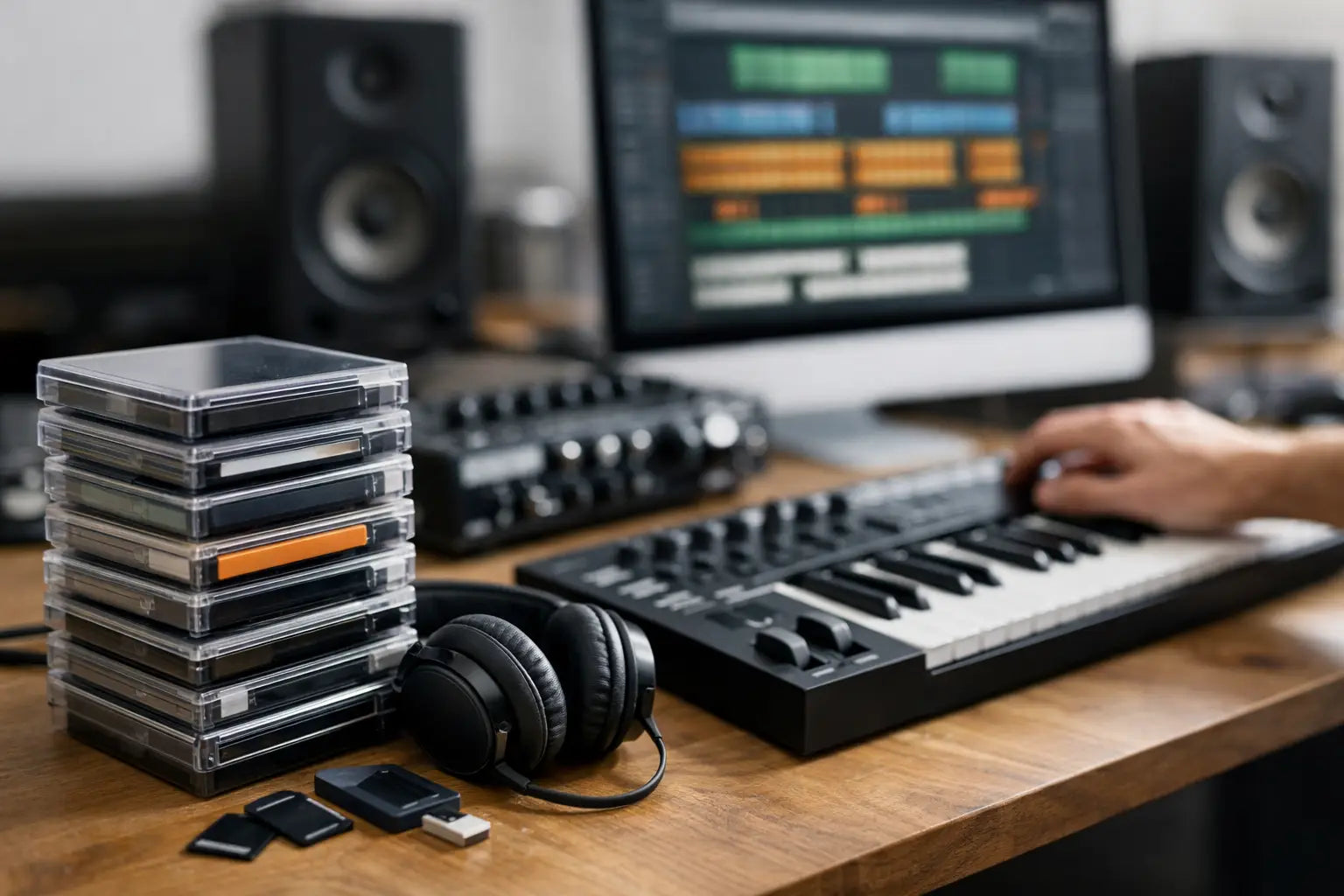
You open a new project, audition a few kicks, scroll through old folders, test a bass preset that almost works, then lose 40 minutes before the groove even lands. That is exactly why use sample bundles becomes a real question for working producers. If your goal is to finish more club-ready tracks with less friction, bundles are often the smartest way to build a usable sound library fast.
For electronic producers, speed is not just convenience. It affects output, consistency, and whether ideas survive past the first eight bars. A strong bundle gives you coordinated drums, tops, vocals, effects, one-shots, loops, and presets that already speak the same genre language. Instead of hunting for isolated sounds that may or may not fit together, you start from a curated pool designed to work in the same production world.
Why use sample bundles instead of single packs?
Single packs still have value. If you only need Afro House vocals or a new set of Tech House drum loops, buying one focused pack can make perfect sense. But bundles solve a different problem. They are built for producers who need range, depth, and faster access to complete track ingredients across multiple sessions.
The biggest advantage is cohesion. When a bundle is assembled well, the percussion, melodic content, FX, and presets tend to share similar quality standards, tonal balance, and genre direction. That matters more than people think. A random clap from one source, a bass loop from another, and a vocal from somewhere else can work, but it often takes extra processing to make everything feel like one record.
Bundles also reduce decision fatigue. Too many producers waste creative energy making small sourcing choices before they make musical ones. If your folders are full of mismatched downloads, your workflow slows down. A good bundle narrows the field in a productive way. You still have options, but they are relevant options.
There is also the price factor. Buying several individual packs over time usually costs more than getting a bundle built around a genre or production goal. For producers trying to expand their library without overspending, that difference adds up quickly.
The workflow benefit most producers notice first
The first thing you feel with a strong bundle is momentum. You can sketch a drop, test drum combinations, layer tops, and swap in transitions without leaving the creative zone. That is a real edge when you are building Tech House, Melodic Techno, Afro House, or Bass House, where groove and energy depend on quick decisions.
A bundle can turn a blank project into a structured idea much faster because the raw materials are already there. Need a rolling percussion bed, a vocal chop, and a Serum bass to anchor the low end? You are not starting from zero each time. You are starting from a curated toolkit.
This does not mean every sound should be dropped in untouched. Strong producers still shape, resample, layer, automate, and process. The point is that high-quality source material gets you to the creative part sooner. You spend less time fixing weak sounds and more time building records that hit.
Why use sample bundles if you already know sound design?
Because sound design skill and efficient production are not opposites.
A lot of advanced producers can build drums, synths, and textures from scratch. They still use sample libraries because deadlines are real, inspiration moves quickly, and not every session should begin with making a hi-hat from noise or a bass patch from init. Sometimes the best move is starting with a polished foundation and customizing from there.
Bundles are especially useful when you need production-ready elements for arrangement speed. Risers, impacts, percussion loops, fills, vocal phrases, and drum one-shots can all shave serious time off a session. Even if you prefer to design your own leads or basses, using a bundle for support elements can keep the project moving.
It also helps when you work across multiple subgenres. A producer who jumps between Techno, Melodic Techno, and EDM may not want to build separate libraries one pack at a time. A bundle can cover more ground and make transitions between styles easier.
Sample bundles help you stay genre-accurate
In club music, details matter. The wrong clap character, the wrong hat swing, or a bass tone that feels dated can pull a track out of the market fast. This is one of the strongest answers to why use sample bundles: they can help producers stay closer to the current sound of their lane.
Genre-focused bundles are usually assembled with a specific end result in mind. Afro House needs different percussion movement than Bass House. Melodic Techno requires a different emotional palette than raw Techno. When your source material comes from producers who understand those distinctions, your tracks start in a stronger place.
That matters whether you are pitching to labels, creating DJ tools, or building your own independent releases. Better source sounds do not guarantee a better record, but they do reduce the gap between your idea and a professional result.
The cost advantage is real, but only if the bundle is right
Savings alone should not decide it. A cheap bundle is not useful if half the sounds are filler or if the genre fit is off. Producers know the difference between quantity and value very quickly.
The best bundles earn their place by combining price efficiency with actual usability. You want sounds you can drop into real projects, not a bloated folder that looks impressive but slows you down. That means curated content, not recycled leftovers.
A smart bundle usually makes sense in three situations. First, you are building your core library and need immediate coverage across drums, synths, vocals, and FX. Second, you are producing frequently and want better cost-per-track value. Third, you are trying to upgrade from generic sounds to material that feels more current and competitive.
If none of those apply, individual packs may still be the better buy. It depends on how you work and how targeted your needs are.
What to look for when deciding why use sample bundles
Not all bundles are worth it. The strongest ones are organized around how producers actually make music, not just around a big file count.
Look for genre clarity first. If a bundle claims to cover everything, it may not go deep enough anywhere. Club-focused producers usually get better results from bundles that stay inside related lanes and understand the groove language of those lanes.
Look at format balance too. A useful bundle should not be all loops or all presets. Good production moves between audio and MIDI-driven sound sources, between fixed ideas and flexible building blocks. One-shots, loops, vocals, FX, and presets each do different jobs in a session.
Quality control matters just as much. Clean processing, modern sound selection, consistent levels, and mix-ready design make a huge difference. If the sounds already feel polished, you spend less time repairing and more time arranging.
This is where producer-built catalogs stand out. Brands like Hot Grooves tend to approach bundles from the session perspective: what gets a producer from idea to playable, release-ready track faster? That mindset usually leads to more usable content than broad marketplaces with no real sonic point of view.
The trade-off: convenience can lead to lazy choices
There is one risk with bundles, and serious producers should be honest about it. If you rely on them without adding your own taste, edits, and processing, your tracks can start to feel too familiar.
That is not a bundle problem by itself. It is a workflow problem. The fix is simple: use bundles as starting material, not final identity. Layer drum hits, slice loops, re-pitch vocals, automate FX, and reshape presets until the track feels like yours.
The producers who get the most from bundles are not passive users. They move fast because the sounds are strong, then they make those sounds personal.
Why use sample bundles when finishing tracks is the goal
A lot of unfinished projects are not caused by lack of talent. They stall because the process gets too fragmented. The drums do not fit the bass. The vocal search goes nowhere. The build feels empty. The preset folder is chaos. Bundles reduce that fragmentation.
When your sounds are already curated to live together, arranging gets easier. You can test combinations quickly, make confident choices, and keep pushing toward a finished record. That is a massive advantage for producers trying to release more consistently.
At the end of the day, sample bundles are not just about getting more files for less money. They are about building a production environment where ideas turn into tracks with less friction, better sound quality, and more focus. If your sessions feel slow, scattered, or sonically inconsistent, the right bundle is not just a purchase. It is a practical upgrade to how you work.
10 Best Melodic Techno Production Resources
Electronic Music Producer Workflow That Works