
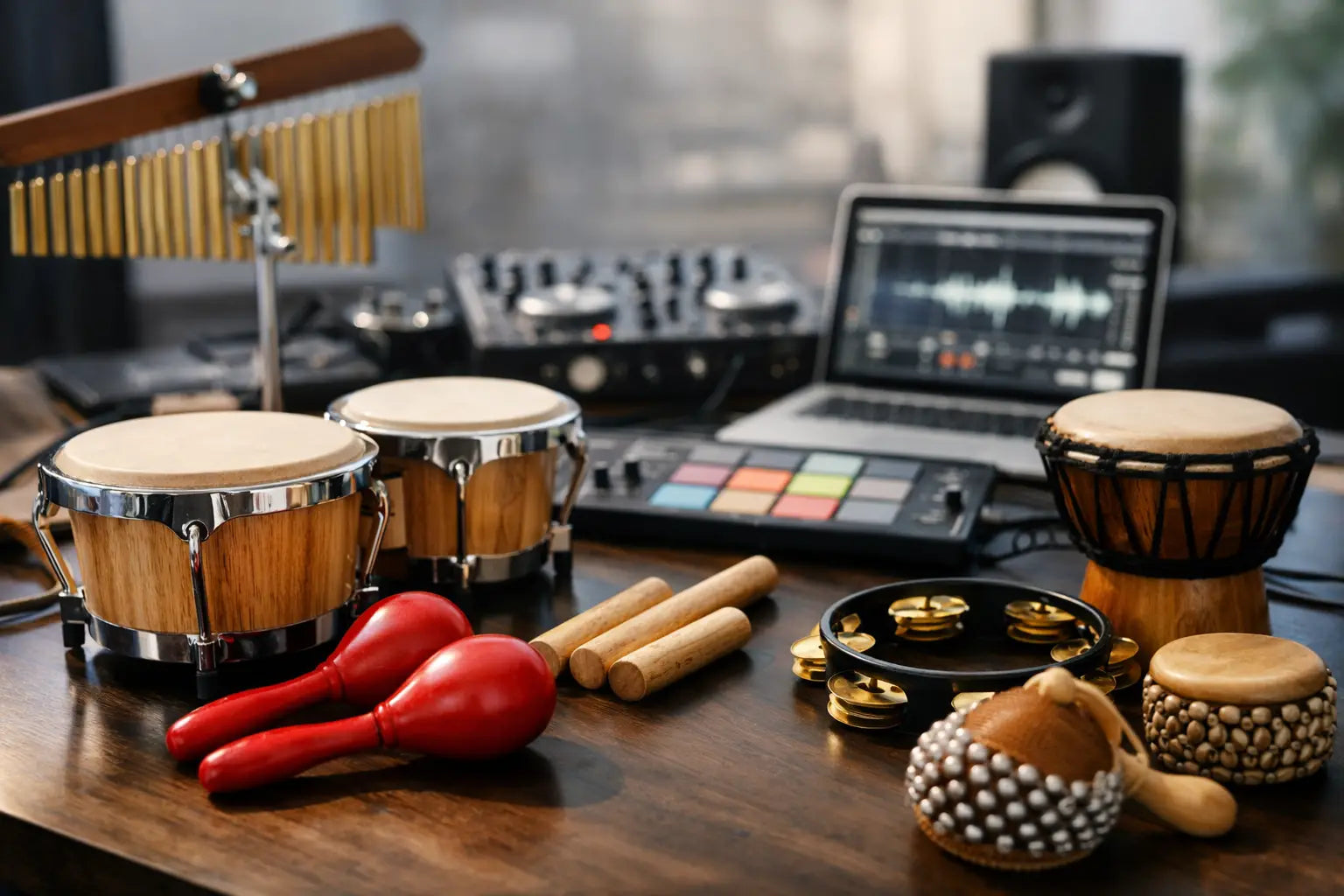
A kick can make a track hit, but percussion is what tells the dance floor where to move. The right club percussion sample collection gives your drums motion, tension, swing, and identity without forcing you to spend hours shaping basic shakers, congas, tops, and fills from scratch. For club-focused producers, that speed matters. A loop that already feels alive can turn an eight-bar idea into a record with direction.
The catch is that not every percussion pack belongs in every session. Generic loops can crowd a mix, pull a groove out of time, or make a track sound disconnected from its genre. The goal is not to stack more sounds. It is to choose a focused palette, place it with intent, and make every layer earn its space.
What a Club Percussion Sample Collection Should Deliver
A usable percussion collection should do more than provide a large file count. It should supply the specific ingredients that make modern club records feel physical: crisp closed hats, open hats with controlled decay, shakers with movement, claps that cut through a dense arrangement, rides for lift, and organic hits that add texture without muddying the low end.
For Afro House, that often means congas, bongos, djembes, wood percussion, bells, and rolling shaker patterns with human feel. Tech House usually calls for punchier claps, tight tops, rim clicks, tambourines, and short, functional fills that push the groove forward. Melodic Techno and Techno tend to benefit from darker metallic hits, industrial textures, driven hats, and percussion that creates tension across long transitions.
The strongest collections include both loops and one-shots. Loops provide instant momentum and genre-aware phrasing. One-shots give you control when the track needs a custom pattern, a different accent, or a fill that matches your arrangement exactly. Neither format replaces the other. A loop may establish the feel in seconds, while a few programmed one-shots make that feel yours.
Quality Is More Than Clean Audio
Clean recording and processing are essential, but club-ready quality also means practical mix behavior. Percussion samples should have defined transients, sensible tails, and frequencies that do not fight the kick, bass, lead vocal, or main synth hook. A great shaker can be bright without becoming harsh. A conga can feel warm without filling the entire low-mid range.
Pay attention to consistency, too. If every loop has wildly different loudness, reverb, stereo width, or tonal balance, auditioning becomes slow and frustrating. A curated collection should make it easy to move between sounds while keeping your session under control.
Start With the Groove, Not the Sample Folder
A common mistake is auditioning hundreds of loops before the core rhythm exists. That approach creates option overload and often leads to percussion that sounds impressive in isolation but weak in context. Start with the kick and a simple supporting pulse, then decide what the groove needs.
If the track feels static, add a shaker or hat loop with gentle movement. If it lacks physical energy, introduce a hand percussion pattern that answers the kick. If the build feels flat, use a rising hat rhythm, metallic texture, or short fill at the end of every eight or sixteen bars. Each choice should solve a musical problem.
For example, a Tech House groove may only need a tight clap, a shuffled top loop, and a short tambourine pattern before the drop. Adding five more layers can make it feel smaller rather than bigger. In Afro House, a more detailed network of percussion may be appropriate, but the principle remains the same: establish a hierarchy. One or two sounds carry the main rhythmic story. The rest provide color and variation.
Build Around Call and Response
Club percussion becomes more engaging when layers communicate. Instead of programming every sound on every beat, let one element leave room for another. A conga hit after the kick, a rim click before a clap, or a shaker that opens up only in the second half of a phrase can create movement without raising the channel count.
This is especially effective in arrangements built for DJs. A loop can run steadily for sixteen bars, then a single additional percussion phrase can signal that the track is progressing. The listener may not consciously identify the change, but the energy shift is clear.
Try treating percussion like a conversation. Your main loop states the groove. Accent hits answer it. Fills create anticipation before a transition. A removed layer creates space just as effectively as an added one.
Make Loops Fit Your Track, Not the Other Way Around
Even high-quality loops rarely work best when dropped into a session untouched. First, make sure the loop is rhythmically compatible with your project. Time-stretching is useful, but extreme stretching can soften transients or introduce artifacts. If a loop is far from your tempo, use its one-shots to rebuild the pattern or choose a closer source.
Next, shape the frequency range. High-pass organic percussion when it competes with the kick and bass. Tame harsh resonances in hats and shakers with a narrow EQ move. If a loop is overly wide, reduce its stereo spread so the center of your mix stays strong. These are small decisions, but they are often what separates a crowded demo from a focused club mix.
Do not be afraid to cut a loop apart. Pull one great conga hit from a phrase. Mute the first beat to create a new syncopation. Keep only the final fill and place it before your drop. Sample packs are designed to accelerate your workflow, not dictate the arrangement.
Preserve Dynamics Where They Matter
Percussion needs punch, but flattening every layer with heavy compression can remove the very movement you are trying to add. If a loop already has strong character, a little EQ and level balancing may be enough. Use compression when you need to control inconsistent hits, tighten a group, or create a specific pumping effect.
Velocity variation matters most when working with one-shots. Repeating the same conga at identical volume and timing can sound mechanical quickly. Small changes in velocity, timing, and sample selection create a more believable result. In Techno, intentional machine-like repetition can be part of the aesthetic. In Afro House, a slightly looser feel is often more convincing. It depends on the record, not a fixed rule.
Arrange Percussion for Energy, Not Constant Noise
A full percussion stack during every section leaves nowhere to go. The arrangement needs contrast. Keep the opening controlled, introduce detail gradually, and reserve your most active layers for the moments that need maximum lift.
In a typical club arrangement, the first section may feature only kick, a restrained top loop, and one percussive accent. As the track develops, bring in a shaker, clap, or organic rhythm. Before a breakdown, strip the groove back and let one distinctive texture remain. When the drop returns, the same core sounds feel larger because the listener has experienced the space around them.
Variation does not require a new loop every four bars. Automating a high-pass filter, muting one transient, changing the final hit in a phrase, or adding a short reverse texture can keep a repeated groove engaging. The less obvious the change, the more professional it usually feels.
Choosing Samples That Match Your Genre
Genre labels are useful starting points, not creative restrictions. A tribal hand drum can add character to Melodic Techno. A metallic hit can bring edge to Afro House. What matters is whether the sound supports the groove and the record's emotional direction.
Still, genre-focused collections save time because their sounds are already selected with a musical context in mind. When you are building a late-night Tech House track, you want percussion that feels direct, dry enough to process, and designed to sit beside a heavy kick. When you are producing Afro House, you need rhythmic material with detail, warmth, and natural movement rather than a folder of random world instruments.
That is why producer-built packs are valuable. A focused collection from Hot Grooves gives you sounds chosen for modern electronic productions, so less time is spent forcing samples to fit and more time goes into decisions that make the track memorable.
Turn a Good Groove Into Your Own Signature
A sample collection should speed up the first 80 percent of the process. Your choices create the final 20 percent that listeners recognize. Layer a dry clap with a short room hit, resample a conga through saturation, reverse a shaker tail into a transition, or print a percussion bus with effects and chop it into a new fill. These moves turn familiar source material into track-specific moments.
The best test is simple: mute the percussion for eight bars, then bring it back. If the track suddenly gains movement, confidence, and forward pull without becoming cluttered, you have chosen well. Build from that response. A few high-impact layers, arranged with discipline, will take you further than a crowded session full of sounds competing for attention.
Can You Monetize Sample Packs? Know the Rules
Dance Sample Licensing for Working Producers