
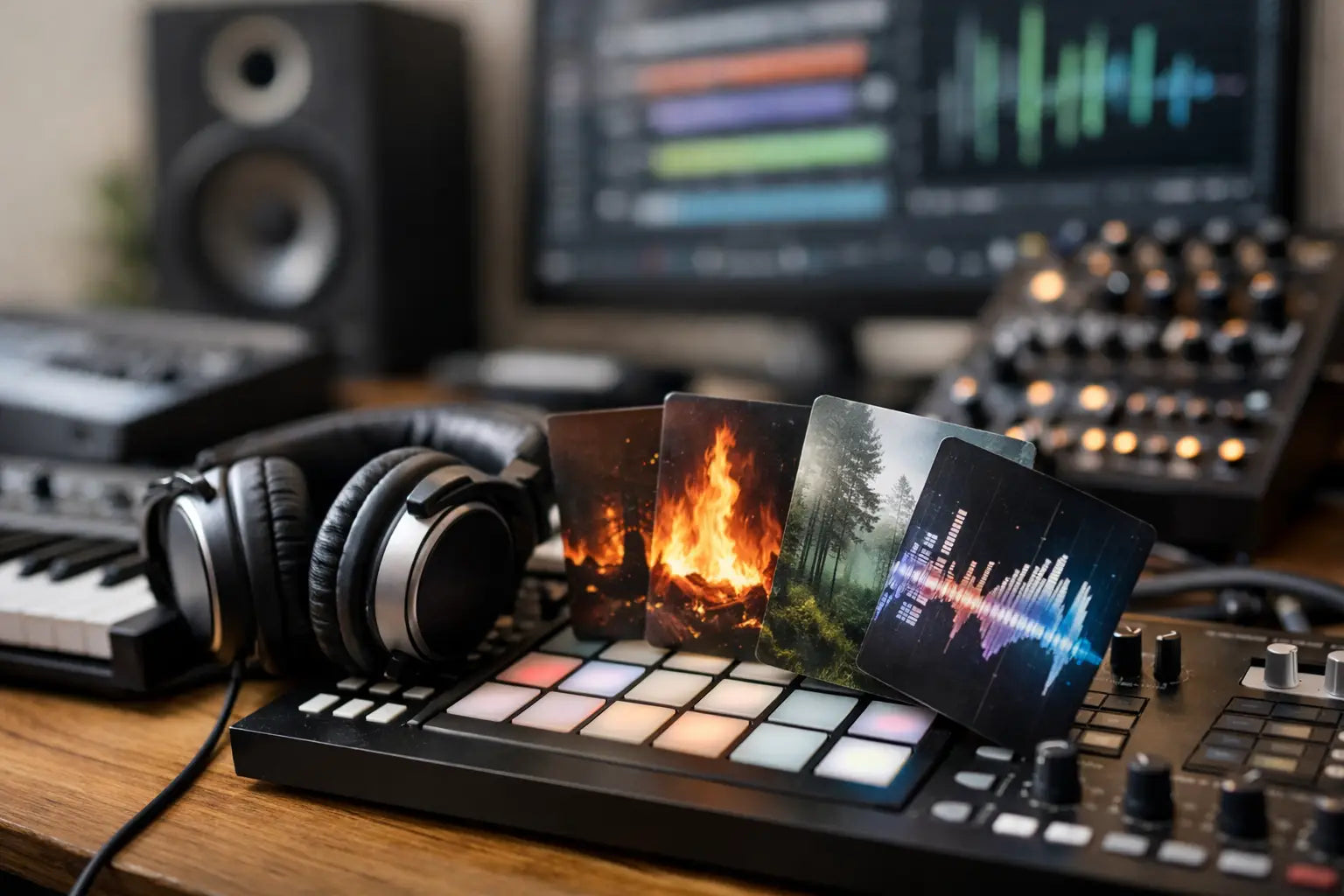
A bad sound pack usually reveals itself in the first five minutes. The kick looks promising, the preview sounds polished, and then you drag the files into your session and everything falls apart. The low end is muddy, the tops are harsh, the loops fight your groove, and half the pack feels like filler. A good sound pack does the opposite. It speeds up decisions, sharpens your arrangement, and gets you closer to a release-ready track without the usual cleanup.
For electronic producers, that difference matters more than most people admit. When you are building Afro House, Tech House, Melodic Techno, Techno, Bass House, or EDM, the source material shapes the entire record. Strong sounds do not just save time. They change what gets finished.
What a sound pack should actually do
A sound pack is not just a folder of WAV files. At its best, it is a production shortcut with a clear job. It should give you genre-specific material that drops into a session and feels immediately useful. That might mean drums with the right transient shape, percussion loops that already carry movement, Serum presets that sit in a modern mix, or vocals that add identity without forcing a complete rewrite.
The key word is usable. Plenty of packs sound impressive in isolation, especially in flashy demos. That does not mean they will work inside a real arrangement. A usable pack leaves space where it should, feels balanced across the frequency spectrum, and gives you enough variation to build a track without sounding repetitive. It should help you move, not trap you in edits.
That is especially true in club-focused genres. Producers are not shopping for random inspiration. They are looking for tools that match a lane. If you make Tech House, you want drums, bass shots, synth hooks, FX, and vocals that already understand that bounce. If you produce Melodic Techno, you need emotion and width, but also control. The best packs respect those differences.
Why genre fit matters more than pack size
Big packs look like better value on paper. More loops, more one-shots, more presets. But volume is not the same as usefulness. If only 15 percent of a giant library matches your style, you did not really save money. You bought extra scrolling.
A focused sound pack usually beats a bloated one. When a pack is built around a specific genre or sub-style, the sounds tend to share the same sonic logic. The drums hit with similar intent, the musical content leans in the same emotional direction, and the processing feels consistent. That makes it easier to combine elements fast and stay in the creative zone.
There is a trade-off here. Broader packs can be useful if you produce across multiple styles or want raw material to mangle. But if your goal is speed and competitive results, specialization usually wins. The more current and targeted the source sounds are, the less fixing you have to do later.
The signs of a genre-true pack
You can hear when a pack was made by people who actually work in the genre. The groove choices make sense. The percussion is not generic. The basses carry the right weight for the style. The vocals, if included, feel contemporary instead of dated. Even the effects and transitions tend to be more practical because they are built for the energy curve producers actually use.
This is where producer-led curation matters. A pack made by someone who understands club records from the inside will usually feel tighter than one built to cover every possible customer. It is less about quantity and more about selection.
How to judge quality before you buy
The fastest test is to ignore the marketing copy and listen for mix behavior. Does the demo rely on heavy mastering to create excitement, or do the core sounds already feel clean and punchy? Are the drums defined without sounding brittle? Do the melodic loops feel layered in a way that leaves room for vocals and bass, or are they already overcrowded?
Preview quality matters, but so does pack structure. Look for clear categories and practical formats. If you use Serum, presets should be organized in a way that supports real workflow. If you rely on one-shots, the drum section should not feel like an afterthought. If you want to sketch fast, construction loops and top loops need to be labeled clearly and tempo-ready.
A solid sound pack also respects flexibility. Overprocessed content can sound good in the ad and become annoying in a session. Sometimes you want polished and aggressive right away. Other times you need cleaner source material that can be pushed into your own chain. The right balance depends on how you work.
If you are a producer who wants fast results, polished source sounds are a real advantage. If you are more hands-on with mixing and sound design, slightly drier material might be better. Neither is objectively right. It depends on whether your bottleneck is ideas, arrangement, or finishing.
The formats that save the most time
Not every producer needs the same type of pack. One-shots are still the foundation for people who want full control over programming and layering. They are ideal when you want to build custom grooves, tune your drums, and shape every hit to fit the mix.
Loops are faster. Good loops can establish momentum in seconds, especially in percussion-heavy genres like Afro House and Tech House. The catch is that weak loops can box you in. You want loops that carry groove but still leave room to edit, chop, and rearrange.
Presets are where many producers gain the most speed. A strong Serum bank gives you current lead sounds, basses, plucks, atmospheres, and sequences without starting from zero. That does not mean presets replace sound design. It means you are beginning from a better place.
Vocals are a separate decision. A vocal collection can add instant identity, but it also raises the bar for arrangement. Once a vocal enters the track, everything else has to support it. If the pack includes hooks, phrases, and ad-libs that are recorded and processed professionally, that can be a huge advantage. If the vocals feel generic, they can make your track sound generic too.
What to avoid in a sound pack
The biggest red flag is filler. If a pack includes dozens of near-identical claps, weak loops, or presets you would never use, it is wasting your time. That kind of bulk can look generous but usually slows down production.
Another problem is poor gain staging and inconsistent processing. If one kick is crushed, the next is quiet, and the percussion jumps all over the place, the pack was not curated with real workflow in mind. You should not have to normalize half the folder before you can even audition properly.
Watch for outdated sound choices too. In electronic music, trends move fast. A pack can be technically polished and still miss the current market by a mile. If your goal is label-ready or DJ-friendly music, the sounds need to feel relevant now, not five years ago.
Choosing based on where you are as a producer
Beginners often benefit from a more polished, genre-specific sound pack because it reduces friction. You can hear how professional sounds fit together, reverse-engineer the choices, and finish more tracks. That matters. Finishing teaches faster than hoarding.
Intermediate producers usually need packs that offer both speed and flexibility. This is where curated drums, standout loops, and a few great preset banks can carry a lot of weight. At this stage, you are not just collecting sounds. You are building a workflow.
Advanced producers tend to be more selective. They are not looking for a pack that does everything. They want high-hit-rate material that earns a place in their template. That could mean elite percussion, standout vocals, or a handful of mix-ready bass one-shots. For this level, precision matters more than package size.
Hot Grooves is built around that exact idea - current, club-focused source material that gets you to strong decisions faster, without dragging you through filler.
The real value is momentum
A great sound pack is not valuable because it gives you more files. It is valuable because it cuts the distance between an idea and a finished record. That is the part producers feel in real sessions. Better source sounds mean fewer detours, fewer repair moves, and more energy left for the parts that actually make a track memorable.
If you are choosing between packs, ask the simplest question: will this help me make better records faster in my genre? If the answer is yes, it is probably worth it. If the answer is maybe, keep looking. The right sounds should make your next session feel sharper from bar one.
The best pack is the one you reach for without thinking, because you already know it is going to work.
Sample DnB: What Makes a Pack Worth Using
How to Use a Guitar Sample in EDM