
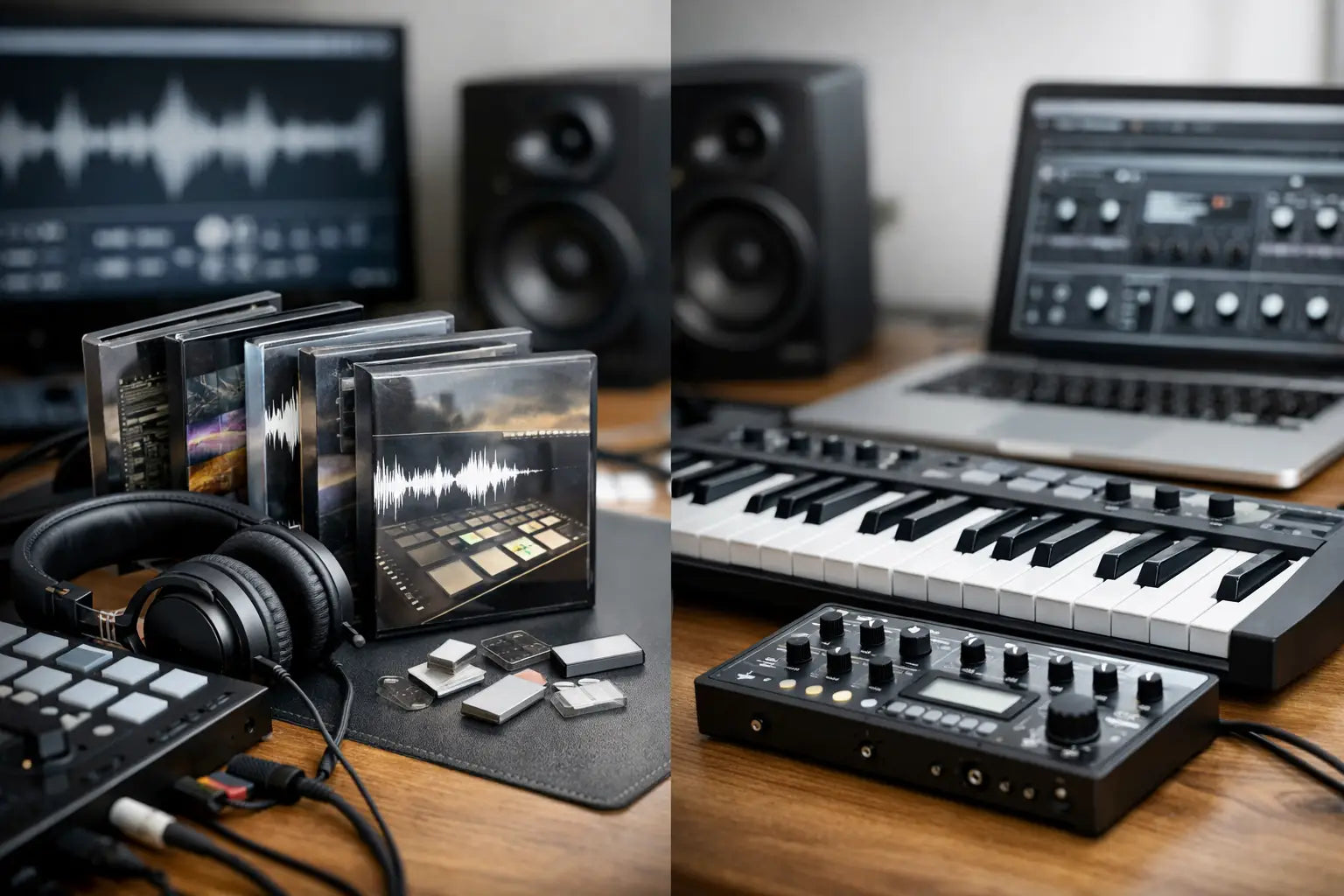
If you have ever opened a new project, stared at a blank session, and thought, I need better sounds right now, you are already in the middle of the sample packs vs presets decision. Most producers do not need more random files. They need the right format for the job, the genre, and the stage of the track.
For club music producers, this choice matters more than people admit. A great loop can give you a full groove in seconds. A great preset can turn a flat idea into a lead, bass, or pluck that feels ready for release. But they solve different problems, and buying the wrong one usually slows you down instead of speeding you up.
Sample packs vs presets: the real difference
A sample pack gives you audio. That can mean drum loops, top loops, percussion, vocals, FX, one-shots, bass loops, synth loops, and more. You drag the sound into your DAW, place it in the arrangement, process it, chop it, pitch it, and build from there. The sound already exists as recorded or rendered audio.
A preset gives you a saved plugin patch. In electronic music, that usually means a sound for a synth like Serum. Instead of dropping in audio, you load the preset into the instrument and play your own MIDI. The core tone, modulation, envelope settings, filters, and effects are already dialed in, but the musical phrase is still yours to write.
That one distinction changes everything. Sample packs are about immediate source material. Presets are about playable sound design.
If you produce Afro House, Tech House, Melodic Techno, or EDM, both can be valuable. The question is not which format is better in general. The better question is which one removes the biggest bottleneck in your current workflow.
When sample packs make more sense
Sample packs are usually the fastest option when you need rhythm, movement, texture, or arrangement energy. If your drums sound weak, your groove feels static, or your track needs vocals or ear candy, presets will not solve that on their own.
This is why sample packs are often the first smart purchase for newer producers. Good percussion loops, kicks, claps, tops, risers, impacts, and vocal chops can raise the production value of a track very quickly. You are not just getting sound quality. You are getting genre context baked into the material.
That matters in dance music. A Tech House groove lives or dies on swing, transient shape, percussion placement, and tone. An Afro House rhythm needs movement and pocket, not just clean sounds. A Melodic Techno break needs atmosphere and tension, not a generic crash and white noise sweep. Strong sample packs can give you those details immediately.
They are also ideal if you work fast and arrange by ear. Many producers build tracks from drums outward. They start with kick, percussion, hats, maybe a vocal, then write bass and synths around that foundation. In that workflow, sample packs are practical because they get the record moving from bar one.
There is another advantage. Audio is universal. You do not need to own a specific synth to use a kick, vocal, or loop. That makes sample packs more flexible across DAWs and setups.
When presets are the better investment
Presets make more sense when your bottleneck is melodic content, bass design, or synth polish. If your ideas are solid but your leads sound thin, your basses feel generic, or your chords never hit with enough character, presets can save serious time.
A good preset pack does two things at once. It gives you a finished sonic starting point, and it teaches you what works inside the synth. Load a strong Serum bass preset and you can hear the importance of filter movement, unison settings, distortion staging, envelopes, and macro control right away. That is useful even if you plan to tweak it heavily.
Presets are especially valuable for producers who write original MIDI parts and want more control than loops can offer. If you want the freedom to change notes, automate expression, and fit a part exactly around your drums and vocals, presets are usually the cleaner solution.
They also help when your arrangement is strong but your mix lacks identity. A properly designed pluck, rolling bass, or tension lead can become the signature element of a drop. In styles like Melodic Techno, Bass House, and EDM, that can be the difference between a serviceable demo and a track that feels competitive.
The trade-off is simple. Presets do not write the part for you. You still need musical ideas, MIDI programming, and the right synth plugin.
Sample packs vs presets for beginners
If you are early in your production journey, sample packs usually deliver faster wins. That is not because presets are advanced. It is because beginners often struggle more with drums, groove, and source selection than with writing a basic MIDI melody.
Strong one-shots and loops help you build cleaner sessions faster. They also make A and B comparisons easier. You can hear immediately whether your own drums sound weak next to professional material. That kind of reference is valuable.
Presets are still worth buying early if you already use Serum confidently and want better synth sounds without spending hours learning deeper sound design. But if your tracks fall apart before the drop even lands, start with better samples first.
What professionals often do differently
More experienced producers rarely treat sample packs vs presets as an either-or choice. They use sample packs for speed and impact, then layer presets for identity and flexibility.
A typical workflow might look like this: the producer builds drums with one-shots and top loops, adds a vocal hook or FX texture from a pack, then writes an original bassline and lead using presets. That hybrid approach works because each format covers the other’s weakness.
Samples bring immediacy. Presets bring customization. Together, they create records that move fast without sounding lazy.
That is also why genre-focused libraries tend to outperform generic ones. Club records need sounds that already understand the lane. If the percussion, vocals, basses, and synth patches are built by producers who actually work in those styles, you spend less time forcing sounds into place.
Which gives you more value for money?
It depends on how you actually finish tracks.
If you open projects and struggle to get an 8-bar loop going, sample packs usually offer more immediate value. You can pull in drums, loops, vocals, and FX across multiple projects and get instant momentum.
If you already finish arrangements but your synths sound average, presets may give you more return. One strong preset pack can improve dozens of basslines, chords, plucks, and leads because you are reusing the sound engine across different songs.
There is also the issue of originality, which gets discussed badly online. Some producers assume presets are more original because you play your own MIDI. Others assume samples are less original because the audio is fixed. Realistically, originality comes from how you use the material. A stock preset with smart automation and a fresh melody can sound unique. A loop chopped, layered, pitched, and resampled can sound completely new.
The better question is whether the content gives you a strong enough foundation to make better decisions faster.
How to choose between sample packs vs presets
If your weak point is rhythm, arrangement energy, transitions, or vocals, buy sample packs. If your weak point is bass, leads, chords, or synth character, buy presets. If both areas are weak, start with the one that blocks you from finishing songs.
For many dance producers, that first block is drums and groove. For others, it is the lack of a convincing lead or bass patch. Be honest about where your tracks stall.
It also helps to think by genre. Tech House and Afro House producers often get huge mileage from drums, percussion, vocals, and groove loops. Melodic Techno and EDM producers may lean harder on presets because melodic identity carries more of the track. Bass House usually needs both - hard-hitting drums and sharp, aggressive synth design.
If you want the shortest path to release-ready results, buy specialized tools instead of broad libraries full of filler. A focused pack built for your genre will usually outperform a giant folder of sounds you never touch. That is one reason producers come back to brands like Hot Grooves - the format, genre targeting, and sound quality are built around speed, not clutter.
The smartest move is not choosing a side forever. It is building a toolkit that matches how you produce right now. Buy the format that solves the next problem in your session, use it hard, and let your finished tracks tell you what to add next.
How to Use One Shots in Electronic Music
Royalty Free Vocal Samples Guide for Producers